Humidity, Solid Wood and Bar Tables in Singapore Homes
Singapore’s tropical climate can make indoor humidity feel permanently present. In an HDB flat in Tampines, air-conditioning may cool the living room to 24°C, yet the corridor outside can remain humid and poorly ventilated. The same contrast appears in Bedok and Punggol condos: a windowless bedroom can stay relatively stable, while a kitchen beside a balcony absorbs moisture throughout the day.
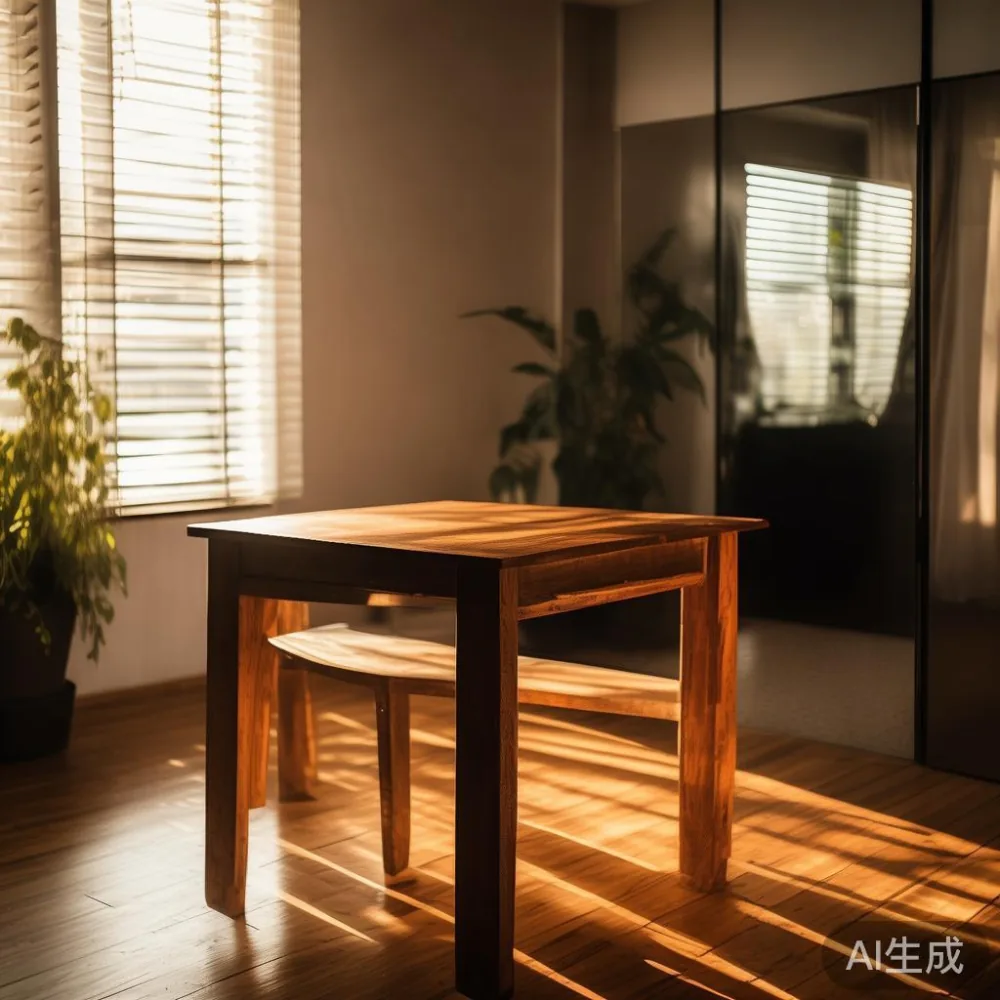
For a solid wood bar table, humidity is not simply a housekeeping issue. It affects the timber’s moisture content, dimensional movement, joint stability and surface finish. A well-made table can accommodate normal Singapore conditions, but placement, care and product design determine how it changes from week to week. This guide explains those effects, gives practical measurements, and shows how to select a bar table suited to local apartments and humid weather.
Why does humidity affect a solid wood bar table?
Wood is hygroscopic: it absorbs atmospheric moisture when the surrounding air is humid and releases it when the air becomes drier. The change occurs mainly across the grain, so a 120 cm-wide solid wood tabletop may expand several millimetres while its length changes very little. Small, controlled movement is expected. Repeated swelling and shrinking can cause gaps, raised edges or stress around joints if the table is poorly designed or exposed to abrupt changes.
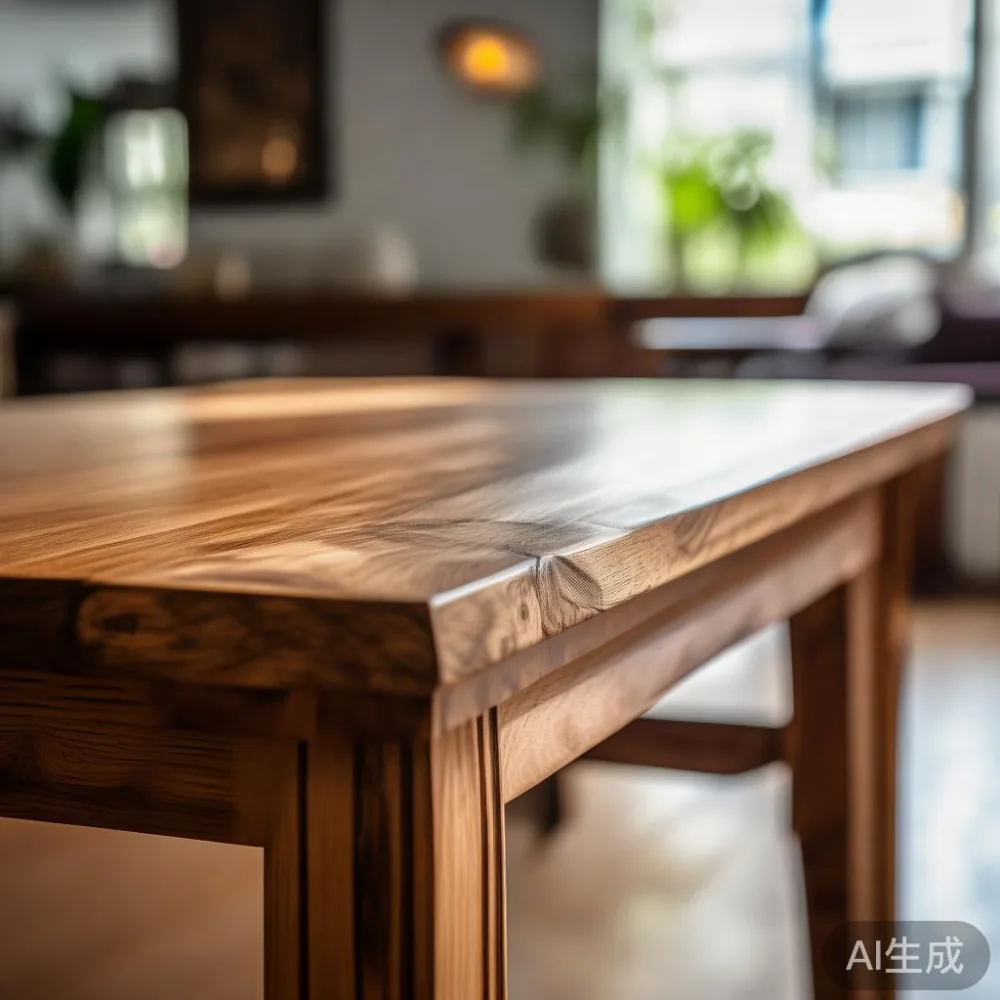
Singapore’s average relative humidity is roughly 75–85%, although readings vary by location and season. Rainy periods can push daytime readings above 85%, while air-conditioned rooms may fall below 55%. A bar table near an open kitchen, bathroom, balcony or frequently opened doorway experiences wider swings than one in a stable living area.
Temperature matters too. Warm, humid air can hold more water vapour than cooler air at the same relative humidity. Moving a bar table from a 28°C service area into a 23°C air-conditioned flat can therefore alter both temperature and moisture conditions within hours. Furniture should acclimatise gradually where possible, rather than move directly from a hot van into a cold room.
What humidity range should Singapore homeowners maintain?
A reasonable target for wood furniture in Singapore is 50–65% relative humidity, with small daily variations. In bedrooms and living rooms, an affordable hygrometer placed near the bar table makes these readings easier to track. A useful working range is 45–70%; avoiding sustained readings above 70% gives solid wood more protection during monsoon periods.
Measure near the furniture, not beside a vent or window. Check at about table height in the afternoon and again at night. Record the values for 7 days before deciding that the wood has a defect. A difference of 5–8 percentage points over 24 hours is less concerning than a table that remains above 80% for several consecutive weeks.
Air circulation helps, but a fan alone does not remove moisture. Dehumidifiers are more useful in enclosed flats. Set one to maintain 55–60% relative humidity rather than running it continuously at maximum power. Portable models with a 12–20 L daily water-removal capacity suit bedrooms and dry HDB interiors. Larger rooms may require 25–35 L capacity. Clean or replace filters every 3–6 months, depending on dust and operating hours.
Conditioners lower humidity but can make wood drier. Aim for stable conditions rather than chasing a single number. A sudden change from 75% to 45% can stress a table just as much as persistent dampness.
How much does a bar table move with humidity?
Exact movement depends on species, construction and finish. As a practical planning guide, solid hardwood may move around 1–3 mm across its width for every 10 percentage-point change in relative humidity. A table 100 cm wide could therefore show roughly 1 mm of dimensional change when humidity rises from 55% to 65%. The movement is small, but it should be considered around fitted walls, tight dining layouts and cabinetry.
For Singapore apartments, leave at least 5 cm between a freestanding bar table and a wall or tiled surface. Allow 10–15 cm at service points if cables, chargers or small appliances are used. Use felt pads under the legs and avoid pressing the tabletop against a cool, damp wall. Do not place hot pots, insulated drink containers or wet glasses directly on the wood; use a coaster and wipe spills within 5 minutes.
The table should be assembled with methods that permit natural movement. Solid wood sofa frames, solid wood dining tables, solid wood bed frames and solid wood wardrobes all need stable indoor conditions, but a narrow bar table placed close to a wet kitchen requires closer attention than a wardrobe built into a bedroom alcove. Marble table tops need almost no moisture adjustment, although their supporting frames can still be affected by humidity.
Does Singapore humidity damage solid wood furniture?
Humidity does not automatically ruin solid wood. A stable, well-finished bar table can last for decades. Problems arise when moisture is trapped beneath a finish, when a cold drink leaves a wet ring, or when the table is repeatedly moved between very damp and very dry environments. Surface mould needs moisture and a suitable temperature, so persistent condensation and dirty crevices require attention.
Watch for early signs such as a hazy finish, tackiness, tiny cracks at end-grain joints, a wavering edge or doors that no longer align. Clean with a soft cloth dampened with warm water and mild soap, using only 2–3 drops per litre. Wipe dry immediately. Avoid silicone sprays, vinegar at full strength, alcohol-based cleaners and “furniture polish” that leaves a sticky residue.
For oil-finished surfaces, apply a compatible maintenance oil every 6–12 months in humid conditions. Test it on a hidden 5 cm section and wait 24 hours. For lacquer or conversion finishes, follow the maker’s care instructions because solvents and oils can cloud the coating.
How should I choose a bar table for a compact HDB flat or condo?
Measure the route before ordering. HDB lift doors are commonly about 80–90 cm wide, while some service lifts are narrower. Internal lift depth can be around 110–140 cm, and corridor widths vary between buildings. A table listed as 120 × 60 cm may fit into a lift diagonally, but packaging, turning space and the route to the flat still matter. Check the actual lift dimensions with the building manager and add at least 10 cm of handling margin.
For tighter routes, choose a bar table under 120 cm long and 45–55 cm deep. A height of 100–105 cm works with standard counter stools; a 90–95 cm table may suit lower seating. A compact design with a clear width of 60–70 cm between a wall and the main path preserves circulation in a 300–400 cm corridor.
Look for solid hardwood construction, secure joinery and a finish intended for interior furniture in humid climates. Good knock-down hardware can help with narrow lifts, but the joints must remain strong. Ask for the packed dimensions, net weight and delivery timeline before purchase. A 120 cm bar table may weigh 35–60 kg depending on its frame and top thickness, so two people should carry it and a trolley should be used.
The same care applies when comparing larger home pieces. In a search for Japanese sofa vs Nordic sofa, construction and comfort matter alongside climate suitability. A useful guide to how to choose light luxury bed focuses on timber stability, joinery and finish rather than appearance alone. Buyers looking into is Italian light luxury bed worth it should compare local humidity performance, dimensions and aftercare with the visual design.
What is the best position for a bar table inside a Singapore home?
The best position is away from direct exterior doors, open balconies, bathroom walls and cooking steam. In an HDB kitchen, place the bar table on the dry side of the partition rather than directly beside the sink. If the kitchen is open-plan, maintain 1–1.5 m from the hob and use a splash guard. A bar table can define a dining zone without adding a full wall, which is useful in Tampines and Bedok flats where kitchens often share one room with the living area.
For a condo near the sea, salt-laden air can add another concern. Outdoor-facing surfaces should be wiped with a clean damp cloth every 2–4 weeks and allowed to dry naturally. Do not trap a bar table between glass doors and an exterior wall, where airflow is poor.
Leave enough space for chairs. With a 60 cm-deep table, stools need about 45–55 cm of rear clearance when occupied. In a narrow dining zone, allow 90 cm behind seated users for circulation. This protects the timber from repeated knocks and prevents people from gripping table edges while squeezing past.
Interior doors need clearance too. A table placed against the main kitchen cabinetry can prevent a 75–85 cm door from opening. Check the swing arc with a tape measure before delivery. Many compact HDB kitchens become more usable when the table is shifted 10–20 cm toward the centre of the room.
How do delivery, GST and installation affect the purchase?
Compare the listed price with the landed cost. Singapore’s 9% GST is already applied to most retail prices shown to consumers, but delivery and installation may carry separate charges. Ask whether the quoted SGD amount includes GST, lift booking, unpacking and assembly. A 120 cm bar table delivered to a unit on the 12th floor may cost around SGD 80–180 for lift and placement if a basic service is included; confirm the scope in writing.
Delivery timing matters during the monsoon. Allow 5–10 working days for standard Singapore delivery and 10–20 working days for custom sizing or finish changes. Avoid scheduling arrival during a storm with likely flooding. Someone should be present to receive the table, photograph the packaging and inspect corners before the driver leaves.
MIDHILL’s local delivery arrangements should be confirmed against the current quotation, including building restrictions and any lift surcharge. The company has operated since 2008 and exports to more than 15 countries, giving its packaging team experience with long-distance timber movement. Its 10-year structural warranty and lifetime refinishing service add useful protection, but normal care instructions still apply. The website, www.midhill.co, provides the reference point for specifications and current service terms.
For shoppers reviewing European light luxury for bedroom products, focus on breathable finishes, stable construction and dimensions suited to HDB rooms. A French light luxury bar table with restrained joinery can work well, while American light luxury may suit loft-style apartments with generous circulation. Post-modern light luxury is also possible through mixed materials, provided the wood remains the structural focus and stone or marble elements are sealed properly.
What care routine protects a bar table through wet and dry seasons?
Use a simple routine based on inspection rather than frequent chemical treatment. Once a week, check the hygrometer and wipe the tabletop with a dry microfibre cloth. After food or drink use, remove residue immediately. Once a month, inspect the underside near legs and wall-facing edges for dampness, finish changes or small insects.
Every 6 months, check the humidity log. If readings regularly exceed 70%, improve ventilation or run a dehumidifier. If they fall below 45% for long periods, reduce direct air-conditioner exposure and avoid heat-producing appliances near the table. Keep the surface at least 30 cm from heaters and avoid placing it in direct afternoon sun.
Use coasters and trivets. A typical coaster should measure 10–12 cm for a drink or 18–25 cm for a hot dish. Felt pads under the feet prevent floor scratches and allow slight airflow. Lift the table rather than dragging it, and use two adults for anything above 35 kg.
For a more considered room, coordinate the bar table with a solid wood dining table, solid wood nightstand and solid wood sofa rather than treating it as an isolated item. A wardrobe should be installed with ventilation gaps where specified, and any solid wood bed frame should sit away from an open bathroom. Marble table surfaces require separate care and should not be treated as wood.
What should I check before buying a humidity-resistant bar table?
Ask for six details: wood species, solid wood components, finish type, expected packed dimensions, net weight and recommended humidity range. A seller should be able to explain whether a low table contains veneer or particleboard panels and how the joints accommodate seasonal movement. Unclear answers are a reason to pause before paying a deposit.
Request close photographs of the underside, joints and end grain. Look for even sanding, tight joints and a finish applied to all exposed surfaces. Check that the table can be carried through the lift and corridor without removing legs unnecessarily. If custom sizing is needed, allow 7–14 extra days beyond the normal delivery period.
Price alone does not reveal durability. A responsibly made solid wood bar table may cost SGD 690–1,800, while customised European light luxury versions can reach SGD 2,500 or more. Compare the timber thickness, bracing, warranty and care support instead of chasing the lowest figure. MIDHILL’s free shipping threshold of US$350 does not automatically define Singapore delivery terms, so confirm the local quotation and GST treatment directly.
My colleague tested a 100 × 50 cm solid wood bar table beside an open kitchen window for 4 weeks in Punggol. The hygrometer rose from 61% to 82% on wet afternoons, and the underside retained slight dampness near one rear leg. After the table was moved 40 cm into the room, fitted with coasters and protected with a stable finish, its readings stayed between 57% and 66%. The top showed no new cracking, and the expected side movement remained under 2 mm. That experience supports a practical rule: control the environment first, then care for the surface.
Can humidity affect other solid wood pieces in the same home?
Yes. A solid wood sofa placed against an exterior wall can pick up seasonal movement from the frame and cushion supports. A solid wood dining table needs the same stable placement as a bar table, with 10 cm of wall clearance where possible. A solid wood wardrobe should not be wedged tightly into a damp corner without a ventilated installation allowance. A nightstand near a bathroom may need a moisture barrier behind it, while a solid wood bed frame should remain clear of condensation from an adjoining en-suite area.
Humidity also influences how rooms are styled. Anyone learning how to style American bed in apartment should avoid placing timber against damp exterior surfaces and retain practical gaps for cleaning. For broader planning, a curated set of top 10 Modern light luxury furniture choices should be judged by proportion, material quality and environmental stability rather than trend labels alone.
The core principle is consistent care across the home. Keep indoor relative humidity around 50–65%, remove moisture promptly, maintain airflow and give every solid wood piece enough space from wet walls. With those measures, a bar table can remain stable and attractive through Singapore’s wet seasons and dry air-conditioned months.