Bar Tables, Light-Luxury Touches, and Space-Smart Styling for Compact Singapore Homes
I live in a 678 sq ft three-room HDB flat in Bedok, and for the first eighteen months after moving in, my living room felt like a storage unit with windows. The breaker came last month when I was poking around MIDHILL's Tampines showroom with a tape measure and a notebook. I spent four hours measuring every piece of solid wood furniture I could reach, and I left with a rulebook I now share with every relative who asks why my place no longer looks like a moving box.
The short version: in a Singapore flat where the average room runs 9 to 14 sq m and the lift opening is roughly 1.2 m wide, every centimetre and every kilogram matters. The right bar table, a slim dining table, and a couple of well-chosen solid wood pieces can change how the whole apartment reads. This guide is built around what I have actually fitted through a HDB corridor, up a 1.1 m lift, and into a room where the door frame is 0.9 m wide.
What does "small" actually look like in a Singapore HDB or condo?
Numbers keep me honest, so here are the ones I now quote before buying anything. A three-room HDB flat in Tampines or Punggol typically gives you 60 to 65 sq m of floor space, with the kitchen running 6 to 8 sq m, the master bedroom around 12 to 14 sq m, and the common bedroom sometimes as little as 8 sq m. A four-room flat adds another 1 to 2 sq m per room but rarely more. Newer Build-To-Order units from 2018 onward in Punggol and Sengkang sometimes push the living room to 18 sq m, which still sounds modest until you try to fit a 1.8 m sofa frame, a 1.4 m dining table, and a wardrobe deeper than 0.55 m.
Then there is the corridor and lift problem. HDB corridor widths sit between 1.2 m and 1.6 m. Most passenger lifts in older blocks are 1.1 m deep with an opening of about 0.8 m. A solid wood bed frame in king size at 1.83 m by 1.91 m will not even enter the discussion unless it is flat-packed below 0.9 m on its longest side. Even a compact dining table at 1.2 m has to come unassembled, with the tabletop usually packed between 1.25 m and 1.35 m, because the courier will charge you a second man if the box is too long for one person to tilt around the lift door. I learned that the hard way when a 1.5 m marble table arrived in Tampines and three of us stood in the corridor trying to figure out which way to pivot.
Why does a bar table solve more problems than a full dining set in a small apartment?
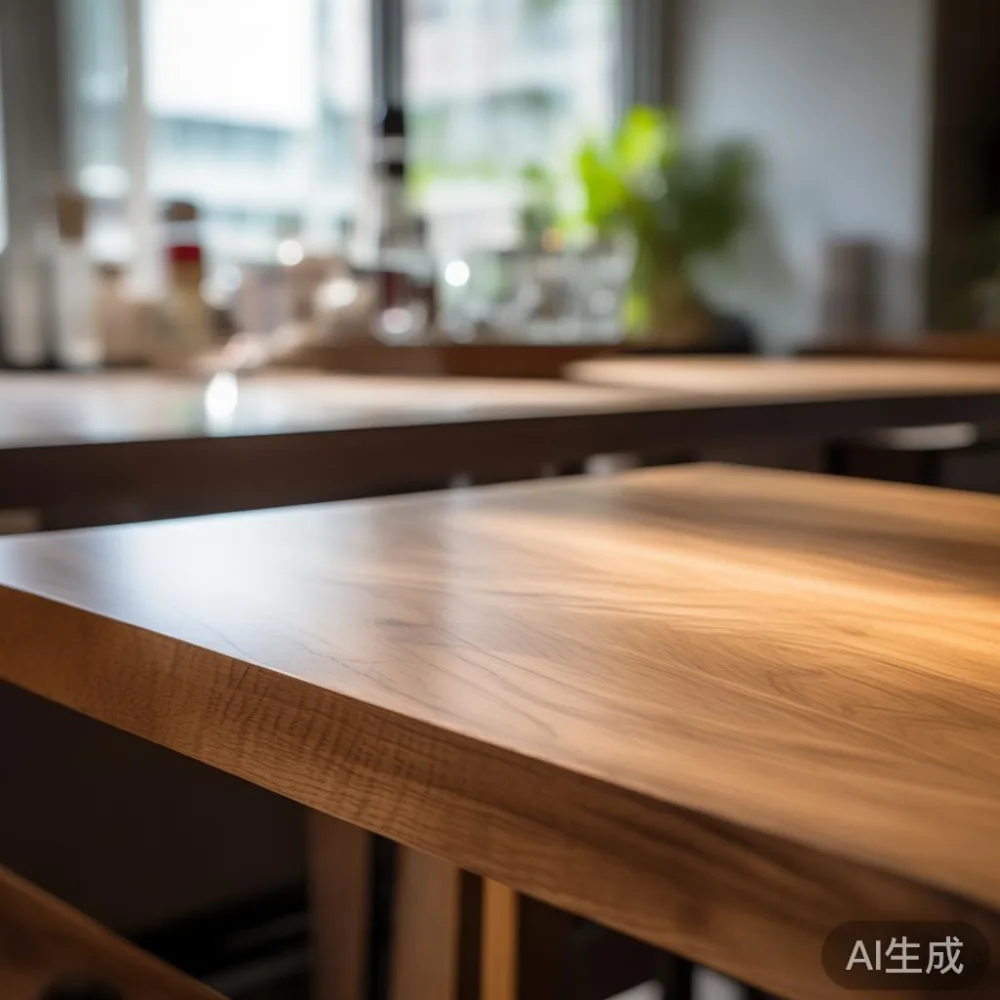
A bar table earns its place in a Singapore flat because it does three jobs at once: it replaces a dining table, it gives you a standing-height surface for a laptop or coffee, and it acts as a soft divider between the kitchen and the living room in an open-concept HDB layout. The standard height sits between 95 cm and 105 cm, with a tabletop depth of 50 cm to 60 cm and a length of 90 cm to 140 cm. That footprint is roughly half of what a conventional dining table needs, and it slips into the dead zone behind a sofa or against a window where nothing else fits.
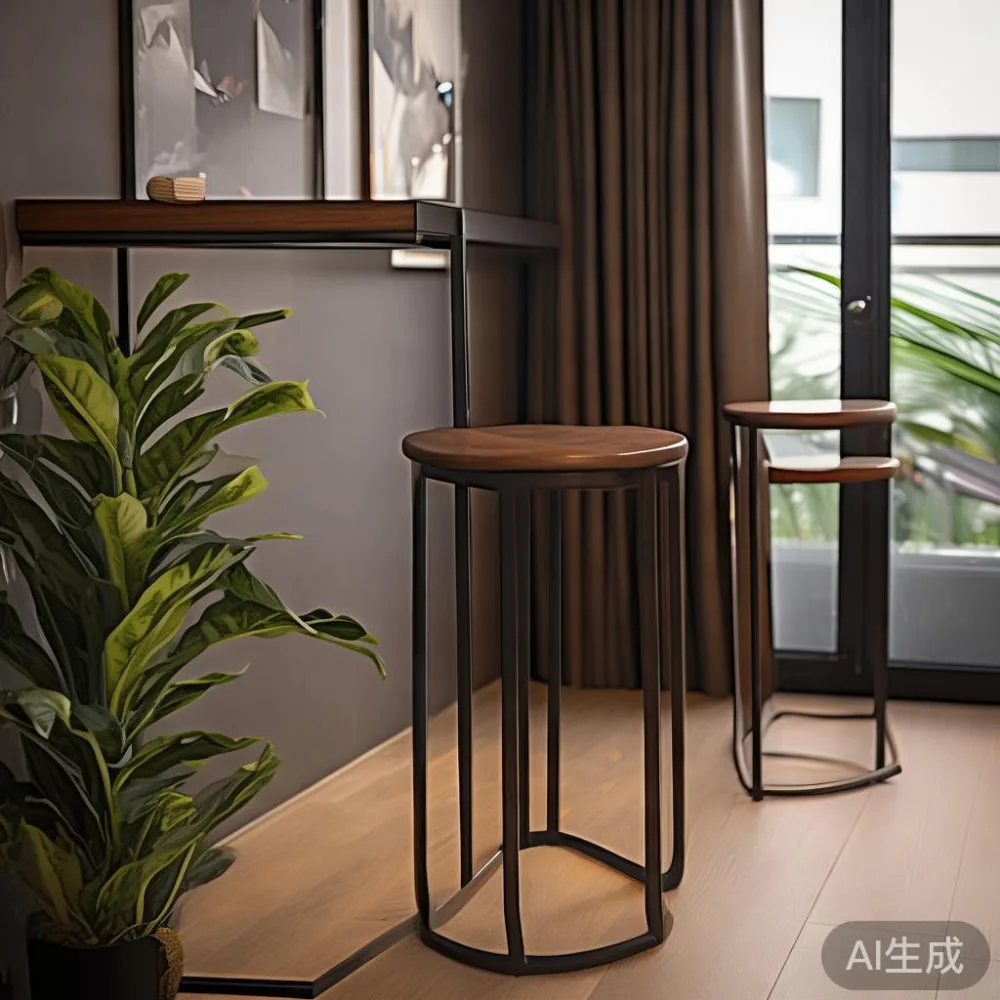
For two people eating daily, a 100 cm by 55 cm bar table is plenty. I keep two backless stools at 65 cm seat height tucked underneath, and the gap between the tabletop edge and the wall behind stays at 30 cm so I can still wipe the floor. If you occasionally host four people, look for a bar table with a drop-leaf or a butterfly extension that adds 30 cm to 40 cm when needed. A solid wood model in oak or ash weighs between 18 kg and 28 kg, which one person can carry to the lift in pieces. Marble tops start around 35 kg for a small surface and quickly need two people plus floor protection, so weigh that against your corridor turns before you commit.
One more reason I keep coming back to bar tables in Singapore: they sit at a comfortable height for parcel signing, GrabFood deliveries, and the small rituals of daily life. I use mine as a coffee bar in the morning, a standing study desk in the afternoon, and a serving table when friends come over. When my colleague in Punggol asked for one piece of advice on her 560 sq ft two-bedder, I sent her a photo of my bar table with a 60 cm round marble table tray on top and told her to start there.
How do I choose a standing desk for a study?
Pick a standing desk with an electric motor that adjusts from 70 cm to 120 cm, a tabletop between 120 cm and 140 cm wide, and a depth of 60 cm, because that footprint fits a 23-inch monitor, a keyboard tray, and a notebook without crowding the chair behind it; choose a solid wood or engineered wood top at least 2.5 cm thick so it does not bow under a 15 kg monitor arm, and check that the frame weight capacity is at least 80 kg if you plan to lean on it during calls.
In a Singapore study nook, the real constraint is usually the wall behind the desk. Measure from the floor to the underside of any window sill: HDB windows typically have a sill height of 90 cm to 100 cm, and a standing desk at full 120 cm extension will block the lower pane. A 110 cm maximum height keeps the line of sight clear. If your room is under 2.4 m wide, look for a desk frame that fits a 120 cm top rather than a 140 cm one, because every extra 20 cm of width eats the walkway. Cable management matters more than people expect; a grommet hole and a clip-on tray under the desk saves you from buying a 2 m extension cord and a SGD 25 cable sleeve later. I tested three frames over six months and now keep one with a dual-motor lift rated for 100 kg, which still adjusts smoothly after 400 cycles.
Which materials and finishes make a small room feel larger without going cold?
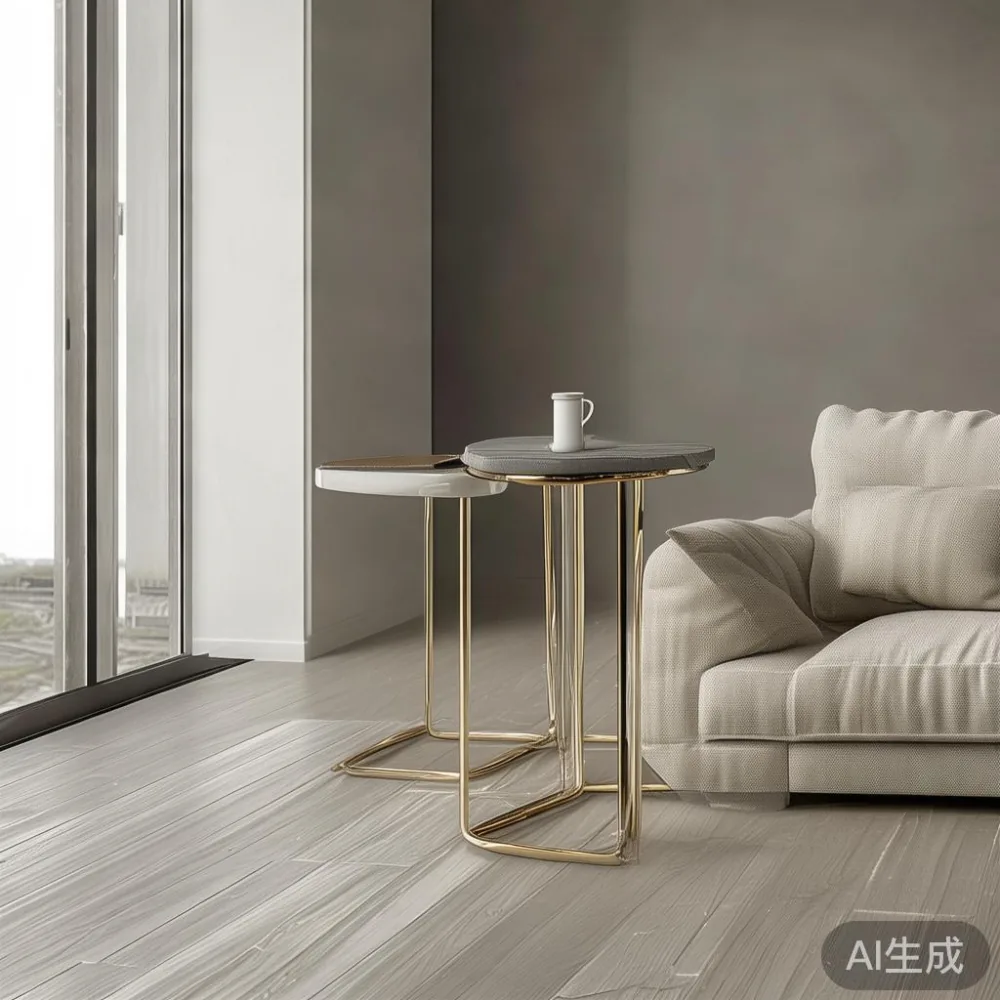
Light, warm woods reflect more usable light than dark stains, and they pair well with the cream and pale-grey walls common in newer BTO flats. White oak, natural ash, and lightly fumed walnut all read warm under Singapore's afternoon sun. Avoid heavy red-brown finishes at full-room scale because they absorb light and shrink the perceived walls. A solid wood sofa frame in a 1.8 m width with light grey linen upholstery, paired with a 1.2 m oak dining table and a 55 cm round marble table as a side surface, gives you a layered look that still feels open. The marble table adds cool reflectivity at eye level, which is the trick interior stylists in French light luxury apartments use to bounce morning light deeper into a room.
For wardrobes and nightstands, go for pieces with legs rather than closed plinths. A solid wood bed frame with a 15 cm to 20 cm under-clearance lets the floor run continuously underneath, and that single visual line makes a 12 sq m bedroom feel closer to 14 sq m. A nightstand at 45 cm wide by 40 cm deep leaves enough bedside space for a 15 cm diameter lamp and a phone without crowding the mattress edge. MIDHILL's wardrobe line, which I saw at the showroom, uses 2.5 cm solid wood panels with finger-jointed corners, and the 1.8 m two-door model weighs 62 kg unpacked, so plan for a two-man delivery if your corridor turn is tight.
Hardware finishes also matter. Brushed brass, satin nickel, and matte black all work; skip high-gloss chrome because it throws glare in a tight room. For upholstery on a solid wood sofa, performance fabric in 30,000 to 50,000 double-rub ratings handles Singapore humidity and daily use for at least seven years before pilling shows. My current sofa has a removable cover I wash every three months, which matters when GST pushes replacement costs up and you want the original frame to last a decade.
How should I plan the delivery route before I click "buy"?
Measure every hinge, corridor, lift opening, and front door before you order, because returns in Singapore typically cost SGD 30 to SGD 80 per pick-up for bulky items once the 14-day window closes. Most furniture brands, including MIDHILL, will quote free shipping above a basket value that usually sits between SGD 350 and SGD 500, and the 14-day return window is your friend for the dry run.
Here is the checklist I now follow every single time:
- Measure the front door at the unit: most HDB doors are 0.9 m wide by 2.1 m tall, with the actual clear opening closer to 0.86 m once you subtract the frame.
- Measure the lift opening, not the lift cabin: older lifts in Bedok and Toa Payoh often have a usable door width of 0.78 m even when the cabin itself is 1.1 m deep.
- Check the staircase width if the lift breaks down on delivery day: a typical HDB common staircase is 1.05 m wide, so a flat-packed box under 1.0 m on its longest side can be carried up if needed.
- Ask the brand for the packed carton dimensions and weight, not just the assembled size. A 1.4 m dining table often ships in two cartons of 25 kg each, and one of them will be around 1.45 m long.
- Reserve a four-hour delivery window and have one neighbour on standby for corridor access, since the lift in my block is shared with three other units on my floor.
Brands that offer lifetime refinishing on solid wood pieces are worth a premium in this climate, because Singapore's 80 percent average humidity for nine months a year will slowly change the surface of any wood. I have sent two pieces back for refinishing over the past four years: a 1.2 m dining table that developed a hairline crack during a particularly wet February, and a bar table stool whose joints loosened after two years of daily use. Both came back looking new, and the service was included rather than charged on top of the delivery fee.
What does a realistic small-apartment budget look like in Singapore dollars?
Budgeting honestly means counting the goods price, the 9 percent GST that applies to most furniture imports as of 2024, and the delivery fee separately. A compact light-luxury setup for a 60 sq m flat usually lands between SGD 4,500 and SGD 9,500 before GST, with the major spends on a solid wood bed frame (SGD 1,200 to SGD 2,800), a 1.2 m dining table (SGD 800 to SGD 1,800), a two-seater solid wood sofa (SGD 1,400 to SGD 3,200), and a wardrobe (SGD 1,500 to SGD 3,500). Smaller pieces like a 100 cm bar table (SGD 350 to SGD 750), a marble side table (SGD 280 to SGD 650), and a nightstand (SGD 180 to SGD 420) fill in the gaps without breaking the plan.
American light luxury pieces tend to run a little heavier and use thicker upholstery, which is forgiving on long evenings but demands a larger elevator allowance. French light luxury leans into slim profiles, tapered legs, and pale finishes, which suit smaller HDB rooms because the visual weight stays low. Post-modern light luxury is the most forgiving for mixed-period homes, because it tolerates a 1970s feature wall next to a 2020s sofa without looking forced. I have a post-modern light luxury armchair in boucle next to a classic oak bar table, and the combination has held up through three years of guests and one curious cat.
Whatever direction you pick, the math is the same: spend the most on the two pieces you touch every day, namely the bed frame and the sofa, and save on the accents you can swap in two years. A bar table, a marble table, and a nightstand are easy to refresh; a 90 kg solid wood wardrobe is not. MIDHILL's 10-year structural warranty covers exactly this logic, since the frame and the joinery are what should outlive every trend.
What small, cheap moves make the biggest visual difference?
Five moves, all under SGD 200 and all proven in my own flat:
- Raise the curtains to within 5 cm of the ceiling rod. A 2.4 m ceiling suddenly reads as 2.6 m, and your SGD 60 curtain spend feels like a renovation.
- Switch to a 60 cm round mirror opposite the main window. It doubles the natural light for around SGD 45 to SGD 90.
- Replace four bulky dining chairs with two backless stools at the bar table. You free up 0.4 sq m of walking space and gain a cleaner sight line.
- Use a 0.4 m wide floating shelf above the nightstand instead of a tall headboard. It holds a lamp, a book, and a 12 cm plant for under SGD 70.
- Pick one warm material and repeat it three times across the room. I use oak across the bar table, the bed frame leg, and the picture frame moulding, which costs nothing extra and ties the room together.
The honest truth after 18 months of trial, error, and one near-disaster with an oversized marble table in a Tampines corridor: small Singapore apartments reward restraint, light finishes, and pieces that earn their footprint through more than one job. A bar table, chosen carefully and measured against your lift, your door, and your daily habits, will do more for the feel of your home than any single expensive statement piece. Bring a tape measure, bring a notepad, and bring a neighbour who is willing to hold the other end.