Bar Table Price Factors: Solid Wood Edition in Singapore
Solid wood furniture prices can look deceptively simple: one product, one number, one delivery charge. In reality, the final amount is shaped by timber species, board dimensions, joinery, finish, hardware, design complexity, packing, and the service behind the order. For a Singapore buyer, it also depends on whether a piece can pass through a lift, fit around a corridor turn, and arrive without damage.
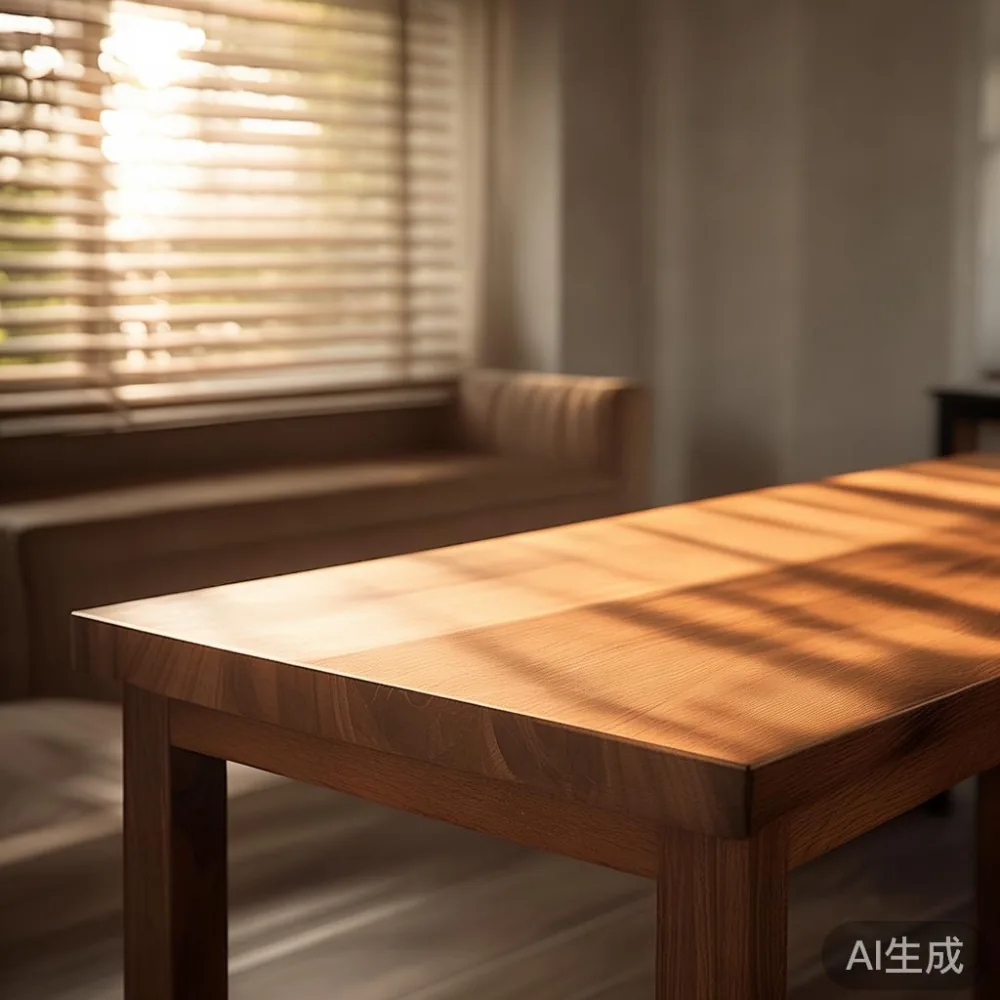
I visited a supplier in Foshan last month and inspected a bar table that looked unremarkable on screen. Up close, its 40 mm solid oak top had visibly different grain patterns, while another sample combined narrow staves with careful matching. The second table required more sorting, more waste, and more sanding, yet its price was higher by SGD 86. That visit made the lesson clear: material is only one part of the price, and “solid wood” does not mean every piece is made, finished, or delivered in the same way.
At MIDHILL, the aim is not to make price the only selling point. The company has operated since 2008, exports to more than 15 countries, provides a 10-year structural warranty, and offers lifetime refinishing. Those commitments matter because a solid wood dining table or bar table should remain useful long after a trend has passed. This guide explains what actually moves the price, where savings can create problems, and what Singapore buyers should clarify before paying.
What determines the price of a solid wood dining table or bar table?
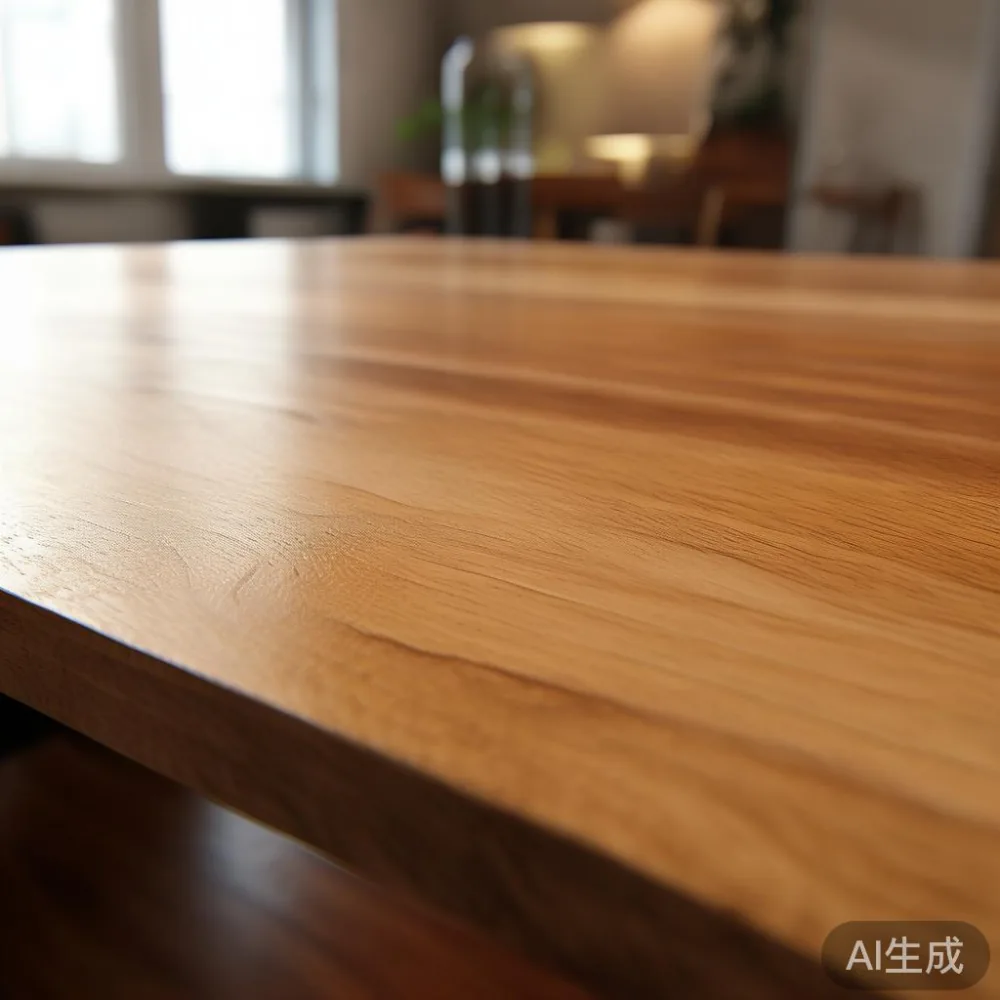
The starting point is timber, but “oak,” “ash,” “walnut,” and “rubberwood” are not equally priced categories. Solid oak with selected grain and acceptable knots may cost more per cubic metre than a lower-grade or plantation alternative. Walnut often carries a higher material cost because supply and grading are limited. Engineered wood and MDF panels can be inexpensive, but they do not belong in the same category as a continuous solid wood top.
Board construction changes the arithmetic. A 200 × 90 cm dining table with 40 mm thickness uses more wood than a 160 × 80 cm table with 30 mm thickness. A bar table measuring 120 × 60 cm with a 40 mm top has a different yield requirement from a 200 × 100 cm bar table with a 50 mm top. Width matters because wide boards are harder to source, dry evenly, and keep flat. Large surfaces also demand more attention to movement across the grain.
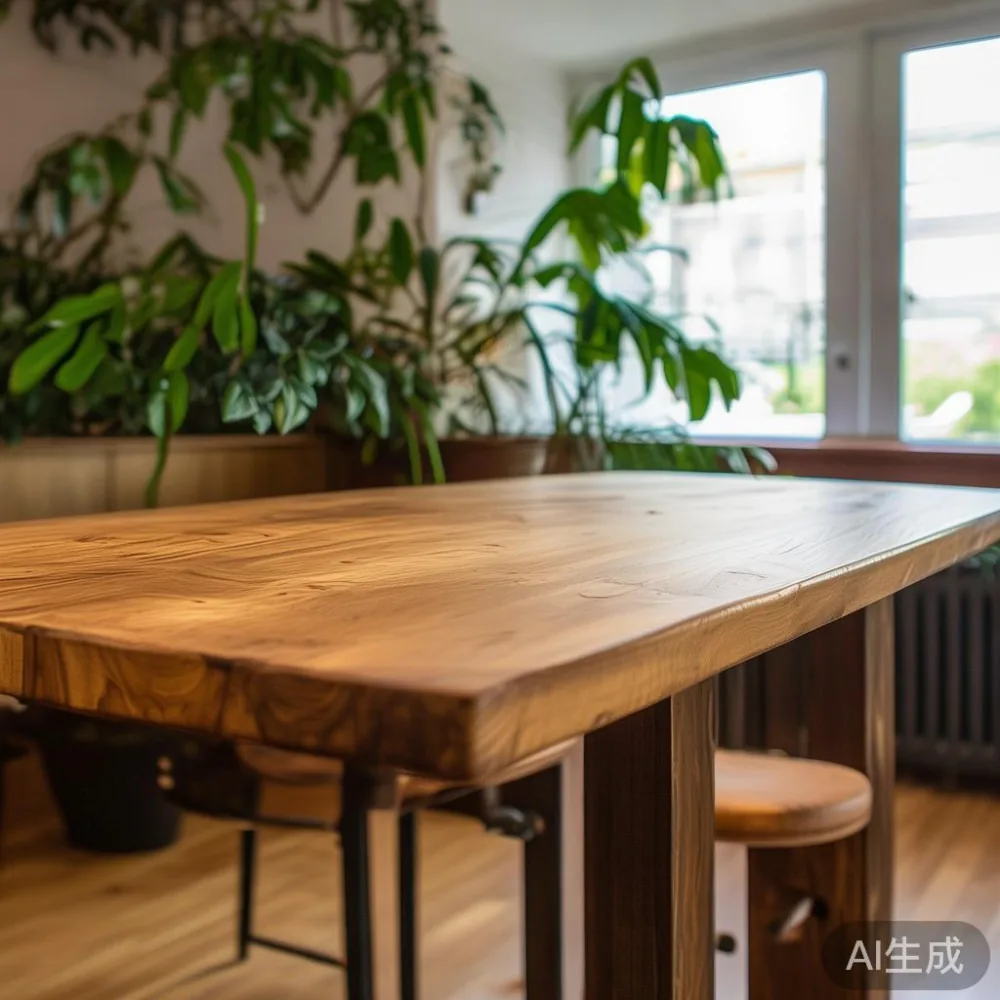
Grade is easy to underestimate. A clear grade prioritises consistent colour and restrained knots, which is useful for French light luxury interiors where pale oak or walnut forms a visual foundation. A character grade may retain knots, sapwood, and stronger grain variation. It can be visually appealing and less expensive, but it is not automatically poor quality. The key is whether the board has been inspected for defects that could affect strength.
Joinery then adds labour. Mortise-and-tenon joints, bridged joints, and well-fitted drawers cost more in cutting and assembly than simple concealed screws and dowels. That extra work can improve longevity, although a weak joint can still be disguised by good marketing. Look for a clear structural warranty, assembly instructions, and photographs of the underside rather than relying on vague claims.
How much should finish, hardware, and craftsmanship add to the price?
A finish protects the surface, but the process behind it changes the cost. Water-based coatings can be clean, fast, and lower in solvent use. Oil, wax, and some harder lacquers may require more preparation, more coats, or longer curing. On a bar table, the finish also has to cope with glasses, hot dishes, spills, and repeated wiping. Ask whether the coating resists heat, alcohol, and water marks, and whether the supplier can repair minor damage later.
Colour matching is another factor. A warm honey oak, smoked oak, and deep espresso finish do not require equal work. Tinting can hide some natural variation, while a transparent finish leaves the timber’s grain visible. French light luxury often favours pale, tactile finishes; American light luxury tends to include darker walnut tones and substantial profiles; post-modern light luxury may use restrained contrast. The style should guide the finish, not an expensive name printed on a label.
Hardware can add between SGD 18 and SGD 240 to a single piece, depending on whether the design uses ordinary screws, concealed hinges, soft-close drawer runners, or a specialist suspension system. Solid wood sofa frames, bed frame joints, wardrobe fittings, and nightstand drawers all use hardware differently. A visible metal bracket may be appropriate on an industrial design. A high-quality concealed mechanism can justify a higher figure on a hinged wardrobe or a softly closing bedside drawer.
Labour is difficult to price from a photograph. Hand-sanding edges, matching grain, filling small voids, fitting drawers, and applying multiple coats can add 2 to 6 hours to a larger item. A factory may spread that labour across a production run, while a small workshop may charge more per unit. MIDHILL’s export experience supports repeat production, but a custom dimension still carries additional setup time and material wastage.
Does a marble table cost more than a solid wood table?
Often, yes, but not only because marble is rarer. A marble table adds stone-selection, template-making, edge-processing, reinforcement, and heavy packing. A 110 cm round marble top may weigh 35 kg, while a 200 cm rectangular slab can exceed 180 kg. That weight affects handling and delivery, especially in Singapore high-rise homes.
This is where the difference between material cost and delivered cost becomes obvious. A marble table may use less framing than a solid wood dining table because the slab carries much of the load, yet the stone must be lifted safely and carried through a corridor. A bar table with a marble top may also require a stronger base and more precise fixing. Ask for the packed weight, not just the product weight.
Natural stone also varies. Veining, clouding, thickness, and reinforcement affect the price. A printed ceramic or sintered surface can be lighter and more uniform, but it should not be described as natural marble. For buyers comparing a marble table with a solid wood table, consider maintenance as well: wood may need periodic refinishing, while marble requires pH-neutral cleaning and careful use of acidic liquids.
Can I get solid wood quality without paying luxury-furniture prices?
Sometimes, but the saving usually comes from removing complexity rather than accepting a hidden structural compromise. A straightforward bar table in one timber grade, standard dimensions, one finish, and conventional joinery can cost less than a sculptural table with curved edges, mixed materials, and premium hardware. That is a useful distinction: paying less for an intelligently simplified piece is different from receiving a poorly made one.
Compare prices on the same basis. Check whether both quotations include the top, base, finish, assembly hardware, protective pads, and delivery. A quoted figure without GST can appear lower by 9%. In Singapore, a SGD 1,000 price before GST becomes SGD 1,090 after GST.
Secondhand furniture can also reduce cost, but inspect the underside, joints, drawer runners, and table legs. A solid wood dining table that has been exposed to alternating humidity may show splits, loose joints, or uneven movement. Look for evidence of previous insect activity, repaired cracks, and warped doors. For a wardrobe, open every drawer and door; for a nightstand, check the runner travel and corner joints.
Design terminology can blur these distinctions. A European light luxury bed may use premium textiles, shaped headboards, and carefully proportioned timber, while a solid wood sofa can mean a solid timber frame with upholstered cushions. If a document says “solid wood,” ask which components are solid wood and whether back panels, drawer bottoms, and internal partitions are plywood, MDF, or another panel product.
What are the hidden costs of getting furniture into a Singapore home?
Access is a real line item. A standard HDB lift opening may be around 90 cm wide and 210 cm high, though individual blocks vary. Older building corridors can be narrower than 120 cm, with right-angled turns. A 200 cm dining table can be turned through a corridor, but a rigid assembled top may not negotiate the same route as a disassembled base with a detachable top.
Measure before purchase. Record the lift door, the narrowest hallway, ceiling height beside the lift, doorways, and the turning space on the landing. A common service lift may exclude furniture over a certain size or weight. If a table must be carried up 6 floors without the lift, movers may add SGD 80 to SGD 220. Upper-floor delivery in Tampines, Bedok, or Punggol should therefore be confirmed with the building management and the supplier.
Protection and assembly also affect the price. A table packed in foam and a reinforced carton costs more to prepare than one protected with thin wrapping, but it reduces transit damage. White-glove assembly can add SGD 60 to SGD 180 per item. The minimum relevant question is simple: will the piece arrive in the room, and who is responsible if a carton is damaged in the corridor?
For MIDHILL, free shipping applies over US$350, which is approximately SGD 470 before exchange and bank adjustments. Singapore orders can include GST and local delivery arrangements, but buyers should request the final landed figure rather than assume the overseas threshold covers every stair or special-handling charge.
Is a more expensive solid wood table actually built to last longer?
Not automatically. A higher price may reflect appearance, brand overhead, packaging, or an unusual design rather than stronger construction. The better test is whether the timber is suitable, the moisture treatment is appropriate, the joinery is sound, and the finish can be maintained.
Wood moves as its moisture content changes. Singapore’s humidity and air-conditioning create a wide indoor range, so solid wood furniture should acclimatise before assembly or finishing. A responsive supplier may advise leaving a table or wardrobe in its room for 24 to 72 hours. Quality does not mean pretending the material never moves; it means allowing controlled movement without splitting the structure.
Warranty terms matter. A 10-year structural warranty is more informative than a generic lifetime claim if the exclusions are clear. Check whether it covers joint failure, wood splitting, and frame defects, and whether finish wear, accidental damage, and normal movement are treated differently. Lifetime refinishing is valuable when it defines what can be restored, how many services are included, and whether transport is chargeable.
Returns can protect against mismatched expectations. A 14-day return period is useful, but the condition rules should be explicit. Many sellers require unused packaging, while a custom-size table may be excluded because it cannot be resold. Obtain the policy in writing before ordering.
How do I compare quotations without comparing different products?
Ask each supplier to show the same 8 attributes: dimensions, top thickness, timber species, board construction, finish, joinery, packed weight, and delivery scope. Then compare like with like. A SGD 760 quotation for a 120 × 60 cm bar table and a SGD 1,850 quotation for a 200 × 90 cm dining table with premium hardware do not establish a clear quality difference.
Ask how long the item takes to produce. Stock or standard production may take 7 to 14 days; custom sizing may require 21 to 45 days. Delivery to Singapore can add approximately 7 to 18 days after dispatch, with peak-season delays of another 5 to 10 days. A clear timeline allows room for access checks and avoids assuming that “solid wood” means immediate availability.
For interior planning, consider proportion as well as price. A 140 cm bar table works against a 280 cm wall with about 70 cm on each side for circulation. In a compact dining zone, a 150 cm table can seat 4, while a 180 cm version can seat 6. The visual weight should match the room, and the chairs should slide in without touching a corridor wall.
The broader products follow similar pricing logic. A solid wood sofa may cost more because of frame timber, suspension, foam density, and upholstery; a bed frame may cost more because of its headboard, slat system, and joint design; a wardrobe costs more as width, internal fittings, and hinged doors increase. Knowing how to style light luxury bed in room can reveal that an expensive frame is visually overwhelmed by poor bedding and lighting. Likewise, knowing how to style Japanese sofa in bedroom helps a buyer judge scale and placement rather than treating a sofa as a decorative object.
European light luxury sofa vs Italian light luxury sofa: what should I compare?
When comparing a European light luxury sofa vs Italian light luxury sofa, focus on measurable construction rather than national labels. Check the timber frame, suspension, seat density, stitch consistency, and warranty. An Italian-inspired silhouette may use sweeping arms, while a French-inspired one may have tighter upholstery and straighter lines. The same visual difference can be produced in different factories.
The same discipline applies to named styles. Mid-century modern for guest room often refers to tapered legs, warm timber, and compact proportions; it does not identify a specific wood species. Modern Italian light luxury furniture may emphasise sculptural forms and precise finishes. For bar tables, modern Italian light luxury furniture could mean a slim pedestal or a veined stone surface rather than a conventional four-leg base.
Foshan furniture production offers useful scale because many factories combine specialist machining, finishing, and packing. It also makes specification more important: the supplier should confirm the actual timber and components instead of relying on a catalogue label. MIDHILL was established in 2008 and now exports to more than 15 countries, giving buyers access to established manufacturing relationships while retaining direct control over product details.
What should I ask before placing a solid wood furniture order?
Ask for the drawing, material schedule, finish sample, packed dimensions, weight, production time, and full delivered price. Confirm whether assembly is included, what happens if the lift is unavailable, and whether the return period covers a piece that has entered a customised room.
For a bar table, I would also request a photograph of the underside, the connection between top and base, and the hardware model. A 40 mm top with 4-leg base may need a different fixing from a 50 mm top on a central pedestal. If the piece includes a marble table top, request the slab thickness and packed weight.
Ultimately, the price should make sense when broken into timber, dimensions, construction, finish, hardware, packing, and access. If one quotation is much lower, find the specific saving rather than assuming the seller is generous. Conversely, a higher price needs a visible explanation: more selective timber, more demanding joinery, a stronger finish, or better service after delivery.
That approach supports a calmer buying decision. You are not simply choosing between furniture makers; you are choosing a bar table, dining table, bed frame, wardrobe, nightstand, or sofa that will work with a particular room and budget. The right price is the one that matches the material and workmanship, arrives intact, and can be maintained for years rather than seasons.