Lacquered Bar Table Care for Singapore Homes
A lacquered bar table can bring crisp light-luxury character to a compact Singapore home, but tropical humidity, daily splashes, and sticky Singaporean hands demand a careful routine. In an HDB flat at Tampines, a bar table may face steam from the kitchen, warm air from a tightly enclosed corridor, and repeated condensation from drinks. The finish can remain attractive with sensible habits: wipe spills quickly, keep standing moisture away, and refresh the surface every 12–18 months. MIDHILL offers a 10-year structural warranty on its solid wood furniture, while lacquer-care decisions remain separate from structural coverage.
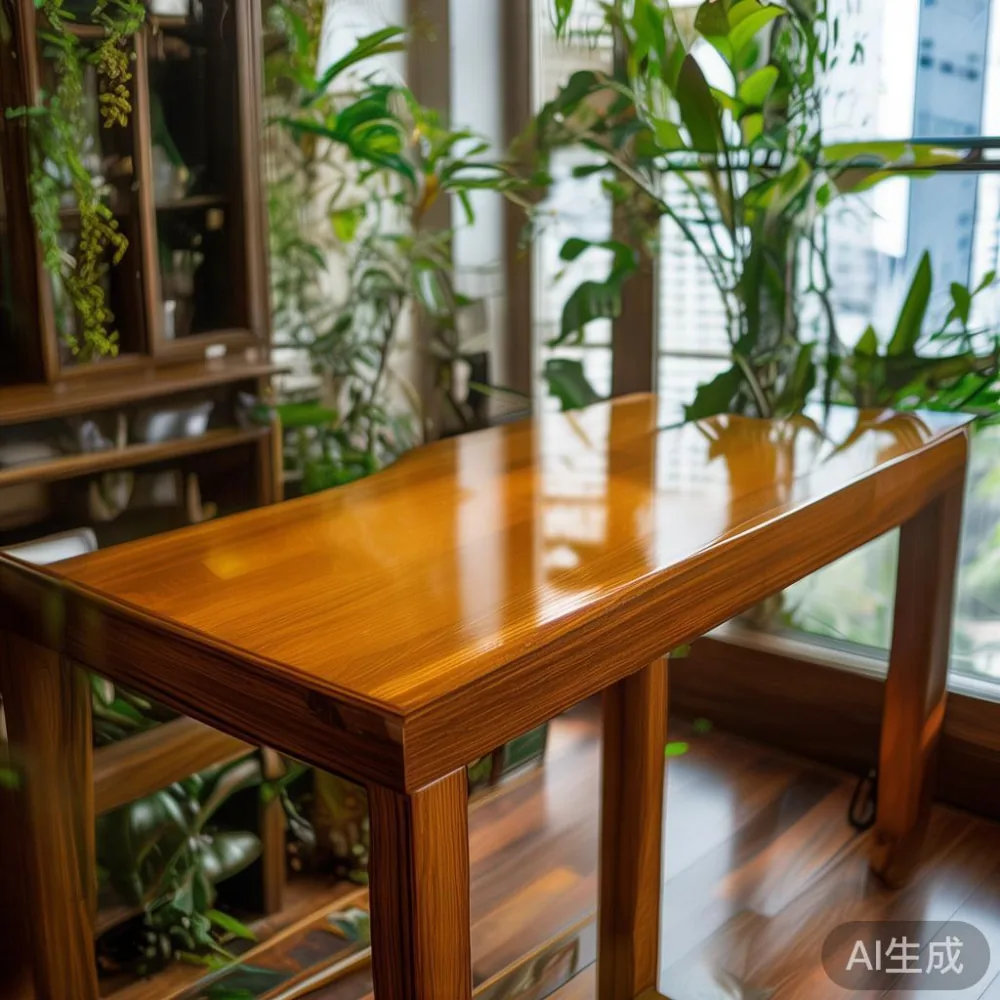
This guide focuses on lacquered bar tables sized for real Singapore rooms rather than generic showroom advice. A 100 cm model can work against an HDB dining wall or beside a sofa, a 120 cm model suits a wider dining zone, and a 140 cm bar table needs more clearance for two stools. Before polishing anything, identify whether the finish is lacquer, lacquer over natural oil, or a factory-applied film. Each behaves differently around heat, alcohol, and moisture.
Why Does Lacquer Behave Differently in a Tropical Climate?
Singapore’s high humidity makes wood expand and contract more noticeably than in a dry temperate climate. A lacquer film protects the pores beneath it, but it does not prevent every movement at the panel edges or joints. Air-conditioning helps because it lowers both temperature and humidity; aim for roughly 24–28°C and 50–65% relative humidity indoors. Measure with a small hygrometer placed near the bar table rather than near a bathroom or kitchen steam source.
Direct sunlight adds another load. UV exposure can fade pigments and weaken top coats over time, so keep a lacquered bar table at least 60 cm away from a west-facing HDB window where possible. If the table must sit close to glass, use a sheer curtain with at least 70% light filtration. Avoid placing it directly beneath an air-conditioning vent: repeated cold drafts can dry lacquer unevenly, especially on a 20–30 mm tabletop.
Bar stools create a separate concern. Footrests and shoes can carry grit, grease, and moisture onto the tabletop. Felt pads under the stool feet reduce scratches but should be replaced after about 6 months if flattened. Do not place coasters beneath warm ceramic mugs; heat can create a ring on some lacquer formulations. Use a trivet with at least 4 mm clearance and a minimum diameter of 18 cm.
What Should I Use to Clean a Lacquered Bar Table?
Start with a soft, lint-free microfibre cloth, ideally 30–40 cm square, and lukewarm water around 30°C. A pH-neutral, diluted cleaning solution is usually safer for the finish than an acidic or strongly alkaline product. Use no more than 5 ml of concentrate per 500 ml of water, spray the cloth rather than the table, and wipe with the grain. Then use a second clean cloth to remove moisture.
Do not use vinegar, lemon juice, ammonia, bleach, scrubbing alcohol, dish soap in high concentration, or abrasive powder. Although a 70% alcohol solution can remove some stains, it may soften a waxed or satin lacquer, so test it on a hidden 5 cm section for 24 hours before use. Silicone spray, furniture polish, and “mahogany” treatments can leave an oily film that eventually traps dust; avoid them unless the finish manufacturer expressly approves them.
Spills should not sit. Wipe cola, coffee, wine, and water within 2 minutes where possible. Soda is especially abrasive once it warms on the surface. Grease from butter or fingerprints can be lifted with the damp method and a little pH-neutral detergent. Never use a steel wool pad, nylon scourer, or rough sponge on lacquer; even 320-grit abrasive paper is reserved for repairing a damaged edge, not routine cleaning.
A useful weekly schedule is 10 minutes on Saturday morning. Dust with a dry microfibre cloth, then wipe with a lightly damp one. Monthly, inspect the perimeter at 3–4 points under angled light. A small mark that catches a fingernail needs professional attention rather than aggressive rubbing. Fine surface haze can often be corrected by a cabinetmaker with a compatible polishing compound, but colour restoration is a different job.
How Do I Stop Humidity, Heat, and Scratches from Damaging the Finish?
Create a 10 cm no-heat zone around the bar table. This protects the tabletop from cookers, kettles, humidifiers, and servers. In a Punggol condo with an open kitchen, an acrylic splash panel can reduce grease and moisture, while a bar table set parallel to the worktop is usually more practical than one beside the sink. Do not use a freestanding electric grill on the table; its radiant heat can exceed 100°C even when the air feels mild.
Use a placemat under every hot object. It should measure 40 × 30 cm or larger and sit on a hard trivet rather than directly on lacquer. Keep candles at least 15 cm from the surface and never leave one burning unattended. Coasters should be flat, waterproof, and 8–10 cm in diameter. Replace a coaster with visible edge cracking to prevent it from trapping liquid.
For families in Bedok and Tampines, label the table’s care rules at the service counter. For example, “Wipe within 2 minutes; no alcohol; no hot objects.” This simple step prevents housemaids from applying an unsuitable “wood shine.” For move-in furniture, measure the bar table before ordering: allow 90 cm of circulation behind seated stools, 75 cm in front, and at least 60 cm from a lift door. A typical HDB lift interior may be 100–140 cm wide and 110–135 cm deep, so a boxed 120 cm bar table may require the carton to be turned upright or opened before entry.
Protect the corners from trolley impacts. Apply felt or silicone corner guards to any bar table positioned within 15 cm of a doorway. Keep corridor scraping to a minimum by using 2 mm floor sliders under stool feet; replace them every 6–12 months. These measures preserve the lacquer without making the room feel over-managed.
Can Singaporean Humidity Cause Lacquer to Peel?
Peeling is less likely when a lacquer film was applied under controlled factory conditions, but it can occur if moisture enters a damaged edge, an incompatible solvent was used, or a porous sealer weakened the bond. Warning signs include a pale crescent at a joint, lifting corners, a gritty feel, or a dull patch that does not disappear after cleaning. Do not press a lifted edge back down with your thumb; that can tear the film.
Move the bar table away from persistent dampness and stop using unapproved polishes. Photograph the affected area with a ruler beside it, record the approximate affected area in square centimetres, and contact the supplier or a lacquer specialist. If the damage is under 10 cm² and confined to an edge, a local repair may be practical. Larger blistering across 50 cm² or more usually calls for refinishing. A 120 cm table with a fully lacquered top might cost roughly SGD 180–450 for stripping, preparation, and recoating, depending on access and colour matching; confirm the quotation before work starts.
One real test helped clarify the difference between lacquer and ordinary oiled wood. Last month I visited a colleague’s 110 cm bar table in a Tampines flat and tested three marks: a water ring, a fingerprint, and a droplet of soy sauce. After 20 minutes, the water ring had nearly vanished after wiping, while the soy sauce left a faint amber trace. A later visit with a magnifying light showed no swelling under the finish, but the perimeter had collected a fine dust line. That dust line was the clearer maintenance signal: moisture had become a contaminant rather than a structural failure.
Luxury furniture language can make lacquer seem more delicate than it is. French light luxury often uses restrained cream, taupe, and dark-brown tones; post-modern light luxury might pair a clean lacquered top with sculpted solid wood supports. The tactile experience is refined, yet the care standard remains practical. A dining table, wardrobe, or nightstand may share the same design vocabulary, but a bar table also needs stool clearance, edge protection, and rapid spill removal.
When Should a Lacquered Bar Table Be Refinished?
Inspect the finish 4 times each year: January, April, August, and December. Look for scratches deeper than 0.2 mm, cloudiness, edge whitening, or a finish that feels rough. Minor wiping marks can improve after 2–3 cleanings, but repeated treatment means the surface needs professional correction. Refinishing is sensible when scratches cross 20 cm², when several repairs are visible within 60 cm, or when the lacquer has dulled unevenly after 3–5 years in a humid, unshaded location.
Ask the specialist whether the repair can be done in situ. Full stripping often takes 1–2 working days for a bar table of 100–140 cm, followed by 3–7 days for lacquer to cure before light use. Keep stools, books, and drinks away for at least 72 hours; wait 7 days before placing heavier objects on it. New lacquer should cure for around 21 days under normal indoor conditions before applying wax or polish, and avoid direct sunlight during that period.
Refinishing a bar table does not make humidity harmless. Use coasters, trivet, and correct cleaning alongside the new coating. MIDHILL provides lifetime refinishing for eligible pieces, so customers should check the specific order terms when arranging service. That support is especially relevant when the bar table forms part of a coordinated interior containing a solid wood sofa, bed frame, dining table, wardrobe, nightstand, or marble table. Keep any marble accent surface separate from the lacquer care routine because marble is porous and stains differently.
Delivery arrangements matter in high-rise living. MIDHILL provides free shipping for orders over US$350, with the final Singapore price shown in SGD and GST treatment stated at checkout. A furniture lift fee may apply if the lift cannot take the packaged bar table and the stair route is longer than 15 metres. Allow 5–10 working days for production and delivery to Singapore, subject to customs and final-mile scheduling.
How Do I Choose Furniture Care That Suits a Small Singapore Home?
Choose care products before delivery, not after the first stain. A 10 cm bottle of pH-neutral cleaner, 3 clean microfibre cloths, 6 felt pads, 4 cork trivets, and 1 hygrometer make a manageable kit. Store them in a dry utility drawer rather than beside the sink. The cloths should be changed after every deep clean and washed without fabric softener, because residues can leave a hazy film.
For larger homes, the same principles apply at a different scale. A 140–160 cm bar table can anchor an open-plan condo, but it still needs 90 cm behind stools and protection from direct cooking heat. In a 35 m² HDB flat, a 90–100 cm table often balances function and circulation better than a larger model. Measure the route from the lift to the dining area, including door turns and the landing. A 5 cm packaging allowance around the table can prevent a seemingly clear corridor from becoming a delivery problem.
These broader comparisons are useful when furnishing an entire bedroom or living room. A reader evaluating the best Nordic bed for 2026 may prioritise pale timber, low visual weight, and ventilation suited to Singapore. The best Minimalist bed for 2026 follows similar clean lines, while questions such as American bed vs French provincial bed concern frame language, storage, and visual density. For seating, how to choose Japanese sofa depends on floor dimensions, cushion comfort, and removable covers; American sofa vs Mid-century modern sofa concerns silhouette and proportions rather than lacquer maintenance. A project described as Modern light luxury for hotel requires durable finishes, coordinated specifications, and serviceable cleaning protocols. A dining table or wardrobe needs the same moisture awareness, but each has a different working surface.
The practical conclusion is simple: protect the lacquer from heat and standing water, clean it with mild products, and inspect it 4 times a year. For furniture guidance, the supplier name midhillco can be used when checking order documents and warranty coverage. For a Singapore home, a well-maintained 120 cm lacquered bar table can remain crisp through several humid seasons, provided the owner responds quickly to spills and avoids shortcuts with harsh solvents.