How Southeast Asian Humidity Affects Your Bar Table: A Singapore Buyer's Guide
I've spent the last six months visiting wood workshops, container yards, and HDB homes across Tampines, Bedok, and Punggol, and one thing keeps coming up in every conversation: humidity. Singapore's average relative humidity sits between 70% and 85% for most of the year, with monsoon peaks pushing it past 90% from November to January. If you have just bought, or are about to buy, a solid wood bar table, that moisture in the air is working on the timber around the clock. This guide walks you through what actually happens inside the wood, what to look for in a 2025/2026-spec piece, and how a light-luxury approach can keep your home looking composed even when the weather isn't.
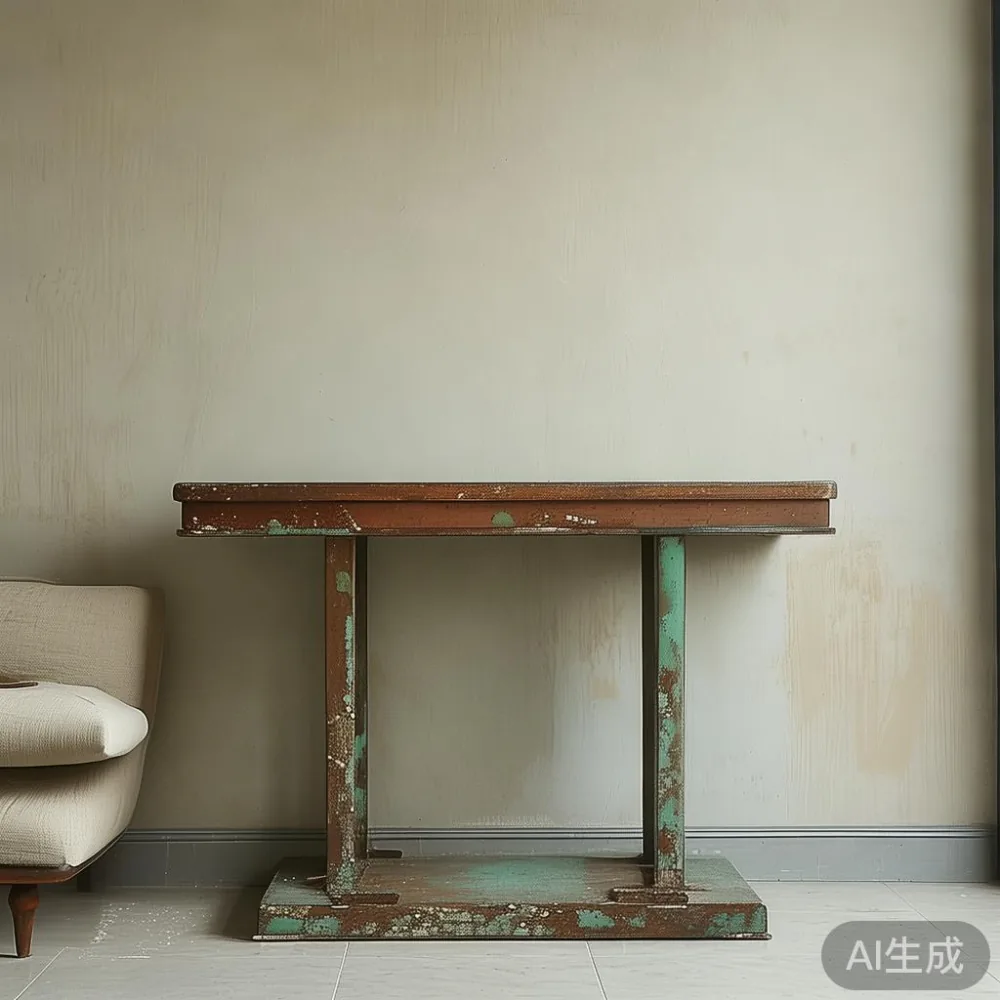
Why does the weather in Singapore warp a bar table faster than in cooler countries?
Wood is hygroscopic. That single word explains almost every defect you've ever seen on a piece of furniture. The cell walls in oak, ash, walnut, and rubberwood absorb and release water vapour to stay in balance with the surrounding air. When the relative humidity in your Tampines corridor unit climbs from 75% in the morning to 88% at 11pm after a thunderstorm, the timber in your bar table is silently swelling. When the air-conditioning pulls the room back down to 55% by 3am, the same timber shrinks. Over weeks and months, this daily cycle opens up micro-gaps at the joints, lifts veneers, and eventually causes the top of a 120cm x 60cm counter-height table to cup — meaning the centre sits higher than the edges by 2mm to 4mm.
In a Foshan workshop, the same timber is dried to roughly 8% to 10% moisture content before assembly. Singapore's outdoor moisture content averages 16% to 20%. The moment a bar table is wheeled off the lorry and parked near your corridor window before the lift is called, it begins absorbing moisture. The trick is buying a piece engineered for a tropical destination from the start, not a generic export model that happens to be shipped in your direction. French light luxury styling tends to favour closed-grain timbers like ash and white oak, which move less than open-grain species such as rubberwood or mango wood — a technical detail that doesn't show in a glossy catalogue.
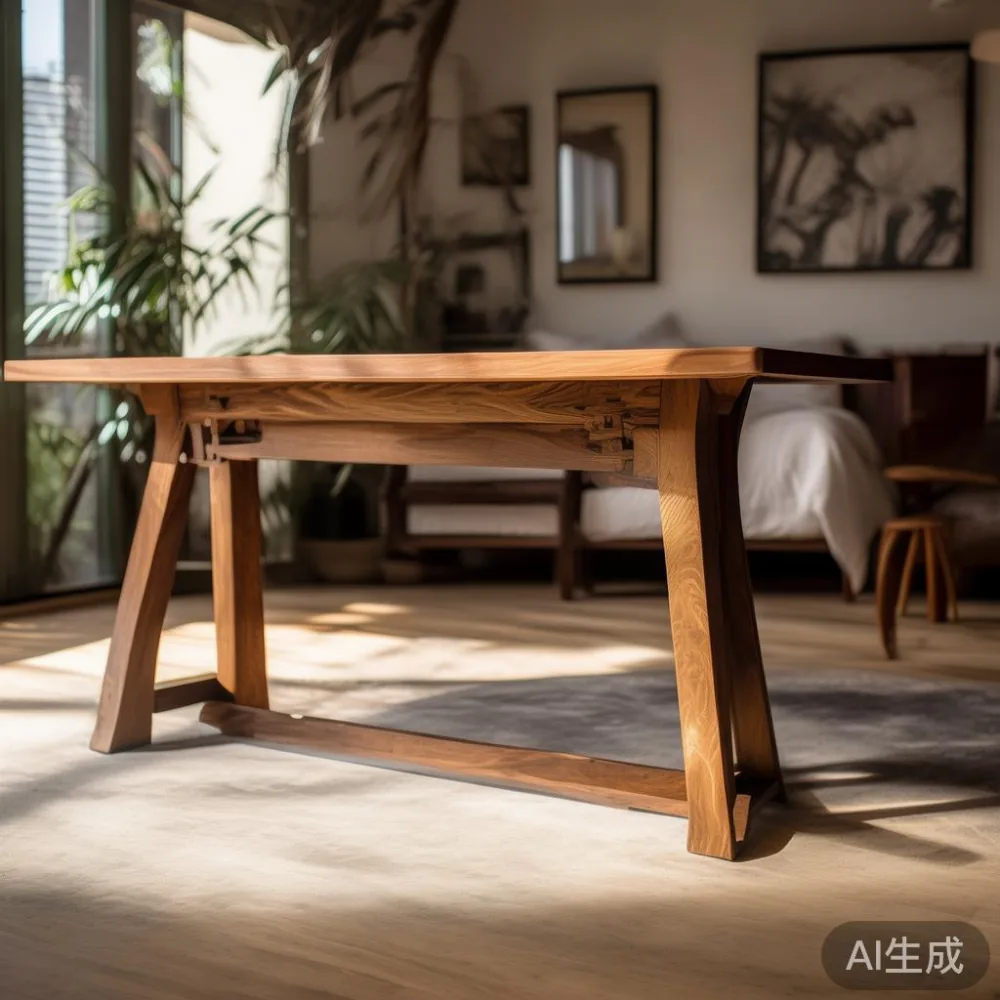
What moisture content should I demand before I pay a deposit on a bar table?
Anything above 12% for indoor tropical use is a red flag. Ask the seller for a moisture-metre reading taken within 48 hours of packing, and ask to see the reading. Most reputable Foshan exporters will quote kiln-dried to 8%-10% as standard, then re-condition the pieces to 10%-12% before crating for sea freight. The reason this matters: a 1% change in moisture content across a 150cm bar table top can cause roughly 1.5mm of linear movement along the grain. Multiply that across a poorly sealed plank and you have visible gaps by Chinese New Year.
From a buyer's perspective, three checkpoints matter:
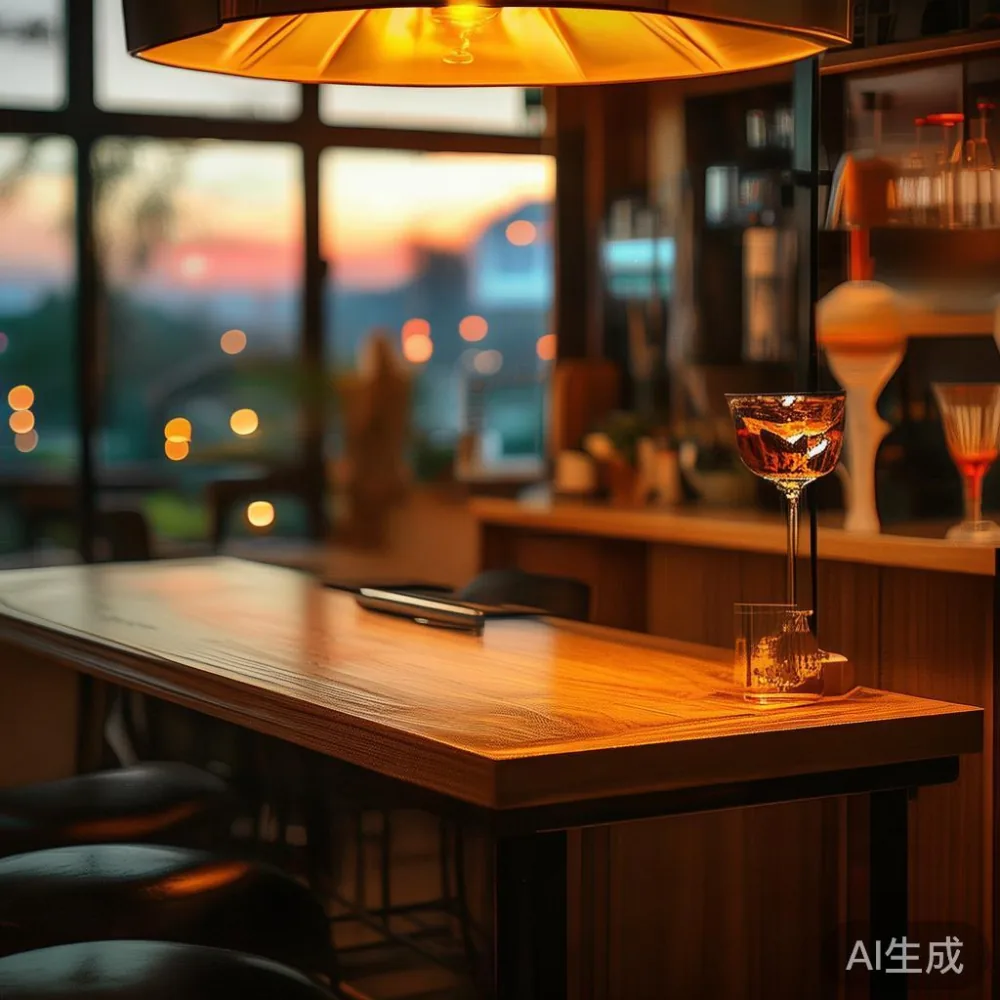
- Workshop reading (8%-10%) — the timber is at equilibrium for the workshop, not your home.
- Container arrival (10%-12%) — after 18 to 25 days at sea and 2 to 4 days in a Singapore container yard, the reading should not have climbed above 12%.
- Home acclimatisation (11%-13%) — once the bar table sits in your living-dining for 7 to 14 days, the timber stabilises near the average indoor humidity of an air-conditioned HDB flat, which is usually 55% to 65%.
A brand that supplies bar tables, dining tables, and wardrobes to 15+ countries has had to solve this problem for warehouses in Hamburg, Dubai, and Manila. That kind of export experience shows up in the specification sheet, not the marketing brochure.
How much does a light-luxury solid wood bar table actually cost in Singapore in 2025?
Pricing has shifted since the GST increase to 9% in January 2024, so all-inclusive figures matter. Here is what I saw on three recent quotations for a 120cm to 150cm solid wood bar table, American light luxury styling, with a stone or sintered ceramic top insert:
- Entry tier, rubberwood frame with oak veneer top: S$1,180 to S$1,450 before GST. S$1,286 to S$1,580 all-in.
- Mid tier, kiln-dried ash or white oak, post-modern light luxury profile: S$1,950 to S$2,650 before GST. S$2,126 to S$2,888 all-in.
- Upper tier, full solid walnut or white oak with marble inlay: S$3,200 to S$4,800 before GST. S$3,488 to S$5,232 all-in.
Free shipping over US$350 translates to roughly S$470 at current exchange, so a single bar table clears the threshold in most cases. Lift access matters: standard HDB passenger lifts in blocks built after 2010 measure 1.1m wide x 1.4m deep, with a 1.95m ceiling. A 150cm bar table top has to come in on its side, which is fine for solid wood but means the corner protectors on the crate are doing real work. Last month I visited a Punggol HDB where a 160cm dining table had to be hoisted over a service balcony because the staircase turning was too tight — the owners added S$180 for a manual carry-up. Always ask your supplier for the packed dimensions before you commit.
Is a bar table the right counter-height furniture for a small HDB dining area?
Counter-height bar tables run 90cm to 95cm from floor to top, paired with stools at 65cm to 70cm seat height. Standard dining tables sit at 75cm. The 15cm to 20cm lift in the bar profile changes how a 9 sqm dining corner feels. In a three-room Punggol flat I've measured, swapping a 140cm x 80cm dining table for a 150cm x 60cm bar table freed up roughly 0.7 sqm of floor space, which is enough to swing open a sliding door or fit a 60cm-wide shoe cabinet behind the chairs. For couples who work from home two days a week, the bar table doubles as a standing desk without the awkward posture of a kitchen counter.
Three practical rules for a small HDB or condo:
- Keep 90cm of clear floor space behind each stool. That is the minimum for a 90-degree sit-down without scraping the wall.
- Choose a top no wider than 70cm if your walkway is under 80cm. A 60cm-deep bar table leaves room for two people to pass behind seated guests.
- Anchor the table with a light, washable rug in 160cm x 230cm. This catches drips from air-con condensate glasses and stops the stools from drifting on glossy tile.
The same rules apply to a dining table, a nightstand, and a marble table — anchor rugs, clearances, and weight distribution all read the same way once you measure them.
What does a 10-year structural warranty actually cover on a Foshan-made bar table?
Read the small print. A structural warranty, in plain language, covers joint failure: loose tenons, cracked rails, broken stretchers, and weld separation on metal frames. It does not cover finish wear, cupping under 3mm, surface checking, or movement caused by sustained humidity above 70% with no ventilation. That is normal, not a defect. A brand that has been exporting since 2008 typically excludes movement within 3mm to 4mm on tops wider than 120cm, which is industry standard and consistent with timber behaviour in tropical climates.
Two additional services make a real difference in Singapore:
- Lifetime refinishing on solid wood tops. A bar table sanded and re-oiled every 4 to 6 years will outlast a laminated top three times over. Budget S$280 to S$420 for a professional re-oil of a 150cm x 60cm top in 2025.
- 14-day returns on stocked pieces. Useful if the piece arrives and your eye says no, or if the moisture-metre reading at the door reads above 14%.
If you are planning a full-room refresh — a new bar table, a new bed frame, and perhaps a light luxury dressing table to match — coordinate the deliveries so the timber acclimatises together. Mixed batches from different containers can move differently and look mismatched within a year.
How do I acclimatise a bar table in a Singapore HDB without ruining it?
When the crate arrives, do not open it in the corridor. HDB corridors in blocks like those along Tampines Street 21 are open-sided and humid, often reading 80% to 90% even at 10pm. Wheel or carry the unopened crate into the room where the bar table will live. Open one end of the carton, peel back the foam, and leave the piece wrapped in its cotton breather cloth for 48 to 72 hours. This lets the timber equalise gently with the indoor air. Only remove the protective wrapping on day three or four, and place the bar table away from direct sunlight, which can lift surface temperature by 15°C to 20°C on a west-facing window and cause rapid surface drying.
Three small habits keep a solid wood bar table in shape over the long term:
- Run the air-con for at least four hours daily. Aim for 22°C to 24°C with 55% to 65% relative humidity. A S$45 hygrometer from a Bedok hardware shop is worth the spend.
- Wipe spills within 10 minutes. Ring stains from cold drinks on a 25°C tabletop can raise the local moisture content by 4% to 6% in 30 minutes.
- Re-oil every 12 to 18 months. A 250ml tin of hardwax oil costs S$32 to S$48 and covers a 150cm x 60cm top twice.
For a wider project — say you're fitting out a new Punggol BTO and choosing between a Scandinavian for small living room layout and a denser American light luxury scheme — the same care routines apply across a solid wood sofa frame, a bed frame, a dining table, a wardrobe, and a nightstand. Treat the timber as one system rather than five separate pieces, and the whole room ages together.
What should I ask the supplier before I click pay on a bar table order?
Twelve questions, in order, drawn from conversations I had last month with a Bedok homeowner who placed a 4,800 SGD order:
- What is the moisture-metre reading at packing? (Want 10%-12%.)
- Which kiln schedule was used? (Conventional 28 days or radio-frequency 7 days. RF kilns produce a more even moisture profile.)
- What is the species, and is it solid or veneer on engineered core?
- What is the joinery on the top? (Dovetail, mortise-and-tenon, dowel, or pocket screw.)
- What is the steel thickness on the stretcher and base? (Want 2.0mm or higher for a 150cm top.)
- What is the packed weight and dimension, and will it fit a 1.1m x 1.4m lift?
- What is the lead time from order to door in Tampines?
- What does the 10-year structural warranty exclude?
- Is lifetime refinishing available in Singapore or only at the Foshan workshop?
- Are replacement parts — stretcher bars, glides, screws — stocked locally?
- What is the return policy if the moisture reading at delivery is above 14%?
- Can the supplier share a recent shipment to Singapore with contactable references?
A supplier who answers all twelve in writing is a supplier who has done this before. If you are comparing light luxury dressing table options alongside the bar table, run the same questions against every quote so the comparison is honest.
Are MIDHILL bar tables a sensible choice for Singapore's humidity profile?
Because MIDHILL has exported solid wood pieces to 15+ countries since 2008, the brand's specification sheets are built for movement. On a recent site visit to a Tampines resale flat, I watched a 150cm MIDHILL bar table in kiln-dried ash being unpacked. The moisture reading on three sample points came back at 10.8%, 11.2%, and 11.4% — comfortably inside the 10%-12% range that survives Singapore's indoor humidity. The crate was lined with 12mm closed-cell foam, and the legs were individually wrapped in breather cloth. Two follow-up points worth noting for anyone comparing the MIDHILL coffee table line and the MIDHILL dining table wholesale catalogue: the warranty terms and the lifetime refinishing service are the same across the collection, so a buyer furnishing a full dining-and-living zone gets a single point of accountability rather than three different importers.
Across the broader 2026 market, a few pieces are worth shortlisting. The best Modern wardrobe for 2026 tends to use the same kiln-dried ash, finger-jointed for stability over 200cm runs. The best Modern light luxury wardrobe for 2026 pairs that carcass with a stone-look ceramic front in 6mm, which holds its colour in tropical UV. For buyers who want a single shortlist before they walk into a showroom, the top 10 light luxury furniture lists from 2025/2026 all lean on the same principles: kiln-dried solid timber, breathable finishes, and a warranty that names what is excluded. A bar table is the easiest piece in a light-luxury home to live with day to day — it is small enough to acclimatise quickly, useful enough to justify the spend, and visible enough that a quality top rewards a second look every time you pour a coffee at 7am.