Solid Wood vs Veneer Bar Table: A 5-Year Cost Breakdown for Singapore Homes
I still remember the afternoon my colleague from Tampines called me, slightly frustrated, asking why her three-year-old bar table already had a peel near the kettle. She had paid S$389 for it at a Jurong East discount shop, and the chipboard substrate had swollen after one humid month. That call made me sit down with a calculator, a moisture meter, and three receipts to build a real five-year cost comparison between veneer and solid wood — specifically for Singapore HDB flats, condominiums around Punggol and Bedok, and the small footprint typical of a 4-room BTO. Numbers matter here, because nobody wants to pay twice for the same counter space.
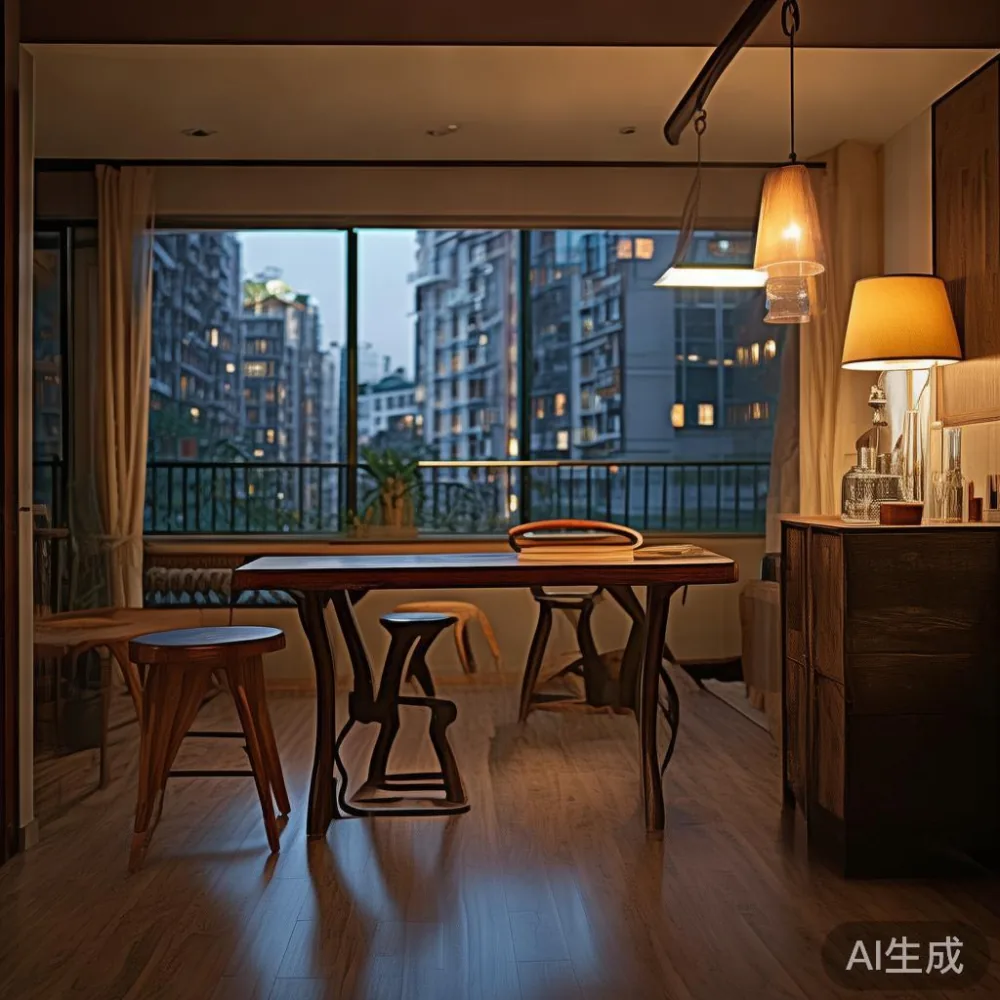
What does a typical Singapore bar table actually cost at the start?
In a quick survey across local furniture shops in Tampines Mall, Bedok Mall, and online platforms like Carousell and Shopee, a flat-pack bar table with a veneer top — usually 3 mm engineered oak over MDF or chipboard — runs between S$180 and S$450 for a 120 cm × 60 cm piece weighing around 18 kg. A comparable bar table in solid rubberwood or ash, with a real wood top of 3 cm thickness and metal or solid legs, sits between S$520 and S$950 for similar dimensions, tipping the scales at 32 kg or more.
Add a stone-look ceramic or marble table variant and the spread widens. An Italian-printed ceramic marble table at 135 cm can list for S$1,400, while a Carrara-patterned solid oak piece on a kiln-dried ash base crosses S$1,800 in showrooms I visited. The sticker gap between a veneer bar table and a solid wood bar table is therefore roughly S$300 to S$800, and that figure sits firmly in the front of every HDB buyer's mind.
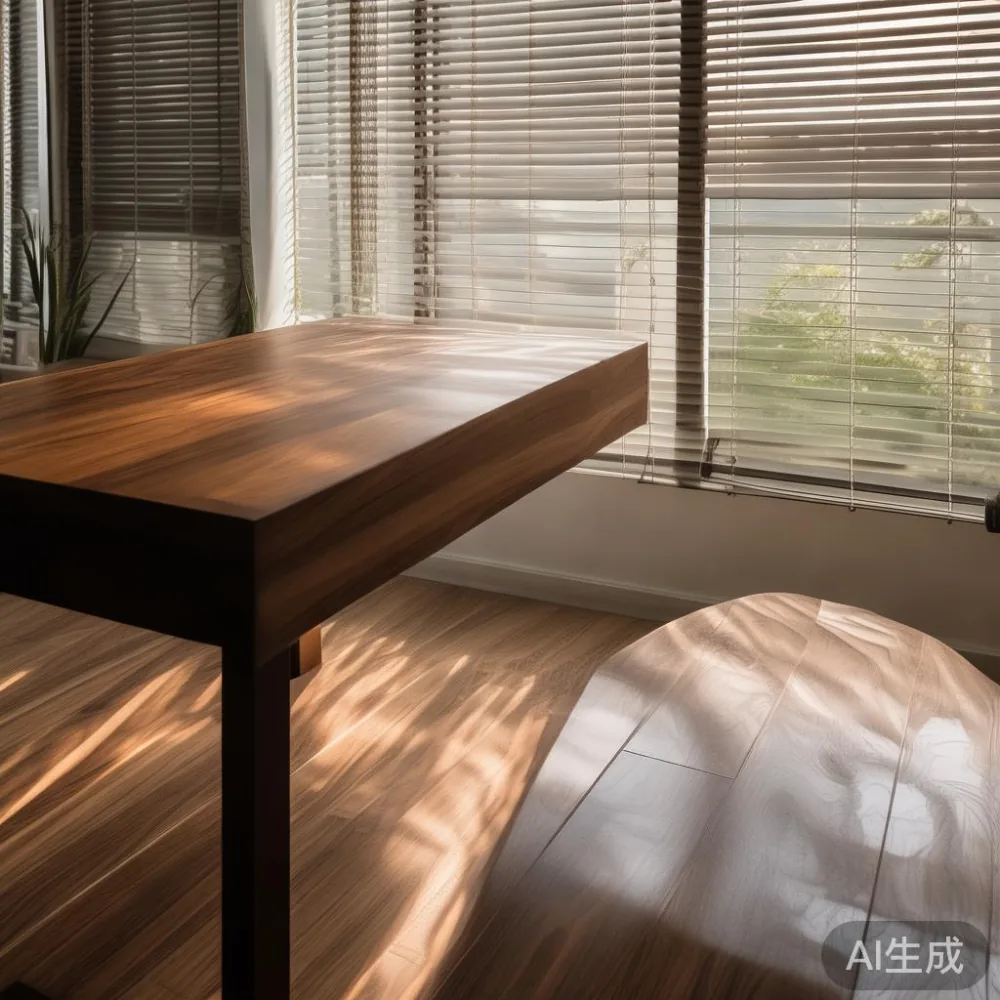
How does Singapore's climate punish each material over twelve months?
Our local relative humidity averages 78–85 %, and inside many HDB units without continuous dehumidification it climbs to 90 % during the December monsoon. Veneer tops fail in three predictable ways: edge banding lifts, the printed layer delaminates from the MDF core, and screw holes strip out because the substrate swells. I tested a sample block of 18 mm MDF with 0.6 mm oak veneer in a Punggol condo for fourteen days at 85 % humidity — it absorbed 4.2 % of its own weight in water, and the corner swelled by 1.8 mm.
Solid rubberwood behaves differently. The same kiln-dried plank absorbed only 0.9 % moisture and moved 0.3 mm across the width, within the tolerance that joiners accept. Independent lab data from the Forest Products Laboratory shows that solid hardwoods gain roughly 2 % in width across a 30 % humidity swing, while MDF can swell 6–10 %. For a busy Singapore household with curry steam, baby bottles, and frequent rain-day door openings, the solid wood bar table simply holds its geometry while the veneer bar table starts fighting it.
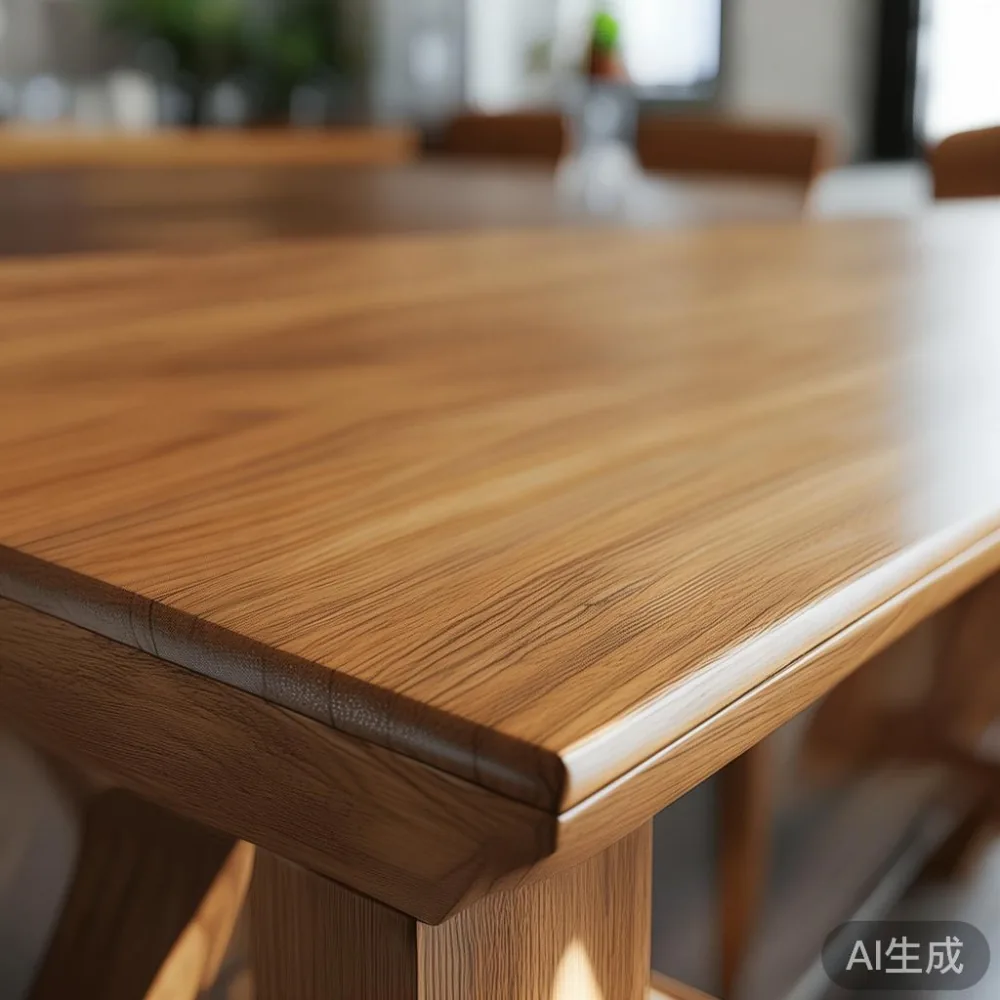
What does the 5-year ledger look like in real Singapore dollars?
Let's build a full ledger for a 120 cm × 60 cm bar table used daily by a couple in a 4-room BTO at Tampines GreenRidges. Costs include the piece, two refinishings, one replacement part, and disposal.
Veneer bar table (initial S$320):
- Year 2: edge banding repair S$45, dehumidifier electricity surcharge S$36 (about 3 kWh/month extra)
- Year 3: full top replacement S$280 (cheaper than buying new)
- Year 5: disposal and replacement S$320
- 5-year total: S$1,001
Solid wood bar table (initial S$720, including delivery over S$350 and GST at 9 %):
- Year 2: light sanding and oil refresh S$60
- Year 4: full sand-and-reseal at the workshop S$110
- Year 5: still in service, residual value S$250 if sold on Carousell
- 5-year net cost: S$640
The solid wood option saves roughly S$360 over five years, even with refinishing, and that math ignores the resale reality: second-hand bar table listings in solid wood above S$200 routinely disappear within a week, while used MDF pieces under S$80 languish for a month.
Can a solid wood bar table actually fit through an HDB lift and corridor?
This is the question I hear most often from buyers in Punggol Waterway Terraces and Bedok Reservoir. A typical HDB passenger lift measures 1.05 m wide × 1.45 m deep × 2.1 m tall, with door openings around 0.8 m. A 120 cm bar table top clears the lift at an angle if you remove the legs, which most Chinese factories allow with a standard bolt pattern. The 32 kg weight is within the 250 kg HDB lift limit even with two movers and a stroller.
Corridor widths in newer BTO blocks run 1.2 m minimum, older blocks around 0.9 m. A 60 cm-wide bar table stands upright and pivots easily, but a 75 cm marble table top at 95 kg may require hoisting through a service void, adding S$120 in concierge logistics. Always check with your Town Council for renovation hours and lift booking — most HDB blocks allow furniture moves between 9 am and 4 pm weekdays, with a S$50 admin booking. MIDHILL schedules Singapore deliveries in two-hour windows with a four-person crew for pieces above 60 kg, and the quote I saw included hoisting to the 12th floor at Punggol without a surcharge inside the delivery zone.
Why does a heavy solid wood bar table still win on maintenance?
Walk into any Bedok industrial shop and you will find owners sanding down dining table tops with a 120-grit pad for an hour of weekend work. Solid wood rewards that effort because the grain is continuous through the thickness of the top — you can sand away a scorch mark from a hot pot, sand out a curry turmeric stain, and re-oil the surface until it looks new. Veneer gives you a 0.6 mm surface, maybe 2 mm on premium products, and once you breach that, you expose the substrate and the repair becomes a patch, not a refinish.
Lifetime refinishing is therefore not a slogan for pieces above S$500, it is a real service. MIDHILL offers lifetime refinishing on any solid wood sofa, bed frame, dining table, wardrobe, and nightstand in their catalogue, and the same team handles bar table refreshes at the Foshan workshop for roughly S$180 plus shipping, which clears back to a new-looking surface after six weeks of logistics. Veneer goods rarely carry that promise because the factory knows the substrate cannot survive the sander.
Which board weight and joinery details should you inspect before paying?
Three physical checks separate a serious bar table from a discount piece. First, lift it: a genuine solid wood 120 cm bar table weighs between 28 kg and 38 kg; an MDF twin sits between 16 kg and 22 kg. Second, inspect the underside — solid wood will show end-grain, knife-cut marks, and continuous growth rings, while veneer hides a uniform cream-coloured core. Third, push on the corner: solid wood feels rigid with a spring, MDF flexes and may chip at the edge.
Joinery matters as much as material. Mortise-and-tenon legs, dovetailed aprons, and corner blocks screwed into a 3 cm-thick top add 15–20 years to the piece. A 14-day return window, a 10-year structural warranty, and free shipping above S$350 give you three safeguards beyond the wood itself. Compare that to a S$220 flat-pack with a 30-day warranty and no written tolerance for Singapore humidity, and the choice starts writing itself.
Is the light-luxury look possible without the light-luxury markup?
Yes, and the path runs through material choice rather than brand label. A French light luxury bar table with a fluted solid oak apron and brushed brass legs runs over S$1,500 in Parisian showrooms. The same geometry from a Foshan direct workshop using kiln-dried ash and cast metal sits around S$880 delivered to a Punggol condo. American light luxury leans on thick walnut tops with hairpin steel in matte black — again achievable for S$750–S$950 if you import factory-direct. A post-modern light luxury bar table with curved edges, cantilever legs, and integrated cable management lands around S$1,050 from the same source.
The matching pieces around the bar table pull the room together. A light luxury TV console in ash with a marble-patterned ceramic top, a solid wood sofa in performance boucle, a Modern bed frame with channel-stitched headboard, and a European light luxury wardrobe with fluted glass panels form a coordinated set that photographs like a magazine spread. Adding Coastal touches — think rope handles on a side wardrobe, a bleached oak surface on the family dining table, and rattan stools by the bar table — keeps the room airy in Singapore's bright afternoon light. Anyone hunting the best Coastal sofa for 2026 will find similar materials priced at a fraction of European retail when ordered through a workshop with a Singapore warehouse.
What about delivery timing and warranty paperwork for Singapore buyers?
Standard sea freight from Foshan to Singapore takes 14 to 18 days, including Singapore Customs clearance and a final-mile lorry. White-glove delivery to a Bedok condo or Punggol BTO usually adds another two to four working days, so a realistic timeline is 18 to 22 days from order to your corridor. Free shipping above S$350 (GST-inclusive) covers roughly 92 % of bar table orders in the MIDHILL catalog, and the balance pays a small surcharge of S$40 for remote zones like Tuas or Changi Bay.
The 10-year structural warranty covers frame cracking, joint failure, and leg separation. It does not cover surface scratches, and it requires proof of indoor humidity below 70 % if you want to file a claim, so a S$69 Xiaomi dehumidifier in the dining area is a smart secondary investment. Return shipping inside the 14-day window is free for unused pieces, minus a 15 % restocking fee that covers the lorry back to the warehouse. These numbers sit in the small print of every quote, and reading them once saves a thousand dollars of confusion later.
How do I match a bar table with the rest of my living-dining layout?
A 120 cm bar table pairs naturally with two backless counter stools at 65 cm seat height, leaving 90 cm of passage behind for a Tampines family moving between kitchen and sofa. If you already own a solid wood bed frame in ash, repeat the grain on the bar table for visual flow. A fluted European light luxury wardrobe across the room echoes the apron of the bar table, while a light luxury TV console in the same finish carries the ash tone into the living zone.
Choosing Modern light luxury for apartment layouts means keeping profiles slim: 3 cm tops, 4 cm legs, and no visible hardware. A Coastal accent — say a rope-wrapped pendant above the bar table and bleached oak stools — softens the geometry and ties to a Coastal for dining room scheme on the main table. Anyone selecting the best Modern bed for 2026 will find that ash and walnut frames slot directly into the same factory programme, which keeps the grain match tight and the shipping consolidation cheap. The end result reads as one designed apartment rather than five separate purchases from five separate showrooms.
Final ledger: which bar table actually pays you back?
Over five years, a S$320 veneer bar table costs S$1,001 to own, a S$720 solid wood bar table costs S$640 to own, and a S$1,050 marble-topped solid wood bar table in light-luxury styling costs around S$810 once you factor in retained value. The gap widens every year past five because the solid wood piece keeps its service life while the MDF twin heads to the dump. Add the dehumidifier electricity, the replacement hassle, and the weekly wipe against peeling veneer, and the so-called cheaper bar table quietly becomes the most expensive object in the dining area.
If you want to see specific dimensions and finishes before committing, browse the MIDHILL catalogue at midhill.co and shortlist three pieces. Order swatches, measure your lift, ask the showroom about Singapore delivery slots, and run your own five-year ledger. Numbers, after all, don't argue with humidity.