How to Read a Furniture Warranty Without Getting Caught Out (Especially When Buying a Bar Table)
I keep a battered file folder at home labelled “Receipts & Guarantees”, and after fifteen years of furnishing three different HDB flats in Tampines and Bedok, I have learned that the piece of paper folded into the smallest envelope is the one that matters most. Last month I helped my colleague Mei Ling unbox a counter-height bar table she had been waiting six weeks for, and within ninety seconds of lifting the tabletop we were hunting through the box for the warranty card. The card was there — a single A5 sheet, printed on both sides, mostly in English with a Mandarin summary on the back. We spent twenty minutes reading it together, and I realised most buyers never do. They assume “ten-year warranty” means ten years of everything. It almost never does.
This guide is written for Singapore households who are about to spend SGD 800 to SGD 4,500 on a bar table, a matching dining table, or a solid wood sofa from a Foshan factory that ships direct. It uses HDB-specific realities: 90 cm service-yard corridors, lifts that measure roughly 1.6 m deep by 1.1 m wide in newer BTOs, the 9% GST line on every invoice, and the very local habit of putting a bar table against the kitchen counter in a 4-room flat. Read once, save the page, and you will never be the person who finds out, eighteen months in, that “structural” only refers to the legs.
What does a furniture warranty actually cover on a solid wood bar table?
The single most common misunderstanding is the word “structural”. On a 120 cm by 60 cm bar table made from solid ash or walnut, the structure is the frame, the four legs, the corner brackets, and the load-bearing stretchers. Surface finish — the satin matte you picked from the swatch in the Tampines showroom — is usually a separate item, often capped at 12 or 24 months. Upholstery on a matching solid wood sofa with leather-look PU seats is a third category. Hardware — the adjustable feet, the metal plate that joins the two halves of a flip-top bar table, the bolts — is sometimes bundled with structure, sometimes excluded. Read each line and ask: which part of my bar table does this sentence describe?
At MIDHILL, the structural warranty on the solid wood frames runs ten years, and that is generous by Singapore standards where direct-from-China sellers often quote five. Lifetime refinishing is offered on the visible wood surfaces, which is unusual and worth understanding: it is a paid service at cost, not a free re-spray whenever you scratch the top with a wine bottle. Knowing the difference between free repair and paid refinishing will save you an awkward email six months from now.
How long should each part of a bar table really last?
A practical way to read a warranty is to translate the language into years, then check it against your own use. For a bar table that doubles as a weekday breakfast counter and a Saturday evening wine bar for three people, the stress points are predictable:
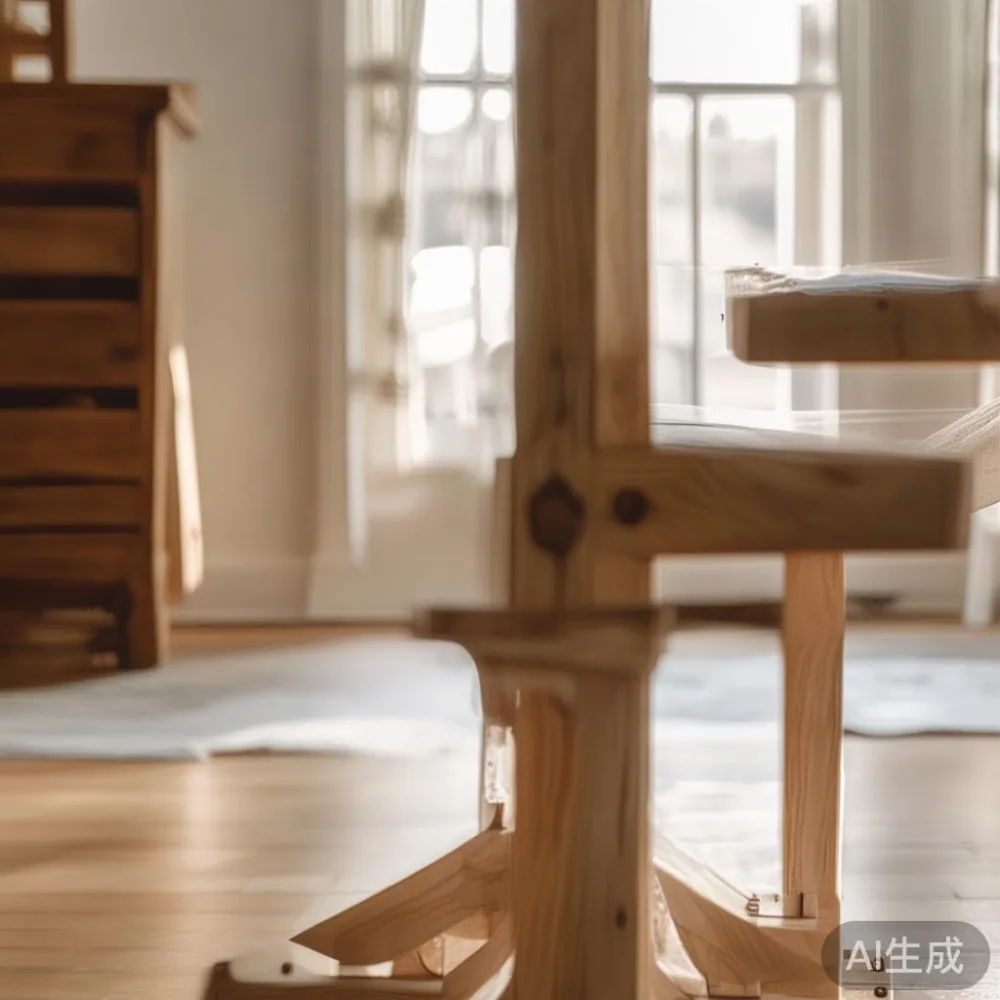
1. The joint between the leg and the apron. With solid wood, this is a mortise-and-tenon or a dowel joint, glued and sometimes pinned. It should outlast you. A ten-year structural term here is reasonable. Anything under three years is a red flag.
2. The finish on the tabletop. Oil-and-wax finishes need refreshing every 12 to 18 months; a polyurethane or lacquer finish is tougher but can chip under a hot pot. A 12-month finish warranty is normal; 24 months is good. Look for language about “peeling, cracking, or bubbling under normal indoor use.” If the wording includes “under normal indoor use,” remember that a bar table placed 50 cm from your service-yard window with afternoon sun on it for four hours a day is not normal indoor use — it is a tropical greenhouse. Keep that bar table out of direct sun.
3. Hardware and mechanisms. If you chose a flip-top, extendable, or height-adjustable bar table, the gas struts, hinges, and locking pins are mechanical parts. Typical coverage is 1 to 3 years. These parts are replaceable; ask whether spares are stocked locally or have to ship from the Foshan factory, which adds 14 to 21 days plus SGD 35 to SGD 80 in courier fees per box.
4. Marble, stone, or sintered-stone tops. If you upgraded from solid wood to a marble table top, expect separate terms. Marble is a natural product with veining variation and is usually warrantied against structural cracking, not against staining, etching from lemon juice, or chipping at the corners. A 2-year term on stone is standard; 5 years is rare and indicates confidence in the resin backing.
Is the warranty from the brand or from the marketplace?
This is the question that catches Singapore buyers more than any other. When you buy a bar table from a local Instagram seller, a Carousell refurbisher, or even some furniture chains, the warranty you receive may come from the shop, the distributor, or the actual Foshan factory. Each layer weakens the protection. The shop may close in eighteen months. The distributor may refuse claims by saying the damage is “user-inflicted.” Only the manufacturer controls whether replacement parts, refinishing, or a swap-out are actually possible.
The clearest signal is paperwork. You should receive, in physical or PDF form: the invoice with GST 9% shown as a separate line, a product specification sheet listing wood species, dimensions in centimetres, weight in kilograms, and finish type, a warranty card or letter on the brand’s letterhead, and care instructions in English. If the seller can only produce a handwritten receipt, treat the warranty as a verbal promise. Verbal promises do not survive a HDB move.
Direct-from-factory sellers that export to 15 or more countries tend to have paperwork refined for overseas claims, which is what you want. MIDHILL, for example, has shipped to Singapore buyers for years and uses a standard two-page warranty that names the parts, the terms, and the contact email in plain English. That format is not a marketing choice; it is the result of learning what claim disputes actually look like.
What does “normal residential use” mean in a Singapore HDB flat?
Almost every warranty contains the phrase “normal residential use.” In a Tampines 5-room flat with two teenagers, a bar table can see homework, hot-pot dinners, Nintendo Switch tournaments, and the occasional Standing Desk — style experiment when one kid turns it into a standing workstation. None of that, individually, voids a warranty. What voids it is moisture damage from an unventilated service yard, impact from a 25 kg treadmill that scraped the leg while moving in, or a refinishing attempt using a belt sander and the wrong grit paper.
A useful local rule of thumb: if the bar table is within 3 metres of an unglazed service yard door, treat it as semi-outdoor furniture regardless of what the warranty card states. If you want a bar table next to the cooker hood, ask the seller for the clearance distance; most manufacturers want at least 60 cm between an open flame or a steamer and a wood finish.
Another HDB-specific clause to look for is load rating. A counter-height bar table with a sintered-stone top can easily weigh 45 kg before you add plates, stools, and a wine rack. Older HDB lifts in Bedok and mature estates in Punggol have a payload of around 630 kg, so a single bar table by itself is no problem, but a six-piece dining room set can push 180 kg, and that is when a building management form is useful. Knowing the weight in advance also protects you if the warranty excludes damage from “overloading” — a phrase that usually means more than 80 kg of static load on a standard 120 cm by 60 cm top.
How are shipping damage and “photo on arrival” claims handled?
For Singapore deliveries, free shipping above US$350 (roughly SGD 480) is the industry-standard threshold for a Foshan factory shipping direct. Below that, expect SGD 60 to SGD 140 in freight, depending on whether the order is curbside or white-glove. White-glove delivery into the room of choice is worth SGD 80 to SGD 120 extra for a bar table and stools, because it removes the 4-metre corridor shuffle from your front gate to the kitchen.
Regardless of how the bar table arrives, the moment of unpacking is a warranty moment. Photograph the outer carton on all four sides before opening. Photograph the foam packing. Photograph the bar table from each angle as you unwrap it. If you see a 3 cm scratch on the apron or a cracked stretcher, that is shipping damage, and the courier or the seller, not you, owns it. Most Foshan sellers require a damage report within 48 hours of delivery, with photos, before any replacement part is dispatched. The 14-day return window that many direct sellers offer usually starts from the delivery date, not the order date, so read the fine print.
One tip from a Punggol customer I spoke with: she keeps a printed copy of the warranty card taped inside the cabinet under her bathroom sink, plus a scanned PDF in her phone. When she moved from a 4-room flat in Sengkang to a 5-room in Punggol, the movers scratched the marble table top, and the photo log from delivery made the claim straightforward. Without it, the seller would have argued the scratch was old.
What is the difference between a warranty, a return policy, and after-sales care?
These three documents often get confused, and the confusion costs money. A return policy is short — in Singapore direct-from-factory retail, 14 days is standard. It covers change-of-mind and visible defects. A warranty is longer — one to ten years — and covers failures under use. After-sales care is the lifetime service that sits outside both: refinishing, replacement cushions for a solid wood sofa with upholstered seats, hardware kits, and care products. A seller offering all three is signalling a long-term commitment to the product.
For a bar table specifically, the after-care question matters because wood moves. A 180 cm by 80 cm solid oak top in an air-conditioned HDB at 23 degrees and 55% humidity will behave differently from the same top in a non-aircon corridor. In the first year you may see minor checking at the end-grain, which is cosmetic, not structural, and is not a warranty claim. Understanding that difference — and having the seller explain it before you buy — is what separates a smooth five-year ownership from a small spike in cortisol.
Where can buyers check if a brand’s claims hold up?
Three checks, all doable in an afternoon. First, ask for the export licence or the business registration number of the Foshan factory and verify it on the Chinese national enterprise credit system (the public-facing version works in English). Second, ask for two customer references in Singapore, ideally one in a condo and one in an HDB — different lift sizes catch different issues. Third, ask which courier company handles the last-mile delivery and whether the seller pays for insurance. A seller who volunteers insurance is a seller who has had to claim it before, which is a good sign.
At MIDHILL specifically, the Singapore-side fulfilment works through a local 3PL with insurance up to 1.5 times the invoice value, and the warehouse in Foshan has been operating from a single site since 2008, which simplifies tracing a specific production batch if a serial number is needed. None of this matters until it does, but when it does, it is the difference between a swap-out in three weeks and a six-month dispute.
How do light-luxury styles affect what you should expect from a warranty?
Light luxury is a finish language as much as a design language. French light luxury tends to mean softer curves, brushed brass details, and lighter oak or ash tones. American light luxury leans towards clean lines, darker walnut, and slightly thicker profiles. Post-modern light luxury introduces mixed materials: a sintered-stone top on a slim solid wood base, or a bar table with a cantilevered marble table top. Each of these styles has a different risk profile, and a warranty that reads identically across all three is probably underwritten by someone who has not thought about how each style fails.
For a French light luxury bar table in solid ash with a 6 mm sintered-stone insert, ask whether the insert is replaceable. For an American light luxury piece in thick 40 mm walnut, ask whether end-cracking beyond 5 cm is covered. For a post-modern light luxury hybrid, ask how the mixed-material joints are warrantied — the glue line between stone and wood, the resin bonding the marble table top to the substrate. The answers tell you whether the seller has tested these combinations or simply listed them in a catalogue.
Does the warranty change when you mix a bar table with other pieces?
Yes, sometimes materially. A matching set ‚ bar table plus four stools, plus a sideboard, plus a dining table in the same solid wood ‚is usually delivered from the same Foshan production batch. If the colour or the grain matters to you, the warranty becomes your safety net against batch-to-batch variation. If you buy the bar table now and add the dining table six months later, ask whether the seller can guarantee a colour match, and what happens if the match is poor. Many direct sellers will offer a 10% credit or a free refinishing on one of the two ‚ as long as the request is made within 30 days of the second delivery.
The same logic applies to a coordinating bed frame, wardrobe, and nightstand in the same wood. Light luxury bedroom sets are usually ordered as a single production batch for exactly this reason. If you are furnishing a full condo in Punggol over six months and want the same finish on every piece, ask whether the seller can hold a production slot or warehouse a batch for you. A 5% deposit on a batch reservation is worth the consistency.
What questions should you ask the seller before paying the deposit?
Keep a printed list and tick each box. Seven questions, in this order:
1. Is the bar table made from solid wood, or is it solid wood with a veneer on the side panels and edges?
2. What is the structural warranty in years, and what parts does it cover?
3. What is the finish warranty, and what counts as a finish failure?
4. Are replacement parts stocked locally, or shipped from the Foshan factory, and at what cost?
5. What is the return window, and is it 14 days from delivery or from order?
6. Who handles shipping damage claims, and what is the photo evidence requirement?
7. Is refinishing available later, at what cost, and on what timeline?
If the seller can answer all seven in writing, you are in good hands. If they deflect on any of them, walk away or insist the answer be added to the invoice as a note before you pay.
Are there hidden exclusions that bite Singapore households specifically?
Three exclusions appear more often than they should. First, damage from aircon condensation dripping onto the back of the bar table when it is placed against an exterior wall — sellers will call this “moisture damage” and exclude it. Solution: keep the bar table at least 15 cm off the wall and place a felt pad behind each leg. Second, discolouration from unfiltered UV through floor-to-ceiling windows in newer Punggol condos — most warranties exclude “sun damage” on wood and on PU leather. Solution: apply 3M UV film to the window within 5 cm of the bar table. Third, damage caused by third-party movers during a subsequent HDB-to-condo move — the original warranty usually does not transfer with damage from a non-affiliated mover. Solution: photograph the bar table before and after every move and keep the mover’s insurance certificate.
A fourth, less common exclusion is on hardware finishes: brushed brass, matte black, and champagne gold PVD coatings can oxidise in Singapore humidity, and the warranty may exclude “normal oxidation.” If your bar table has metal accents in a French light luxury style, ask the seller whether the hardware is solid brass, plated steel, or PVD, and what the coating warranty is.
Can the warranty be transferred if you sell the bar table?
Usually yes for the remaining structural term, sometimes no for finish or hardware. Direct-from-factory sellers that export to multiple countries are accustomed to this question because the furniture often moves with the owner. A transfer typically needs the original invoice, the warranty card, and a one-page assignment signed by both parties. The new owner then registers the transfer by email. This matters in Singapore because HDB-to-HDB resale is common, and a bar table with eight years of structural warranty left is a small but real selling point. If transfer is important to you, confirm it before you buy — some sellers explicitly exclude transfer on clearance items.
Final checklist before you sign for the bar table
Keep this on your phone for the day of delivery. The bar table is correct wood species, dimensions, and finish. The carton has no visible damage, or damage is photographed before opening. All hardware bags are present, with the correct bolt count from the parts list. The warranty card matches the invoice in product code and purchase date. The seller’s email for claims is saved in your phone. You have taken at least eight photos: carton four sides, foam, tabletop, apron, two legs, hardware. You have emailed a copy of the photos to yourself so they are timestamped. The 14-day return window starts from today, not from the order date. And the bar table is positioned at least 60 cm from any heat source, at least 50 cm from direct afternoon sun, and at least 15 cm from the nearest wall.
That list takes fifteen minutes. It will save you fifteen hours the next time something goes wrong, and in twelve to fifteen years — which is roughly the lifespan of a well-kept solid wood bar table — something always goes wrong. The question is whether the small print on the warranty card was on your side or not.