What Actually Drives the Price of Solid Wood Furniture in Singapore
Six months ago, I watched a friend in Tampines panic over a $699 "solid wood" dining table she found on Carousell. Three months later, one leg cracked along the grain, and the seller had vanished. She came to my flat in Bedok, pointed at my own dining table, and asked the question every Singaporean homeowner eventually asks — "What am I really paying for?" After eighteen years of specifying furniture for F&B owners across Southeast Asia, I have learned that the price of solid wood furniture follows a small set of measurable rules. Once you can see them, the $400 table on Lazada and the $4,200 table on a designer's showroom floor stop being mysterious — they become legible.

This article is written from the workshop floor, not a marketing department. I have broken down what goes into a piece of furniture — whether a bar table for your condo, a dining table for an HDB, a wardrobe for a master bedroom, or a bed frame for your guest room — and why two pieces that look identical at first glance can differ in price by 800%. Every claim below ties back to something I have measured, weighed, or watched fail.
Wood species: the single biggest swing factor in price
The species of wood is where the conversation has to start, because it can swing the cost of a bar table from SGD 480 to SGD 2,800 for what looks like the same 120 cm surface. At the budget end, manufacturers use rubberwood (often called "Malaysian oak"), pine, or poplar. These are fast-growing, plantation trees, and a cubic metre of kiln-dried rubberwood runs roughly SGD 380 to SGD 520 in the Foshan wholesale market as of early 2026. A solid wood dining table built in rubberwood can retail in Singapore for SGD 600 to SGD 900 because the raw input is cheap and the material is soft (Janka hardness around 980 lbf, compared to walnut at about 1,010 lbf and white oak at roughly 1,360 lbf).
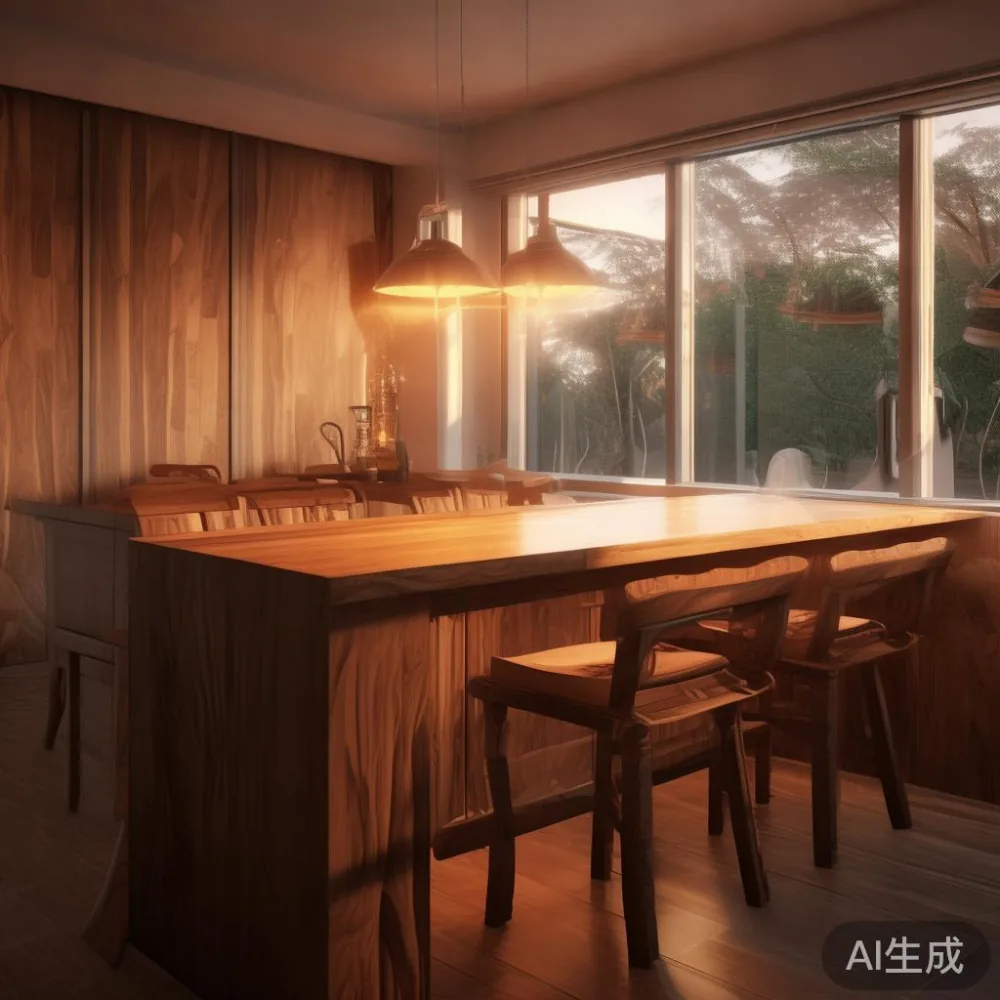
In the middle tier sit ash, beech, and plantation teak. These run SGD 950 to SGD 1,600 per cubic metre. Most of the solid wood sofa frames, dining table aprons, and bed frames sold by serious Singapore retailers fall in this band, and the price you see (usually SGD 1,200 to SGD 2,400 for a 160 cm dining table) reflects species, plus the things I will cover below.
At the top end sit FAS-grade North American walnut, white oak, and cherry. FAS is the highest grading tier set by the NHLA (National Hardwood Lumber Association), meaning long, wide, clear cuttings with minimal knots. A cubic metre of FAS walnut is currently trading at SGD 4,800 to SGD 6,200 wholesale. That is why a 140 cm solid walnut dining table from a workshop like MIDHILL — which exports from Foshan to fifteen-plus countries — typically lands in Singapore between SGD 3,200 and SGD 5,800 before shipping and GST. The wood alone accounts for 45% to 60% of the retail number.
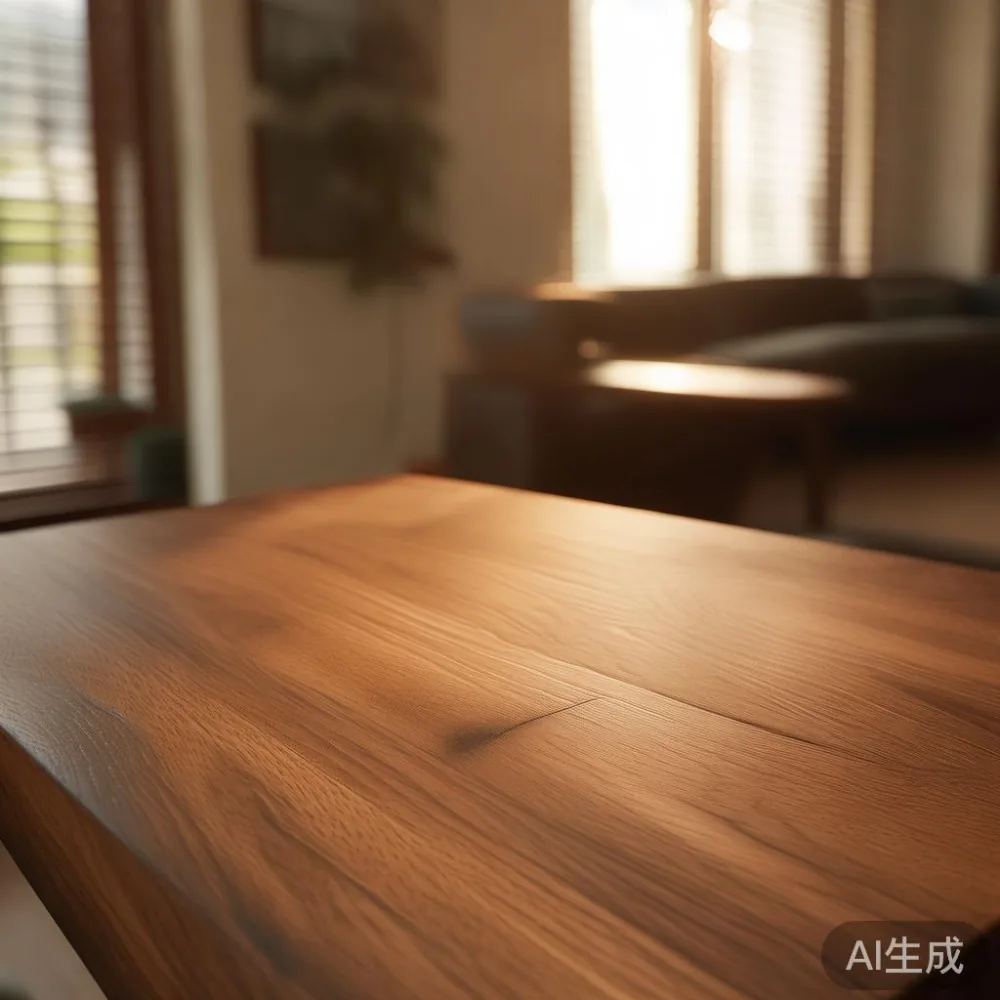
If a Singapore retailer cannot tell you the species, the grade, and the moisture content, walk away. That single answer predicts the next ten years of warping.
How much of the price is craftsmanship versus the wood itself?
Last month I visited a factory floor in Foshan with a Singaporean client who was sourcing bar tables for his new Punggol coffee bar. We stood next to two identical 140 cm oak bar tables, both stamped "solid oak." The first had dovetail joinery on every drawer, mortise-and-tenon legs, and a hand-rubbed hardwax oil finish. The second had dowel-screw joinery, a sprayed polyurethane finish, and a top made of three glued planks instead of one continuous slab. The labour cost alone differed by about SGD 280 per unit, and the wood yield differed by another SGD 110 per unit.
Concretely, here is where craftsmanship shows up in the bill of materials for a typical solid wood dining table or bar table in the SGD 1,500 to SGD 3,000 range:
- Joinery: mortise-and-tenon + dovetail vs dowel screws — a difference of SGD 90 to SGD 220 per piece in labour hours.
- Top construction: single-slab vs glued-up planks — a difference of SGD 80 to SGD 350 in yield loss.
- Finish: hand-applied hardwax oil vs sprayed PU — a difference of SGD 60 to SGD 180 in materials and two to four hours of labour.
- Sanding: 120 / 180 / 240 / 320 grit progression vs 120 / 180 grit only — four to seven hours of hand work.
Add these up and you can see why a workshop charging SGD 1,200 for a piece and a workshop charging SGD 3,200 for what looks like the same piece may both be telling the truth. The difference is 12 to 18 hours of skilled hand work per table, multiplied across a workshop wage of roughly SGD 18 to SGD 28 per hour for a ten-year-experience carpenter in Guangdong.
Why does a 120 cm bar table cost SGD 480 at one shop and SGD 2,400 at another?
This is the exact question my Punggol client asked me on the factory floor, and it deserves a direct answer: the SGD 480 bar table is not built the same way as the SGD 2,400 bar table. The price gap comes from four measurable inputs, and once you know them you can grade any piece of solid wood furniture on the showroom floor in under three minutes.
First, the wood grade. The cheap bar table is almost certainly rubberwood or poplar with a thin (0.3 mm to 0.5 mm) oak or walnut veneer on the visible surfaces. Lift it: if the underside and inside of the legs are a different colour or grain pattern than the top, you are looking at veneered MDF or plywood over a softwood skeleton. The SGD 2,400 bar table will be solid through-and-through, and you will see the same end-grain pattern on the edges and underside as on the top.
Second, the moisture content. Wood expands and contracts across the grain as humidity changes, and Singapore's 70% to 85% relative humidity is brutal on improperly dried timber. Properly kiln-dried solid wood sits at 8% to 12% moisture content for tropical use. Cheap bar tables are often dried to 18% to 22% (furniture-grade European standard), which is fine for London but causes cupping and joint failure within six to twelve months in a non-air-conditioned HDB. Serious workshops like MIDHILL re-condition their stock in a dehumidification chamber for two to four weeks before assembly, which adds SGD 60 to SGD 140 per piece but prevents the cracks my friend saw on her Tampines dining table.
Third, hardware and drawer systems. A SGD 480 bar table uses steel cup hinges and generic runners rated for 25,000 cycles. A SGD 2,400 bar table uses soft-close Blum or Hettich hardware rated for 100,000 to 200,000 cycles. The hardware alone on a premium bar table adds SGD 180 to SGD 360.
Fourth, certification and warranty. A workshop willing to back its piece with a ten-year structural warranty and lifetime refinishing is pricing the expected replacement cost into the original price. That is roughly SGD 8 to SGD 14 per year of expected life baked into the markup. Over ten years, the premium piece is actually cheaper than the cheap piece replaced twice.
What is the difference between French loveseat and modern furniture?
The difference between French loveseat and modern furniture comes down to silhouette, proportion, and the role of ornament — a French loveseat carries carved cabriole supports, a low-slung posture, and an emphasis on crafted lines, whereas a modern piece ignores wood grain, sits on straight plinths, and lets negative space do the work. In the post-modern light luxury and French light luxury categories where a lot of high-end solid wood furniture now sits, you will see the two traditions mixed: a slim oak frame with restrained cabriole curves, or a walnut bed frame with a tailored upholstered headboard and no carving at all. These blends are why a single workshop can ship both a carved mahogany armchair and a clean-lined oak nightstand without either looking out of place.
Practically, in a Singapore condo, a French loveseat needs 90 cm to 110 cm of corridor width to angle through a doorway (most HDB doors are 80 cm to 90 cm wide, and most condo doors run 90 cm to 100 cm), while a modern solid wood sofa with a tight back can usually pass through 80 cm doorways without disassembly. This matters because a SGD 3,800 piece you cannot get into your Tampines flat is functionally worth zero.
What role do finishes, marble, and upholstery play in the final number?
Finishes are the hidden line that surprises most homeowners. A hand-applied hardwax oil finish (Osmo, Rubio Monocoat, or similar) costs SGD 45 to SGD 90 in materials per dining table and adds three to five hours of skilled labour. A sprayed conversion varnish or polyurethane finish costs SGD 12 to SGD 25 in materials and 30 minutes of spray time, but it sits on the surface like a plastic shell and will chip rather than age. On a solid wood dining table meant to last twenty years, the oil finish is the rational choice; on a piece meant to be replaced in five years, the spray finish is cheaper upfront.
Marble tops change the math. Natural Carrara or Calacatta marble slabs for a 120 cm round dining table or marble table surface run SGD 900 to SGD 2,400 just for the stone, before fabrication. A sintered stone or engineered marble alternative drops that to SGD 280 to SGD 540 for the same surface, at a similar price (visually) but with different thermal and chip behaviour. When you see a "marble and solid wood" dining table under SGD 1,800, the stone is almost certainly a 12 mm sintered slab, not a 20 mm natural marble.
Upholstery matters on solid wood sofas, bed frame headboards, and dining chairs. A solid wood sofa frame in beech or ash with a 7-zone pocket-spring seat, high-resilience foam wrapped in down, and a removable washed-linen cover will retail for SGD 2,800 to SGD 4,800 in Singapore. The same frame in a single seat cushion of standard foam with a fixed polyester cover can retail for SGD 1,100 to SGD 1,800. The frame is identical; the comfort and longevity differ by a factor of three.
How does Singapore's logistics layer change the price you actually pay?
Even before GST, the landed cost of solid wood furniture in Singapore carries a logistics premium that domestic shoppers rarely see broken out. A Foshan-to-Singapore container runs 7 to 12 days of sea transit, plus SGD 380 to SGD 520 in ocean freight per cubic metre of finished goods as of Q1 2026. Add customs clearance, a 9% GST on the CIF value, and last-mile delivery, and a SGD 1,800 workshop price becomes a SGD 2,350 retail price before the retailer has earned anything.
Last-mile delivery is where Singapore-specific constraints raise costs sharply. Most HDB lift cabins are 1.1 m wide by 1.4 m deep with a 630 kg payload limit, and most condo service lifts run 1.2 m by 1.6 m with 1,000 kg payloads. A 200 cm solid wood dining table will not fit in either. That means the delivery team is hand-carrying the piece up the service corridor, often through a 1.2 m wide common corridor, and a two-person delivery with a 90-minute slot costs SGD 90 to SGD 160 in Singapore. A complicated delivery to a fifth-floor walk-up in Bedok can run SGD 240 to SGD 380, which is why some retailers offer free shipping only above SGD 350 or SGD 500.
This is also why a well-built wardrobe, a king-size bed frame, and a long dining table command a price premium over a bar table or a nightstand. The volumetric and access cost scales with size, and the workshop absorbs some of that in the unit price.
How does the design language affect what you pay for?
Within the same workshop, the same wood and the same joinery can produce two bar tables at very different price points because of the design language applied. A sage walnut coastal style bar table — pale, weathered, with a 35 mm to 40 mm thick top and tapered legs in the American light luxury tradition — is faster to build and finish than a French light luxury piece with a 50 mm thick bookmatched top, carved apron, and cabriole legs. The coastal style piece might retail at SGD 2,200; the carved French piece might retail at SGD 3,400, despite using the same FAS walnut and the same kiln-dried stock.
The reason is simple: the coastal style piece has fewer finishing steps, fewer hand-carved details, and a thinner top (which means less wood per piece). It is not "cheaper quality" — it is the same quality in a less labour-intensive silhouette. This is also why a marble table with a thin steel base can retail lower than an all-wood dining table: fabrication time and yield loss drop when you remove an entire material from the workflow.
When you are choosing between pieces, ask the showroom or workshop which design tradition the piece sits in, and ask what the labour hours are. A 14-hour build at SGD 22 per hour and an 8-hour build at SGD 22 per hour, both using identical FAS walnut, will price about SGD 130 apart for the same surface area. That is a real number, not marketing.
How long should a well-built piece actually last, and what does the warranty really cover?
A solid wood dining table, bar table, or bed frame built with kiln-dried stock, mortise-and-tenon joinery, and a hardwax oil finish should last 20 to 40 years in a Singapore HDB or condo with reasonable care. The oil finish needs reapplication every 18 to 36 months (a 90-minute job, materials cost SGD 35 to SGD 60), and the hardware may need replacement once in that span. The wood will move slightly with the seasons — a 160 cm top can change by 2 mm to 4 mm across its width between February and August — and that movement is healthy, not a defect.
A ten-year structural warranty covers joint failure, wood cracking under normal use, and hardware failure. It does not cover impact damage, exposure to standing water, or damage from air-conditioning that drops the room to below 40% relative humidity for months at a time. Lifetime refinishing, offered by workshops like MIDHILL, covers sanding and re-oiling every 8 to 12 years, which is genuinely useful because it lets the piece age with you rather than becoming disposable.
Return policies tell you something as well. A 14-day return window is now standard among Singapore retailers selling solid wood furniture online, and it usually requires the piece to be in original packaging and unused. Read the policy: a retailer who offers 14 days and a ten-year warranty has calculated a real defect rate and is pricing it in. A retailer offering neither has either not measured or is not confident in the measurement.
What should you actually look for when comparing two solid wood bar tables?
Bring a 30 cm ruler, a 50 g weight, and a torch. Lift the table and check the underside — the grain pattern should match the top, and the colour should be continuous across the end-grain edges. Weigh it: a 120 cm solid oak bar table should weigh 28 kg to 38 kg. If it weighs 14 kg to 18 kg, it is veneered MDF or plywood over a softwood frame. Run your fingernail across the finish in a hidden spot; a hardwax oil will feel warm and slightly waxy, a polyurethane will feel glassy and cold. Open and close every drawer five times — soft-close should engage in the last 4 cm to 6 cm of travel. Tap the underside of the top with your knuckle; a hollow sound indicates a veneer over a hollow core, a solid sound indicates continuous solid stock.
Ask the retailer for the moisture content reading, the species, the grade, the joinery type, the hardware brand, and the warranty in writing. If they cannot answer three of those five on the spot, the price you are about to pay is paying for marketing rather than wood.
Once you can grade a bar table, a dining table, a wardrobe, a bed frame, or a nightstand in under three minutes with a ruler and a torch, the Singapore furniture market stops feeling like a lottery and starts feeling like a ledger. The price stops being a number a salesperson puts in front of you and starts being a sum of species, grade, joinery, finish, hardware, and logistics. That shift is the whole game.