How to Style a Small Singapore Apartment Without Making It Feel Crowded
I have spent the better part of two decades walking into compact Singapore homes — a 52 sqm two-bedder in Bedok, a 689 sqft HDB flat in Punggol, a 78 sqm condo unit overlooking Tampines Green — and the question I hear weekly is some version of the same sentence: "How do I put everything in here without it feeling like a storeroom?" My answer, after about seventeen years of measuring corridors and arguing with lift doors, is that a small apartment does not need more furniture. It needs the right pieces, in the right scale, doing the right jobs. In a 4.9-metre-wide lift opening and a 1.1-metre internal corridor, you cannot afford a 240 cm dining table or a 320 cm wardrobe. You need pieces that earn their floor space. That is the design philosophy behind the current wave of light-luxury furniture coming out of Foshan showrooms — restrained silhouettes, solid wood construction, and one or two pieces that anchor the whole room. A bar table, used thoughtfully, is the piece I keep recommending.
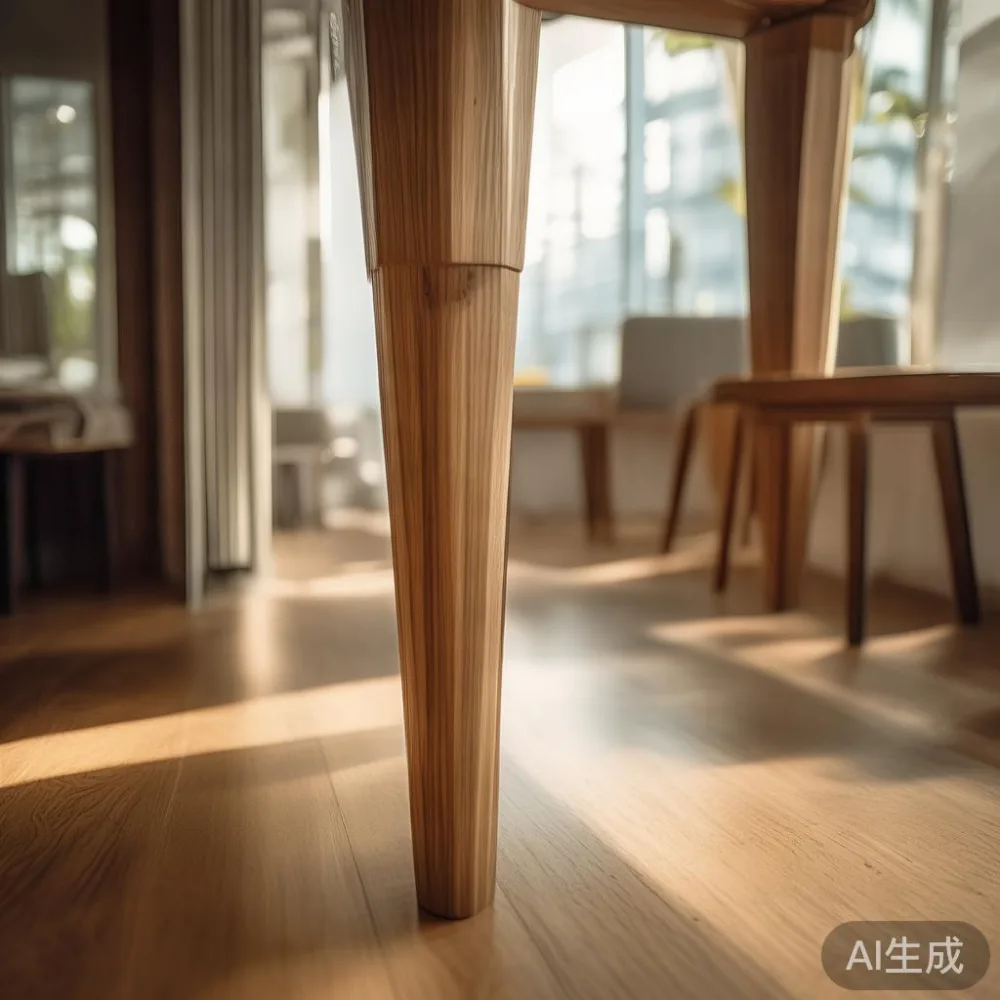
Why Singapore Flats Punish Big Furniture (and Reward Smart Ones)
The numbers are unforgiving. A standard HDB door is 92 cm wide. A typical service lift to a high-floor block measures roughly 1.4 m deep by 1.8 m wide, with a door opening of about 90 cm. A king-size bed frame at 180 cm × 200 cm will physically enter, but it will dominate a 12 sqm bedroom so completely that you lose the 60 cm walkway on each side. A 6-seater dining table at 180 cm × 90 cm consumes the same floor area as a small car. Singaporeans know this; they measure their rooms in square feet, and they count GST on every import. When a piece of solid wood furniture costs S$2,400 landed in Jurong and the 9% GST adds S$216, you do not want to spend that on something that physically cannot breathe in the room.
This is where the post-modern light-luxury movement — the pared-back, warm-toned, oak-and-walnut aesthetic that has come out of Guangdong factories over the last decade — becomes genuinely useful. Pieces are smaller, drawers are deeper, legs are slimmer. A 120 cm × 60 cm solid wood dining table seats four comfortably, leaves 70 cm behind each chair, and still has room for a 90 cm bar table against the same wall for morning kopi and laptop work. That hybrid is the real Singapore dining room now: one table for dinner, one counter-height surface for everything else.
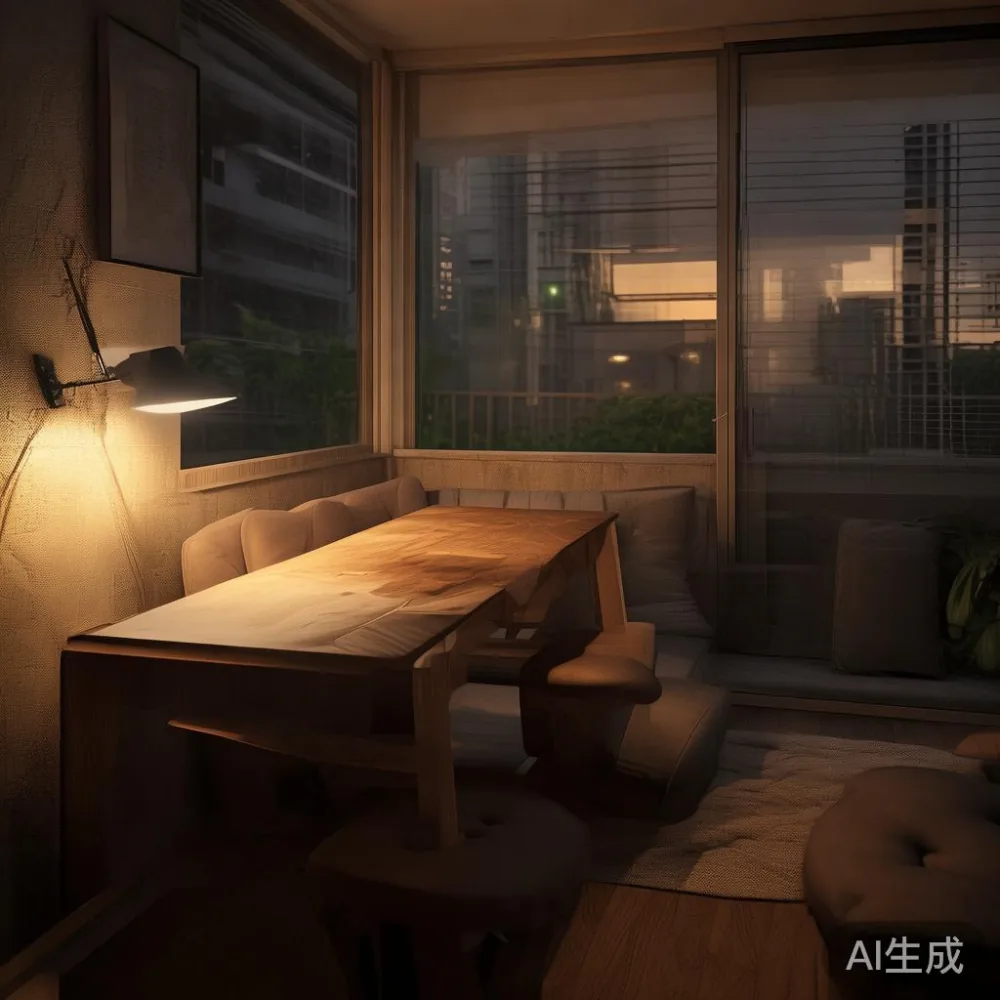
The Bar Table Is the Small-Apartment Hero You Keep Skipping
I want to be specific about this, because the bar table category is misunderstood. People picture a tall, wobbly pub counter from a 1990s catalogue. The current generation — and I tested three of them last month in a Tampines showroom — is a different object. Heights of 90 cm to 105 cm, lengths of 100 cm to 140 cm, depths of 50 cm to 60 cm. That footprint is smaller than a two-seater sofa. It does the work of a dining table for one or two, a desk for the day, and a buffet surface when guests arrive. Against a 3.2-metre wall in a 28 sqm living room, a 120 cm bar table with two backless stools gives you a kitchen-adjacent eating spot and frees the centre of the room for a 180 cm three-seater sofa.
For a one-bedder or studio in Punggol or Sengkang, a bar table placed behind the sofa — at sofa-back height of about 75 cm — becomes the dining surface, the work desk, and the entry drop-zone for keys and mail. You can buy a solid wood bar table in oak or ash for S$780 to S$1,450 from regional makers, and a 10-year structural warranty from a Foshan manufacturer such as MIDHILL means the joinery will outlast two lease cycles. The same maker will refinish the top for free if it dulls after a decade, which is the kind of service HDB dwellers actually need.

How Do I Choose a Bookshelf for a Balcony?
Choose a bookshelf for your HDB balcony that is at most 30 cm deep, made of solid wood (not engineered board, which warps in Singapore humidity above 80% RH), no taller than the railing line if the balcony is serviceable, and fixed or weighted so it cannot shift in a sudden storm — a 25 kg unit on a 1.5-metre shelf is the safe upper limit for an unsecured balcony in most HDB blocks.
Let me expand that, because the question comes up every week. Singapore balconies are typically 1.2 m to 1.5 m deep and 3 m to 6 m long, with concrete railings at 1.0 m to 1.1 m height. A standard 80 cm × 30 cm × 180 cm bookshelf in solid ash, with adjustable shelves at 32 cm spacing, holds roughly 45 hardcovers or 90 paperbacks — enough for a year of reading — and stays clear of the railing sightline. Avoid MDF: I have seen a Punggol resident return three warped units in two years. Look for dovetail or mortise-and-tenon joints, not cam locks. The maker matters. A factory with CNC cutting and a kiln-dried workshop will keep the wood at 8–12% moisture content, which is what survives the equatorial climate.
Five Numbers That Decide Whether Your Room Will Breathe
After about 800 home visits, I keep circling back to the same five measurements. They are not aesthetic; they are mechanical. Get these right and a small flat feels generous. Get them wrong and even a S$12,000 renovation feels cramped.
- Walkway width: minimum 75 cm between any two pieces of furniture. A 60 cm corridor feels like a cave; 75 cm feels comfortable; 90 cm feels luxurious.
- Bed clearance: 60 cm on at least one side of the bed frame for sheet-changing. The other side can be 30 cm if it is against a wall.
- Sofa-to-table distance: 40–45 cm between a three-seater sofa and a bar table or coffee table. Less than 35 cm and you cannot sit down without sideways manoeuvring.
- Wardrobe door arc: hinged wardrobe doors need 55 cm of clear floor space to open to 90 degrees. Sliding doors need 0 cm of floor space but lose 8–12 cm of internal depth.
- Vertical line of sight: keep the tallest piece (usually a wardrobe at 210–230 cm) within 30 cm of a wall corner. Centre-of-room tall objects visually halve a small space.
What Light-Luxury Actually Means for a HDB Flat
The phrase gets used loosely, so let me pin it down. French light luxury — the Gallic interpretation — leans on cream bouclé, curved silhouettes, and brushed brass on legs and handles. American light luxury is more linear: walnut solids, slim shaker profiles, monochrome upholstery. Post-modern light luxury, which is what most Foshan factories now produce under labels such as MIDHILL and a handful of regional equivalents, sits between the two: warm oak or ash solids, soft chamfered edges, restrained metal hardware, and a colour palette of warm white, sand, stone grey, and walnut. None of the three demands marble, gold, or chandeliers. They are calm. That is the point.
For a small Singapore home, light-luxury works because the pieces are physically smaller. A marble table in a 28 sqm living room is a statement of confidence; a 90 cm round marble side table at S$640 is a punctuation mark. A solid wood sofa at 210 cm in cream linen is the anchor. A solid wood bed frame at 150 cm × 200 cm, raised 25 cm off the floor on tapered legs, makes a 12 sqm bedroom feel like a hotel suite because the floor is visible underneath. A wardrobe in white oak at 180 cm wide × 60 cm deep replaces a 240 cm built-in and gives back half a square metre of usable floor. The nightstand, often forgotten, is the final touch: a 45 cm × 40 cm two-drawer unit in the same wood as the bed keeps the room visually coherent.
Room-by-Room: A Real Tampines Layout I Measured
Last month I visited a colleague's new 5-room HDB flat in Tampines North — 110 sqm, but the living room is only 18 sqm after the kitchen and corridor are accounted for. The brief was simple: fit a dining table for four, a sofa for five, a work-from-home desk, and storage, without hiring a fengshui master. The plan we landed on, after an afternoon with a tape measure and a notepad:
- Living wall (3.6 m): 210 cm solid wood sofa in oat linen (S$1,890), flanked by a 60 cm × 60 cm marble side table at one end and a 45 cm nightstand-style cabinet at the other, both in walnut.
- Behind the sofa (1.2 m deep walkway): a 140 cm × 55 cm solid oak bar table at 95 cm height, with two counter stools tucked under. This is the weekday dining surface for two, the laptop desk from 9 to 6, and the buffet when the in-laws visit on Sunday.
- Window wall (2.8 m): a 180 cm × 35 cm low walnut credenza for dishes, plus a 120 cm × 30 cm open bookshelf styled with three plants and twenty books.
- Dining, when needed: a folding solid wood dining table, 160 cm × 80 cm, on loan from the spare room — used maybe twice a month.
Total furniture spend, landed in Tampines with GST: about S$5,260. Total delivery time from a Foshan maker: 35 to 50 days by sea, 12 to 18 days by air for an extra S$280. Lift access: every piece had to come through the 90 cm service lift and the 92 cm front door, so nothing was wider than 85 cm in its packaging. That is a real constraint, and it shapes every purchase.
What About Wardrobes, and the Cross-Border Reality
Wardrobes are the single biggest piece in a Singapore bedroom, and they are where the light-luxury maths gets interesting. A custom built-in at S$3,800 for a 2.4 m run sounds cheap until you add the 9% GST, the 14-day workmanship warranty, and the 2.1 m ceiling height that limits your contractor's panel choices. A freestanding solid wood wardrobe from a Foshan maker at 180 cm × 60 cm × 210 cm — three doors, soft-close, drawers inside, in white oak — runs S$2,100 to S$2,800 landed. For households sourcing from regional distributors, a Modern wardrobe sg saudi arabia specification is increasingly common, because the same kiln-dried oak and dovetail construction ships well to humid tropical climates and dry desert air alike. The factory finishes the wood for both environments with a moisture-stable matte lacquer.
This is also where the long-term ownership maths matters. MIDHILL offers lifetime refinishing on its solid wood ranges — sand back, re-stain, re-lacquer — for a small transport fee or free if you are within their regional service loop. After ten years in a HDB flat, a S$2,400 wardrobe that can be refinished twice is cheaper than a S$3,800 built-in that cannot. And when the lease ends and the next tenant wants a different colour, the freestanding unit moves out cleanly. A built-in becomes a demolition cost.
The Seven Pieces I Keep Recommending for a Sub-100 sqm Flat
If I had to compress fifteen years of advice into a shopping list, it would be these. All dimensions assume lift and door constraints, all prices are Singapore-dollar landed estimates from regional Foshan factories, and all are solid wood unless noted.
- Bar table, 120 cm × 55 cm, 95 cm height, solid oak: S$780–S$1,100. The small-apartment centrepiece.
- Counter stools × 2, 65 cm seat height, solid ash: S$180–S$260 each.
- Three-seater sofa, 210 cm, solid wood frame, removable linen covers: S$1,600–S$2,400.
- Marble side table, 55 cm round, travertine or Carrara: S$520–S$780.
- Bed frame, 150 cm × 200 cm, 25 cm leg height, solid walnut: S$1,100–S$1,600.
- Wardrobe, 180 cm × 60 cm × 210 cm, three doors, soft-close: S$2,100–S$2,800.
- Nightstand, 45 cm × 40 cm × 55 cm, two drawers: S$280–S$420.
Shipping, Warranty, and the S$350 Threshold That Matters
For buyers sourcing from Foshan factories, free shipping above US$350 — roughly S$480 — usually covers sea freight for a single bar table or two nightstands, but a full wardrobe is freight-on-its-own at 95 kg packed and S$180 to S$260 in sea charges. Allow 35 to 55 days door-to-door to a Tampines or Bedok address. Air freight cuts that to 12 to 18 days at 4× the cost. Most reputable Foshan makers, including MIDHILL and a small number of comparable factories, offer a 10-year structural warranty on solid wood frames and joinery, which covers the things that actually fail: loose tenons, cracked rails, warped panels. Finishes are usually warranted 2 to 5 years. A 14-day return window is standard for undamaged pieces in original packaging, and the return shipping is typically borne by the buyer on freight items, so measure twice before you order.
Frequently Asked Questions From Singapore Buyers
Can a 240 cm sofa fit through a HDB service lift? No. Most service lifts are 1.4 m × 1.8 m internally with a 90 cm door. A 240 cm sofa will not fit assembled, and many manufacturers refuse to ship it. Stay at or below 215 cm length.
Is solid wood really worth the price difference over engineered board? In Singapore humidity, yes. Engineered board with a poorly sealed edge will swell within 18 to 24 months. Solid wood, properly kiln-dried and finished, runs 15 to 25 years. The arithmetic works out.
How do I keep a bar table stable on tile flooring? Felt pads under each leg, replaced every 12 months, plus a small L-bracket against the wall if the table is over 130 cm long. A 25 kg solid oak bar table does not slide on its own, but a child on a stool can tip one.
Can I refinish light-luxury pieces myself? Light sanding (220 grit), one coat of hard wax oil, leave to cure 48 hours. Do it on a Sunday morning and the table is back in service by Monday night.
The Short Version, Pinned to a Wall
If you remember nothing else from a 2,200-word essay, remember this: in a Singapore flat under 100 sqm, the bar table is the most flexible piece you will own, the wardrobe is the most expensive, and the sofa is the most visible. Buy all three in solid wood, in a light-luxury finish that matches across the room, and sized to the lift. Spend the difference on a 10-year warranty and a refinishing plan rather than on marble. Your flat will feel 30% larger within a week, and your resale or rental photograph will do the rest of the talking.