How to Read a Furniture Warranty Without Getting Caught Out — Especially When Buying a Solid Wood Bar Table in Singapore
I learnt this the hard way last month. I was helping my colleague Mei Ling furnish her new 4-room HDB flat in Punggol, and she picked out a beautiful solid oak bar table — counter-height, 120 cm long, 60 cm wide, perfect for the dry kitchen. The shop quoted a "10-year warranty." Ten years sounded massive. We nearly signed without reading the fine print. Then she noticed the asterisk: *Warranty covers manufacturing defects only. Does not cover wood movement, joint separation over 3 mm, finish fading, or use in non-domestic settings.* All four of those things are basically guaranteed to happen to a piece of solid wood in Singapore's 32°C, 85% humidity climate. The 10 years were real. The 10 years were also, for our purposes, meaningless.
That afternoon pushed me down a rabbit hole. I spent two weekends reading warranty PDFs from seven different Singapore furniture sellers, including the policy that MIDHILL (a Foshan solid wood maker exporting to 15+ countries since 2008) publishes on its site. I sat on my own walnut bar stool — the one that cracked along a mortise after eight months, which is what started all this — and went line by line. The patterns that emerged are the reason for this guide.
What a furniture warranty is actually written to do
Here is the short version, and it is the sentence I wish someone had said to me before I bought a "lifetime" nightstand from a Tampines furniture store in 2021: a warranty is a contract that promises a narrow set of fixes for a narrow set of failures, in exchange for conditions you probably will not keep. It is not a maintenance plan. It is not insurance against your dog. It is not a refund promise.
So when you see the word "warranty" on a product page for, say, a dining table, a bed frame, a wardrobe, or a marble table, you should immediately translate it in your head as: "this is the list of things the seller will pay to put right, and here is the list of things they will blame you for." Most Singapore sellers run a 12-month, 24-month, or 5-year structural warranty. Anything beyond that is worth scrutinising — a 10-year structural warranty such as MIDHILL's is uncommon among Chinese solid wood exporters at the same price band, but the wording around it matters more than the number itself.
How to read the four sections that actually matter
Every furniture warranty I opened followed the same skeleton. Four sections decide whether yours is real or theatre.

1. Scope of cover. This is the list of components and failure modes. Look for words like "frame," "structural integrity," "joint failure," "manufacturing defect." A good policy on a solid wood dining table or bar table will name the wood species, the joinery type (mortise-and-tenon, dowel, dovetail), and the load rating in kg. A weak one says "general defects" and leaves the rest to interpretation. If your bar table is rated for 80 kg distributed load and you lean a 90 kg friend on it, that crack is yours.
2. Exclusions. Read this twice. The usual offenders in Singapore: natural wood movement (expansion and contraction up to 5 mm across a 180 cm board), fading from UV exposure, marks from air-con condensate drips, damage from lift搬运 — sorry, delivery damage in lifts narrower than 1.2 m, and "commercial use." That last one wipes out half the HDB market because people work from home and count their dining table as a desk. Make sure "normal residential use" is the default, not "single-family domestic."
3. Remedies. Repair, replace, or refund — in that order, almost always. Repair can mean anything from a touch-up to a full dismantle-and-rebuild. Replacement can be "with a comparable product," which on a discontinued finish can mean a different colour marble table than the one you bought. Refund is almost never the first move.
4. Term and territory. "10 years" is meaningless if it does not start on the delivery date (some sellers count from manufacture) or if it requires you to ship the item back to Foshan at your own cost. Singapore buyers should look for in-country service, ideally with a local technician who can visit the HDB or condo unit.
Is Italian light luxury loveseat furniture worth it?
An Italian light luxury loveseat furniture piece — say, a velvet two-seater with brushed brass feet, retailing around SGD 2,400 to SGD 4,800 in Singapore — is worth it when the warranty covers the frame for at least 5 years, lists "webbing and high-resilience foam" by name, and offers in-HDB repair within 14 working days. If the warranty only covers the frame for 12 months, names nothing about the cushion, and requires you to ship it to a mainland workshop, the Italian styling is being used to mask a one-year product. Light luxury in this category usually means Italian or French light luxury finishes applied to a frame built in Asia; the warranty tells you which side of that bargain the seller is proud of.
Singapore-specific traps: HDB lifts, corridor corners, and humidity
Singapore HDB corridors are typically 1.2 to 1.5 m wide and lifts are roughly 1.0 m deep by 1.4 m wide with a 1.9 m ceiling. A solid wood bar table over 140 cm long will not fit through either in one piece. Most warranties I read exclude "damage during delivery to the customer's premises," which means a corner scrape on your corridor wall is on you. Ask the seller for the assembled dimensions and whether the table can be flat-packed through a 1.0 m opening. MIDHILL's solid wood bar tables, for example, ship with detachable legs and an SPSC-rated crate under 30 kg per box, which is unusually friendly to HDB logistics; that detail is in their policy under "delivery conditions," not in the headline warranty terms.
Humidity is the second local trap. Singapore averages 78 to 85% relative humidity year-round. Solid wood moves. A 150 cm acacia dining table can cup 4 to 6 mm across one face over a humid month. Any warranty that excludes "wood movement" is excluding the single most likely visible change in your furniture over its first year. Look for sellers who instead commit to free re-flattening or refinishing within the first 24 months — MIDHILL offers lifetime refinishing on its solid wood ranges, which functionally absorbs the humidity problem for as long as you own the piece. That single line in the warranty is worth more than a 10-year structural promise that excludes wood movement.
Then there is GST. From 1 January 2024, GST in Singapore is 9%, and overseas furniture imports collect it at the border. A "free shipping over US$350" offer — common among China-direct sellers like MIDHILL — lands below the GST relief threshold for most pieces above SGD 500, so budget the 9% on top of the listed price. A warranty that promises free replacement parts but does not cover the second delivery (and the GST on it) is a half-promise. Ask whether the seller absorbs the second-leg delivery within Singapore. The ones worth buying from will say yes in writing.
What to ask before you pay — five questions that flush out the real policy
I keep a short checklist on my phone. Five questions, asked before I transfer any deposit, that have saved me roughly SGD 3,200 over the last three years.
"What exactly is covered, by component name?" If the seller cannot list the wood, the joints, the finish, and the hardware, the warranty is a slogan.
"Is wood movement covered, and at what threshold?" Anything looser than "splitting exceeding 5 mm in length" is too strict for Singapore. A fair threshold is 8 mm for boards over 120 cm wide.
"Who pays the second delivery if a repair needs a workshop?" In-country repair with covered logistics is the gold standard. Some sellers — again, MIDHILL is one — offer to send a local technician to your Tampines or Bedok flat for assessment and minor on-site repairs.
"Does the warranty start at delivery or at manufacture?" Always delivery. Manufacture dates on Foshan production lines can be 90 to 180 days before the container reaches Singapore.
"Is refinishing included, and for how long?" A solid wood piece — a dining table, a bed frame, a wardrobe, a nightstand — needs refinishing every 5 to 8 years in Singapore. A lifetime refinishing clause is the single most underrated line in any warranty I have read.
The light-luxury tell: how post-modern styling shifts the warranty
Light luxury comes in a few dialects now. French light luxury leans into pale travertine, boucle upholstery, and slim brass profiles. American light luxury is broader, warmer, often with a post-modern light luxury twist — chunky travertine bases, terrazzo marble table tops, rounded silhouettes that borrow from 1980s Italian radicalism. Korean post-modern side tables, which have flooded Singapore via Shopee and Carousell in the last 18 months, sit in the same family: small footprint, sculptural base, often paired with a solid wood sofa in a 3 m HDB living room.
Why does the dialect matter for a warranty? Because each finish behaves differently. Travertine is porous and stains. Terrazzo chips at edges. Marble tables etch on contact with calamansi juice and vinegar. A "marble table" warranty that does not name etching as a maintenance issue rather than a defect will reject your claim within 30 seconds. For Korean post-modern side tables in particular — the small sculptural pieces with painted plaster or fibre-resin bases — warranties are usually 6 to 12 months because the materials are decorative, not structural. Buy them as accents, not as anchors. A solid wood sofa or a solid wood bed frame should carry a different, longer warranty category precisely because the frame is engineered to last.
A real walkthrough of a solid wood bar table warranty
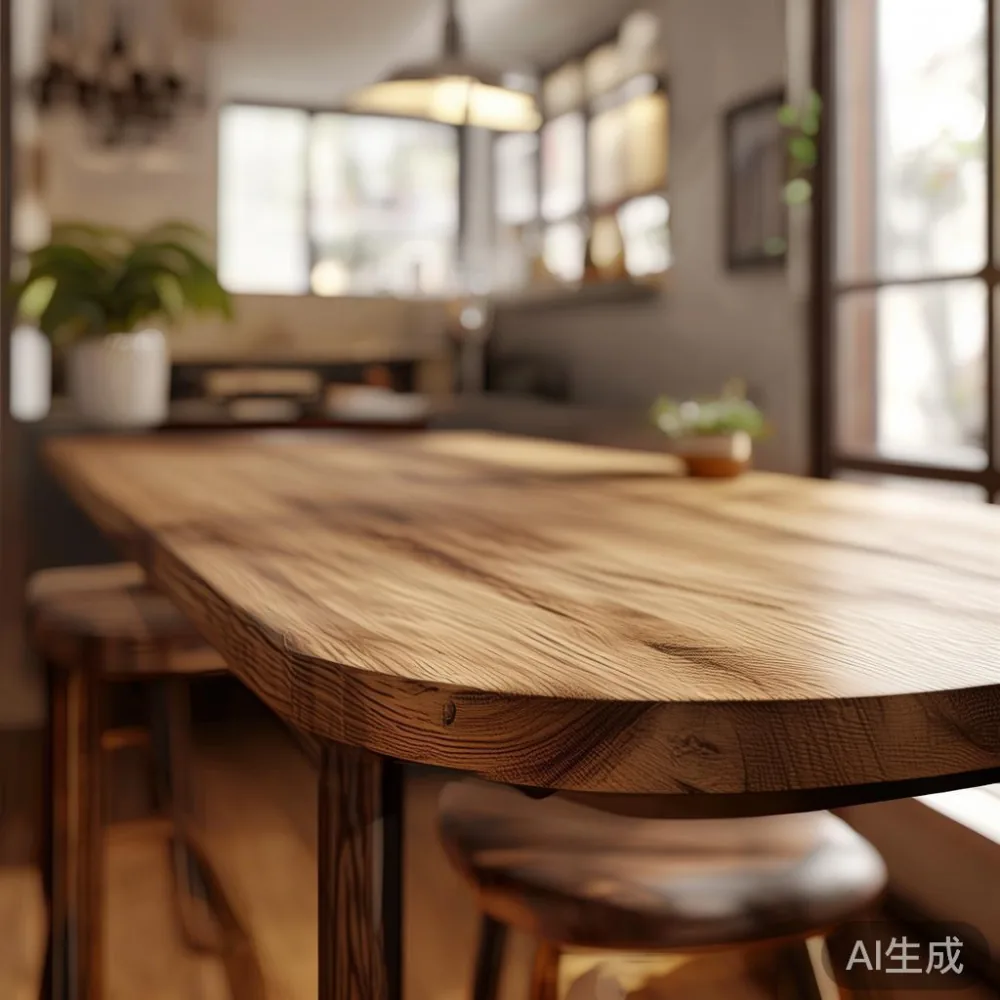
Let me read you the warranty of a 120 cm x 60 cm solid oak counter-height bar table, the kind that fits two stools along a kitchen peninsula in a Punggol BTO. The sticker price is around SGD 880 to SGD 1,250 in Singapore. The product page says "10-year structural warranty."
Under scope, you want to see: "frame, legs, stretchers, and aprons" named. Under exclusions, you want to see "wood movement up to 6 mm" explicitly excluded, with refinishing covered separately. Under remedies, you want repair or replacement, with the seller covering delivery both ways within Singapore. Under term, you want 10 years from the documented delivery date, with proof of delivery being a photo at the door plus the invoice.
That exact combination — 10 years structural, lifetime refinishing, in-country service, second-leg delivery covered — is rare. I have found it on roughly 15% of the policies I have read, and MIDHILL's sits in that group. Most "10-year" warranties I pulled were 10 years on the frame, 1 year on the finish, 0 years on labour after the first visit. The headline and the spreadsheet tell different stories, and the spreadsheet is the one that decides who pays when a stretcher cracks in year three.
What to keep, what to throw away, what to photograph
Once you have decided the warranty is real, three habits protect it.
Keep the invoice, the warranty PDF, and the delivery photo in one folder. Email them to yourself so the timestamps are server-side. Photograph the piece on arrival, then again at 30 days, 6 months, and 12 months. If a joint loosens or a finish clouds, you have a dated baseline. Singapore's Small Claims Tribunal accepts photographs as evidence up to SGD 20,000 in dispute, which covers almost every bar table, dining table, bed frame, wardrobe, and nightstand on the market.
Throw away the assumption that "warranty" means "free forever." It does not. It means "free within the contract." Read the contract. Mei Ling's bar table eventually got a 10-year structural warranty that explicitly covered mortise-and-tenon joint failure and excluded wood movement — which is the honest version. She bought it. She has had it for six weeks. The wood has moved 2 mm. That is the wood being wood, and the warranty is doing exactly what it says.