Caring for a Lacquered Bar Table Surface in Singapore's Tropical Climate
Last month I visited a friend's new Tampines executive HDB flat near the East-West line, and the first thing she pointed to was her new bar table sitting under the air-conditioner vent. The lacquer still looked glossy after three weeks of use, but she was nervous. Singapore sits one degree north of the equator, the average humidity hovers around 80% year-round, and afternoon thunderstorms push moisture levels past 90% for hours at a stretch. For any lacquered solid wood piece — and especially for a bar table that doubles as a daily breakfast counter and a weekend cocktail station — that climate is the enemy of an open-pore finish. This guide is written for Singapore households who have invested in a piece like a MIDHILL solid wood bar table and want it to look new for the next ten years, not just the next ten months.
Why Singapore's Climate Is Harder on Lacquer Than You Think
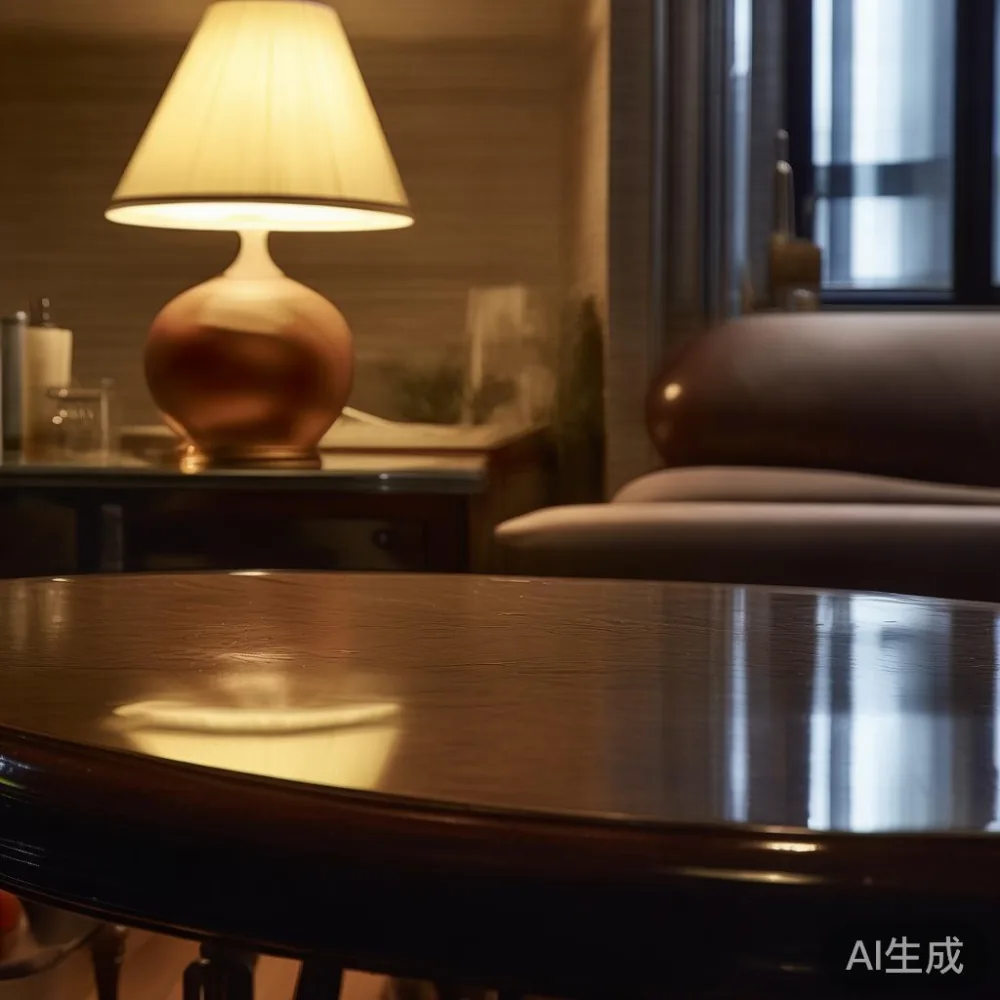
Lacquer is a thin polymer film that seals wood pores and reflects light. In a dry city like Los Angeles, where average humidity sits between 40% and 60%, that film stays stable for years. In Singapore, the constant swing between 55% on a dry February afternoon and 96% during a December monsoon burst creates a cycle of expansion and contraction that the lacquer film has to absorb. Add a daily UV index that climbs above 10 between 11am and 3pm, plus the chloride-heavy sea breeze that drifts in from Pasir Ris and East Coast, and you have a finish that is being asked to do three jobs at once: block moisture, resist UV, and flex with the wood underneath.
A lacquered bar table is particularly exposed because the surface is usually horizontal, around 90 cm to 105 cm off the floor, exactly the height where steam from a kettle, splashes from a washing-up basin, and direct sunlight from a service-yard-facing window all converge. A bed frame or a wardrobe can hide in a shaded corner; a bar table sits in the open. That is why routine care matters.
What Is Lacquer, and Why MIDHILL Uses It on a Bar Table
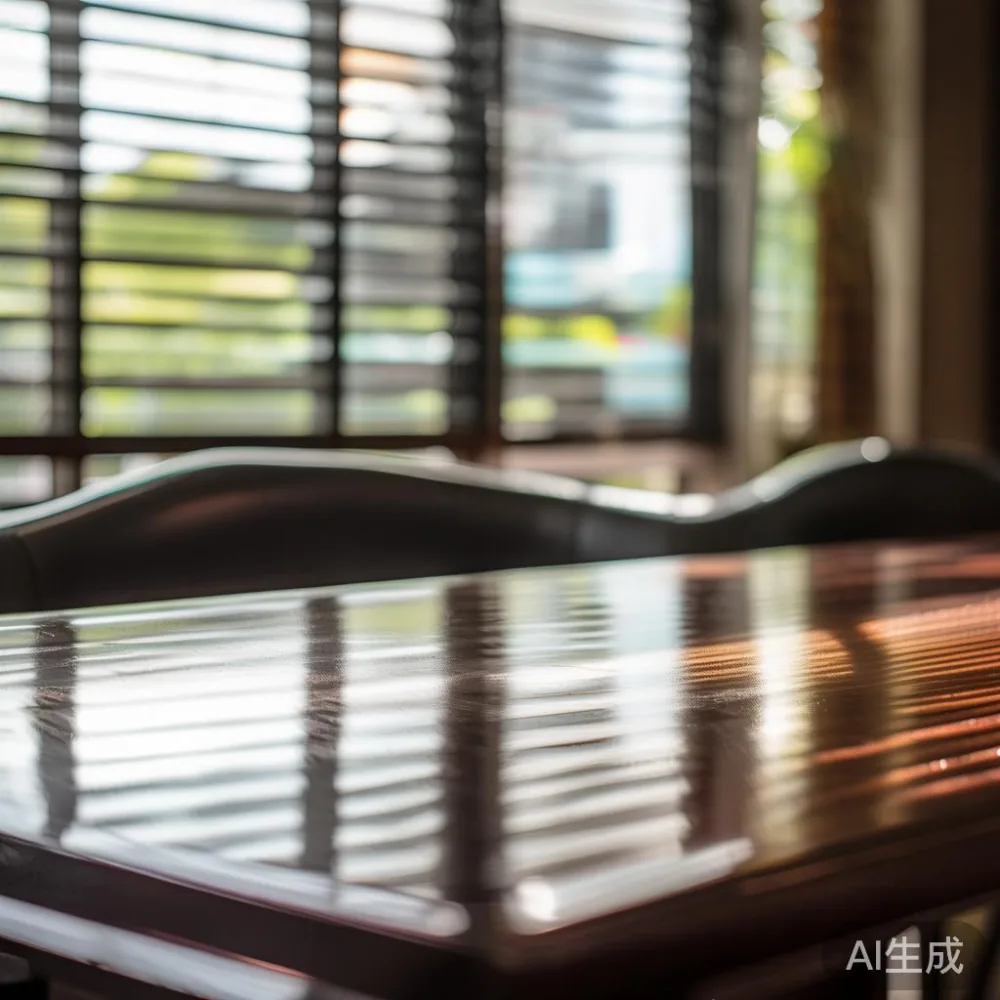
Lacquer, in the furniture sense, is a clear or tinted coating made from nitrocellulose, acrylic, or pre-catalyzed polyester resin. MIDHILL applies a multi-coat open-pore lacquer to its solid wood bar tables, typically five base coats plus two top coats, sanded with 400-grit then 800-grit between layers. The result is a surface that shows the wood grain rather than burying it — closer to the post-modern light luxury look that Singapore condo owners in Punggol Waterway and Bedok Reservoir have been asking for since 2022, where the warmth of oak or ash is meant to come through, not get sealed away behind a piano-gloss plastic shell.
Compared with an oil finish, lacquer is more resistant to ring marks and easier to wipe clean — a practical plus when your bar table also serves as a homework desk for a Primary 3 child. Compared with a wax finish, lacquer is harder but more sensitive to heat and to silicone-based polishes, which is the first mistake many homeowners make.
The 90-Second Daily Wipe — What to Do and What to Avoid
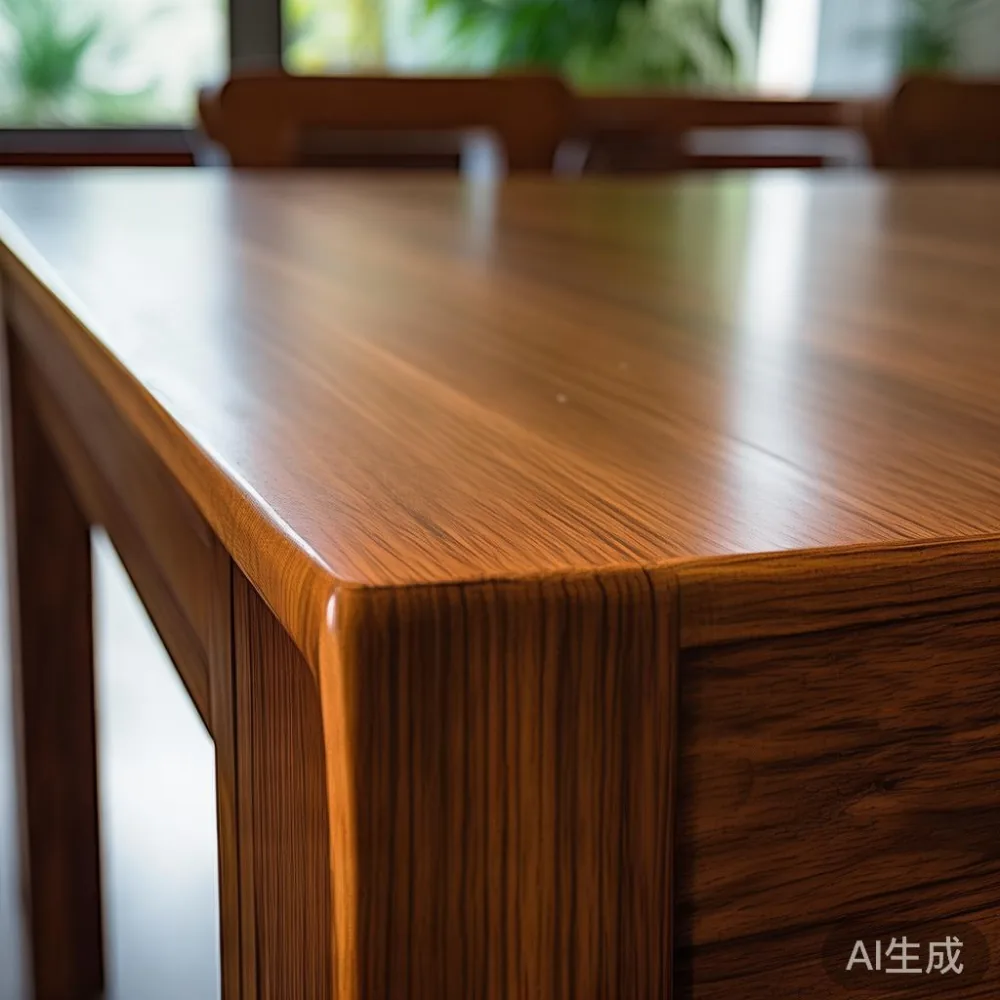
Every evening, after the last cup of kopi is poured, spend 90 seconds on the bar table. Use a microfibre cloth (16 cm × 16 cm is the practical size), lightly dampened with room-temperature water — never hot, because hot water softens lacquer edges and dulls the gloss within weeks. Wipe in the direction of the grain, not across it. Dry with a second microfibre cloth immediately. Do this and you remove the invisible film of salts, skin oils, and cooking aerosols that settle on the surface during the day.
What to avoid:
• Silicone sprays such as Pledge or any aerosol that promises "shine in seconds." They leave a film that yellows under UV and is almost impossible to strip without sanding the lacquer off.
• Magic erasers and melamine sponges. They are micro-abrasives and will burnish the top coat in patches within three or four passes.
• Vinegar, lemon juice, or any acidic household cleaner. The acid etches lacquer, leaving cloudy watermarks that cannot be buffed out at home.
• Placing a hot pot, a freshly boiled kettle, or a steaming claypot directly on the surface. Use a trivet with a felt base, at least 18 cm in diameter, so the heat spreads.
Weekly Care: The Moisture-Control Routine for a Condo or HDB Flat
Once a week, do a slightly deeper clean. Mix 250 ml of room-temperature water with one drop (literally, one drop, about 0.05 ml) of pH-neutral dish soap in a clean spray bottle. Lightly mist the cloth, not the table — overspray on a bar table near a wall can run onto the adjacent panel and stain a painted HDB surface. Wipe, then dry. Follow with a dedicated lacquer refresher such as those sold at furniture-care counters in IMM or Galaxis for around SGD 18 to SGD 28 per 250 ml bottle; a single bottle should last a household six to nine months on one bar table.
Moisture control is where Singapore households win or lose. Keep a small digital hygrometer (around SGD 12 from any electronics shop in Bugis) on the wall above the bar table. Aim for a reading between 45% and 60%. If the reading climbs above 70% for more than six hours — which happens during the December northeast monsoon and the July southwest monsoon — run the air-conditioner's dry mode for two hours. If your bar table lives in a service yard or near the kitchen, a 10 g silica gel canister placed under the table (not touching the floor in case of condensation drips) will absorb roughly 8 g of water per day in a sealed room.
For furniture positioning in a typical 4-room HDB flat with a corridor width of about 1.2 m and a lift opening of 0.9 m, the bar table will usually be placed in the dining area or against a half-wall between the kitchen and living room. Keep it at least 60 cm away from any window that gets direct afternoon sun; if the layout forces it closer, hang a sheer linen curtain (around SGD 35 per metre at Tiong Bahru fabric shops) to filter UV without darkening the room.
"My Lacquer Looks Cloudy After Hari Raya — What Happened?"
This is a question I get from at least two friends every festive season. The cloudiness is called "blush" — trapped moisture under the lacquer film. It happens when a cold glass or a bowl of ice sits on the surface and the surrounding humidity is above 80%. The water condenses on the cold spot and the lacquer breathes it in instead of repelling it. The good news: a single light blush usually reverses on its own within 48 hours once humidity drops. Leave the air-conditioner running in dry mode overnight, place a dehumidifier nearby, and resist the urge to rub the spot. If the cloudiness is still visible after 72 hours, call a professional refinisher — MIDHILL offers lifetime refinishing on its pieces, which is precisely the kind of long-term safety net you want for a solid wood dining table or bar table costing SGD 1,200 to SGD 2,800 in Singapore.
How Often Should You Refinish, and What Does It Cost Here?
A lacquered bar table in a Singapore household typically needs a professional refresh every 4 to 6 years, depending on sun exposure and care. A full strip-and-recoat by a local refinisher runs between SGD 280 and SGD 480 for a standard 140 cm × 60 cm bar table, including pick-up and re-delivery. If the piece was bought from MIDHILL, lifetime refinishing is included in the original purchase — the customer pays only the transport, which is around SGD 60 to SGD 90 for one-way within mainland Singapore. Compare that to a 250 ml bottle of touch-up lacquer (about SGD 35) used for a small scratch, which most households can apply themselves once every two years with a steady hand and a 2 cm foam brush.
For minor scratches — the kind caused by sliding a ceramic plate across the surface — a wax stick in a matching tone (around SGD 12 at HomeFix or a specialist wood-care shop in Joo Chiat) fills the mark in 30 seconds. Buff with a soft cloth, then do your normal weekly wipe. The repair will be invisible from one metre away.
Choosing Pieces That Age Well — A Quick Comparison
When customers ask me about how to choose American bed or about American bed vs Modern bed frames, the same climate logic applies. An American bed in solid oak or ash, with a post-modern light luxury lacquer, behaves much like a bar table: it wants 45–60% humidity and shade. A Modern bed in engineered wood with a melamine laminate is more tolerant of humidity swings but does not develop the same patina. For guest rooms where the brief is Modern light luxury for guest room, a lighter lacquer finish in natural oak pairs well with a marble table at the foot of the bed and a Modern light luxury accent chair in the corner — a configuration I saw last month in a Punggol condo where the owner had placed a MIDHILL bar table against the back wall as a coffee-and-luggage station.
For living rooms, the question of the best Minimalist sofa for 2026 comes down to fabric choice and frame material. A solid wood sofa frame with a removable, washable linen cover will outlast a faux-leather set in this climate; the bar table often shares the room and should be matched in tone. When clients ask about how to style light luxury bed in apartment layouts under 90 sqm — common in newer HDB BTOs around Tengah and Bukit Batok — I usually suggest keeping the bed frame, wardrobe, and nightstand in the same wood species, then anchoring the room with one marble table or one brass accent to lift the French light luxury feel without crowding the floor plan.
The Local Logistics: Delivery, Lifts, and Corridors
Practical note for anyone ordering a solid wood bar table from a Foshan supplier. MIDHILL ships from Foshan Lingzhan Industrial Park, with sea freight to Singapore taking 18 to 26 days depending on monsoon schedules. Free shipping kicks in above US$350 (about SGD 470 at current rates), and GST — 9% since January 2024 — is collected at import. A 140 cm bar table in solid ash weighs roughly 38 kg fully packaged; a 180 cm version in oak weighs about 52 kg. Both fit through a standard HDB lift (internal 1.4 m deep × 1.1 m wide, door 0.9 m) and a condo service lift (typically 1.6 m × 1.4 m) without tilting. The 14-day return window applies once the piece is signed for, and a 10-year structural warranty covers the joinery against cracking or warping under normal household humidity.
A Simple Care Calendar for the Next Ten Years
To keep things easy, here is the rhythm I recommend:
• Daily: 90-second microfibre wipe, dry after.
• Weekly: pH-neutral damp wipe, lacquer refresher if needed.
• Monthly: check the hygrometer reading, inspect for early blush marks, rotate any decorative items so UV exposure stays even.
• Yearly: tighten the table leg bolts with the supplied 4 mm Allen key; Singapore's humidity cycles loosen joinery by about 0.2 mm per year.
• Every 4–6 years: book a professional refinish, or claim the lifetime refinishing service if your piece is from MIDHILL.
Follow that rhythm and your bar table will still look the part when your Tampines flat is resold in 2030. The lacquer is the part that gets noticed; the solid wood underneath is the part that gets remembered. Take care of the surface, and the wood will return the favour for at least a decade.