Bar Table: What Actually Drives the Price of Solid Wood Furniture in Singapore
I learned this the slow way. Two years ago I bought a "solid oak" dining table from a Jurong warehouse clearance. SGD 480, cash only, no paperwork. Six months later the top started cupping and the legs loosened. The supplier had vanished. The piece was not furniture; it was a lesson written in three centimetres of MDF with a 0.6 mm oak veneer. I now keep the photographic evidence on my phone as a reminder of what "affordable" actually costs.
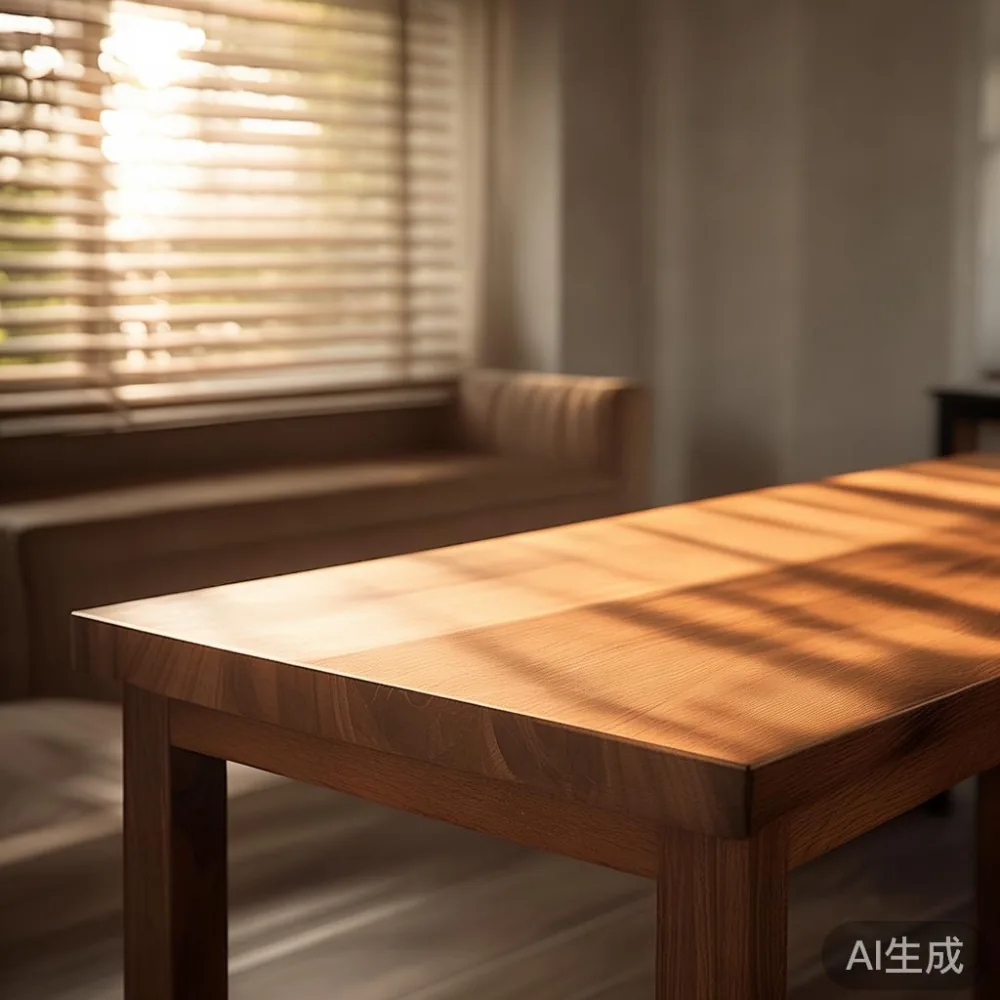
That mistake pushed me into proper factories, proper joinery, and eventually into a long conversation with the team at MIDHILL in Foshan. They ship to Tampines, Bedok, and Punggol regularly, and their pieces show up in HDB living rooms with the same consistency as my kopi order. After two factory visits and a dozen WhatsApp calls, here is what I now believe controls the price tag on real solid wood furniture, including the bar table category that has quietly become the centrepiece of many Singapore condos.
Is the price tag mostly about the wood, or about everything that touches it?
The honest answer is that wood species usually accounts for only 20 to 35 percent of the retail price of a solid wood piece. A dining table in white oak might retail between SGD 1,800 and SGD 4,200 in Singapore. The same shape in ash or rubberwood sits between SGD 1,200 and SGD 2,600. The wood matters, but the other 65 to 80 percent is a stack of decisions that quietly compound: kiln drying, glue, finish, hardware, joinery, and shipping. Skip any one of them and the price drops; keep all of them and you understand why a "real" table from a Foshan workshop like MIDHILL starts around the SGD 1,800 mark rather than the SGD 500 you saw at the pop-up in VivoCity.
What does kiln-dried wood actually mean for my flat in Tampines?
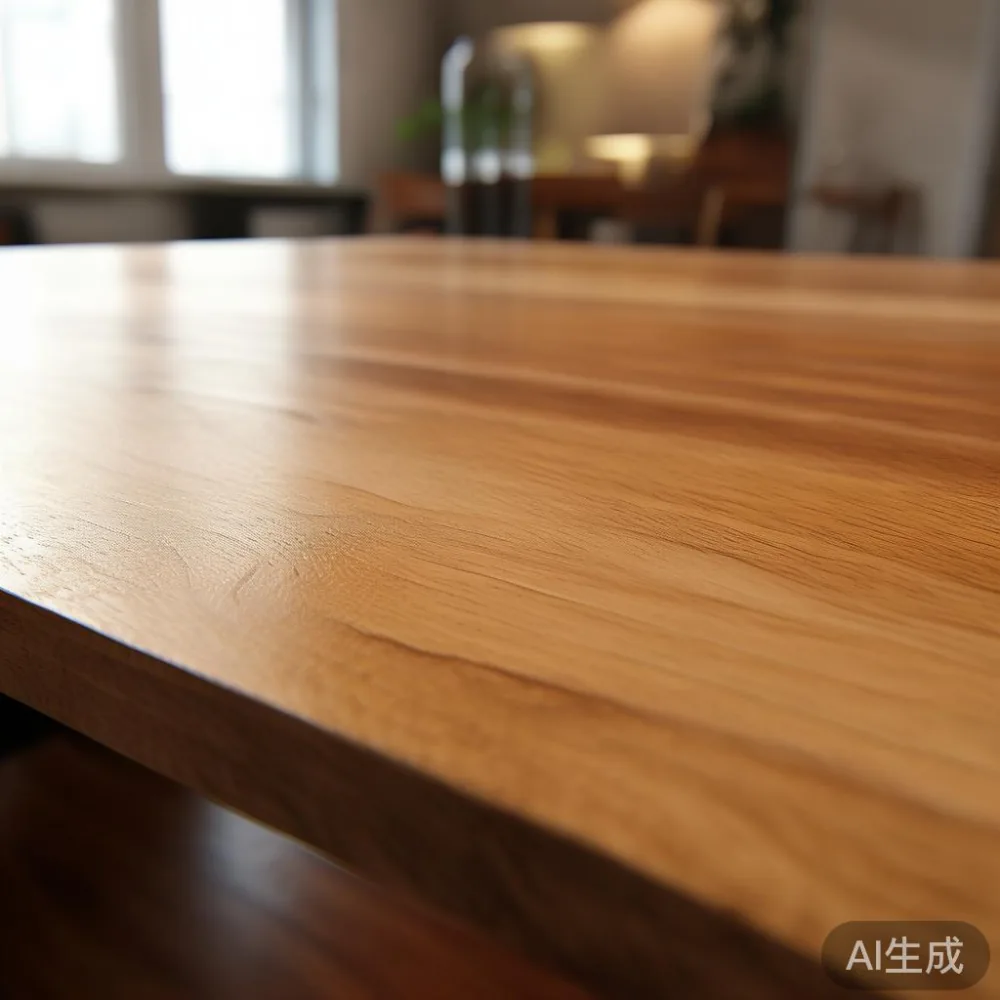
Kiln drying is the controlled removal of moisture from freshly cut lumber, usually down to 8 to 12 percent moisture content for furniture destined for tropical climates. Singapore hovers at 80 percent relative humidity for most of the year, and HDB corridors trap that humidity. If a slab skips proper drying, it will move on you. I watched a workshop in Foshan run a 28-day drying cycle for ash destined for export, then another 7 to 14 days of acclimation in their packing warehouse. The owner told me, "Singapore humidity is brutal. We dry longer than we do for Dubai." A bed frame that arrives with wood at 10 percent moisture and a finish that breathes will sit stable for years. A bed frame that arrives wet will cup, crack, or twist within six months, even if the species label sounds impressive.
How do I style a Japandi nightstand in a small apartment?
Pick a low nightstand between 45 and 55 cm tall, in ash or light oak, with one drawer and one open shelf, then leave a 3 to 5 cm gap between the nightstand and the bed frame so the eye reads the pieces as separate objects. The Japandi formula is roughly 70 percent function, 30 percent empty space, which is the opposite instinct most HDB owners have. In a 4-room BTO at Punggol, I set up a client with a 50 cm ash nightstand on one side and a slim floor lamp on the other, then stacked two books and a ceramic cup on the surface. Nothing else. The room looked 20 percent larger because the floor was finally visible. Pair the nightstand with a matching solid wood bed frame in the same species so the grain reads continuous, and resist the urge to add a marble table or a glass accent piece in the same corner. Stone next to pale ash creates visual weight the room cannot carry.
Which wood species are worth the SGD, and which are marketing?
Four species cover 80 percent of the solid wood market in Singapore right now, and each one has a real personality.
Ash is the honest workhorse. Open grain, light colour, takes a whitewash beautifully, and costs around SGD 1,400 to SGD 2,800 for a six-seater dining table. Sage ash wood dining chairs in this category sit around SGD 280 to SGD 420 each, and they are the chair I have specified most often in 2024 and 2025 because they handle daily family use without drama.
White oak is denser and tighter in grain. It darkens with sunlight, which is a feature if you like warm tones and a flaw if you want a piece to stay the same colour for ten years. Tables run SGD 2,400 to SGD 4,800.
Walnut is the entry into post-modern light luxury territory, the look where one dark piece anchors a pale room. Walnut bedroom sets sit around SGD 4,500 to SGD 9,000 in Singapore, depending on whether you buy the bed frame, two nightstands, and a wardrobe as a set.
Rubberwood is the species the marketing departments love to bury in fine print. It is real solid wood, not engineered, and it is genuinely cheap. A rubberwood dining table at SGD 900 to SGD 1,500 is not a scam if the drying and joinery are correct. If they are sloppy, it is a scam wearing a price tag.
What should I be asking about joinery before I hand over my card?
Ask four questions, and write down the answers.
1. Are the joints mortise-and-tenon, doweled, or screwed? Mortise-and-tenon is the gold standard for a dining table or bar table. Dowels are fine for a wardrobe or a bed frame. Screws alone are acceptable only for knock-down pieces you plan to move often.
2. Where is the glue, and what kind? A bar table or dining table should have glue on every long-grain joint. PVA (polyvinyl acetate) is standard. Hide glue is traditional but moisture-sensitive and a poor choice for Singapore.
3. Is the top a single slab, a glued-up panel, or a veneer? A glued-up panel of 4 to 8 cm strips is the most stable choice. A single slab is beautiful but moves more. Anything under 2 cm labelled "solid" is almost certainly veneered or engineered.
4. What is the finish, and how thick? Conversion varnish, polyurethane, and hardwax oil are all legitimate. What is not legitimate is a piece that has no finish at all, because raw wood in HDB humidity is a maintenance contract nobody wants.
I asked those four questions at MIDHILL on my second visit and the workshop manager answered without pausing, which told me more than the answers themselves. A factory that knows its joinery does not need to consult a script.
Why is shipping from Foshan cheaper than I expect?
Two reasons. First, Singapore is one of the most-logged container ports on earth, so a 40-foot container from Yantian or Shekou to PSA takes 5 to 8 days and costs roughly USD 600 to USD 900 depending on the month. Second, Foshan is the densest furniture manufacturing cluster on the planet, which means a workshop can load a mixed container with bar tables, dining chairs, and bed frames from three different factories in one trip. Consolidated shipping spreads the cost across SKUs, so the per-piece freight for a 35 kg bar table can drop below SGD 80.
MIDHILL offers free shipping above US$350, which on a single bar table clears the threshold comfortably. The lift access matters too: most HDB passenger lifts in Tampines and Bedok blocks built after 2015 measure 1.1 m wide by 1.4 m deep internally, and a bar table top over 200 cm will not fit diagonally. Workshop staff usually confirm dimensions before loading, and a 180 cm top slides in cleanly with 8 to 10 cm of clearance on each side.
How does the 10-year structural warranty actually work?
Read the warranty like a contract, not a slogan. "Structural" usually means the frame, the load-bearing joints, and the major panels. It does not mean the finish, the colour change from UV, or the small seasonal cracks that appear in any solid wood surface over ten years. A proper warranty covers joint failure, wood splitting under normal use, and frame collapse. It does not cover a hot mug ring, a搬家 scratch, or a chair dragged across the top.
MIDHILL's 10-year structural warranty is documented on the invoice, and their lifetime refinishing service is the detail most buyers miss. A solid wood bar table or dining table can be sanded and re-oiled every 7 to 12 years and emerge looking new. Engineered and veneered pieces cannot. That single fact is the reason the per-year cost of a real solid wood table is often lower than the per-year cost of a cheap one you replace twice.
What about GST, customs, and the 14-day return window?
GST in Singapore is 9 percent and applies to the full landed price including shipping for most cross-border furniture imports, although there are personal relief thresholds for very small orders. Reputable Foshan exporters handle the customs paperwork as part of the service and provide a commercial invoice, packing list, and HS code (usually 9403.60 for wooden furniture). On the consumer side, a 14-day return window is standard and usually starts on the day of delivery, not the day of order. Photograph the unboxing. Keep all foam and corner protectors for at least 14 days. If the piece arrives with transit damage, the courier's claim is your friend, and the supplier's goodwill is the second layer.
What does light luxury actually look like on a Foshan price list?
Light luxury is a spectrum, not a single look, and three variants show up regularly in Singapore showrooms.
French light luxury leans on curved silhouettes, cabriole-inspired legs, and pale ash or beech. A French-style solid wood sofa frame with linen upholstery sits around SGD 2,200 to SGD 3,800. The shape does the work, not the ornament.
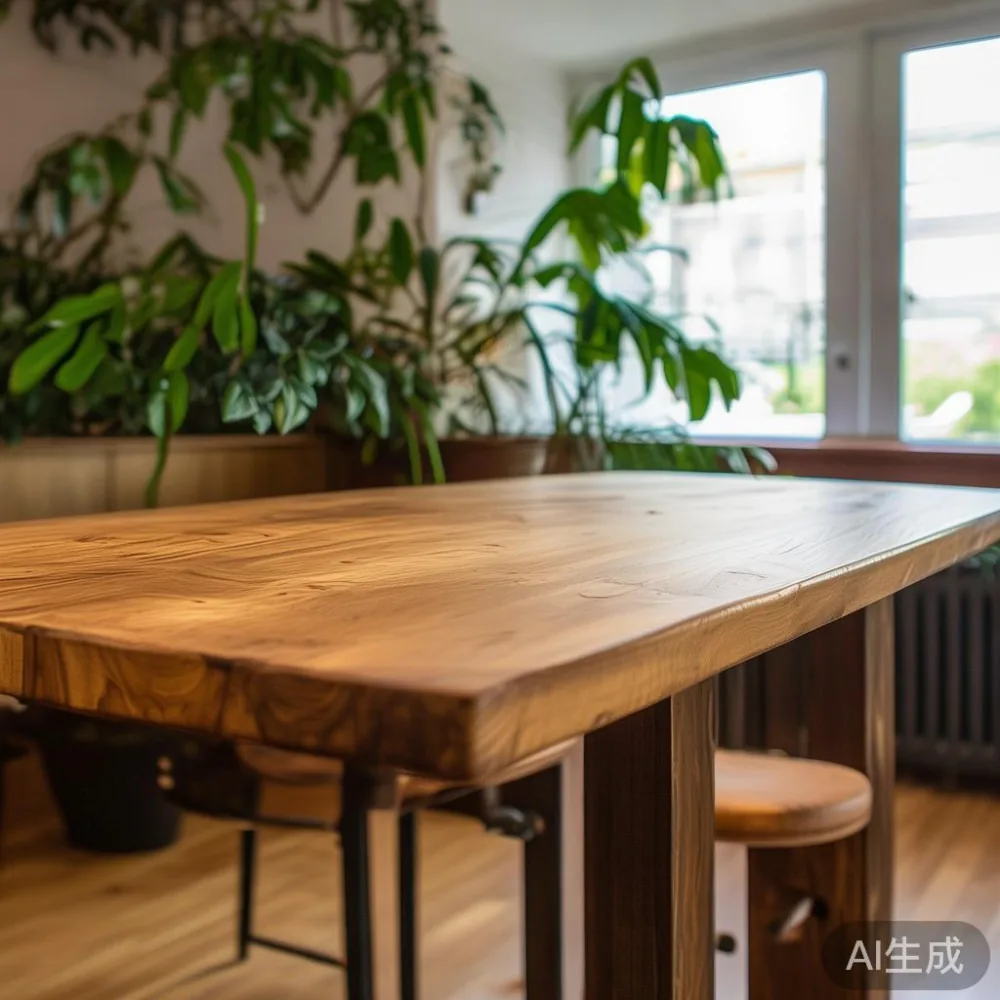
American light luxury is bigger, blockier, and built around walnut or dark-stained ash. An American-style bar table with a thick 6 to 8 cm top and a black metal base lands around SGD 1,800 to SGD 2,600 and reads as the centrepiece of an open-plan condo.
Post-modern light luxury mixes materials: a marble table top on a solid wood base, or a wood bar table with a single brass detail. Pieces in this category start around SGD 2,400 and climb based on how much stone or metal you bring in.
I keep coming back to the same five pieces when I spec a condo: a solid wood bed frame, a six-seater dining table, two sage ash wood dining chairs per resident who eats at home, a 160 to 180 cm bar table for the kitchen counter, and a wardrobe with full-extension drawers. Add a single marble table for the entryway if the floor plan allows. That kit covers 90 percent of what an HDB family actually uses, and it is all categories where solid wood pays back over ten years.
So what is the realistic budget for a real solid wood setup?
A starter kit for a 4-room BTO, all in ash, with proper joinery and a finish suited to Singapore humidity, lands roughly between SGD 8,500 and SGD 13,500: a bar table around SGD 1,800, a six-seater dining table around SGD 2,200, six dining chairs around SGD 2,000, a queen bed frame around SGD 1,600, a wardrobe around SGD 2,800, and two nightstands around SGD 900. Add SGD 600 to SGD 1,200 for delivery to a non-lift HDB floor or a Sentosa condo with truck restrictions, plus 9 percent GST. That is the real number. Anyone quoting you half of it is cutting one of the corners I listed above, and the corner will show up in month eight.
What is the single question I should ask before I buy?
Ask for the workshop video. Any Foshan exporter serious about quality has a 30 to 90 second clip of the actual line where your bar table or dining table was made. No video, no footage, no paper trail of the line means you are buying from a trading company that subcontracts and disappears the moment a warranty claim arrives. MIDHILL sends that video on request, which is why their pieces sit in Tampines living rooms and their warranty is the one I have actually seen honoured.
The price of solid wood furniture is not a mystery. It is a stack of decisions, each with a cost, each with a consequence you can predict if you ask the right four questions. Skip the questions and you pay twice. Ask them and the price tag stops looking expensive.