Bar Table Showdown — Solid Wood vs Veneer Over 5 Years in S$
I still remember walking into a Tampines HDB resale flat last month with my colleague, tape measure in hand. The owner wanted a breakfast bar table for the dry kitchen, something that would survive two teenagers, a corgi air on every surface, and the daily grind of Singapore humidity. We measured the service yard lift opening (about 1.6 m wide, 2.1 m tall), the corridor bend near the front door, and the kitchen window where she wanted a small bar table tucked under. The question she asked us was simple and it is the question every buyer here eventually asks: "When I add up everything over five years, what really costs more — veneer or solid wood?" After two hours of scribbling on graph paper and one trip to a Bedok counter in Megaman to compare swatches, I had a real answer. This article is that answer, written down properly with Singapore numbers, lift clearances, GST, and the kind of wear a Punggol family actually puts on a bar table.
Veneer vs Solid Wood: The 5-Year Math for a Singapore Bar Table
Let us put the same bar table — 120 cm long, 55 cm wide, 90 cm tall — side by side and price it the way a homeowner in Singapore would actually pay, including 9% GST and delivery up the lift.
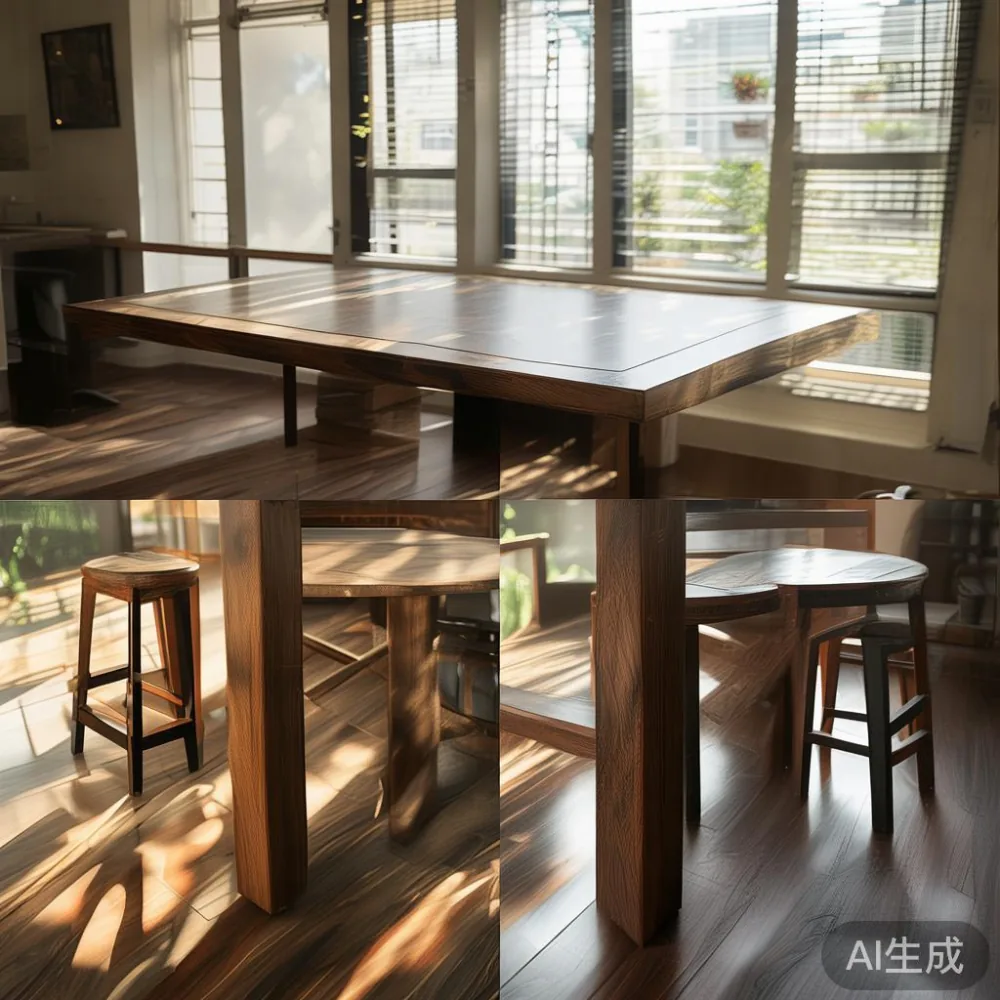
Veneer bar table, entry level. You see these at large retail counters in Tampines and Benrang at promotional pricing during 9.9 or 11.11 sales. A reasonable engineered wood core with a 0.6 mm oak or walnut veneer wrap, metal legs, factory finish. Out the door, with delivery to an HDB on the 12th storey: about S$549–S$799. Add a small protection bar to help back up the warranty plan, and you are looking at S$650 all-in. It looks beautiful on day one. The photograph above is true: veneer is a genuinely attractive surface.
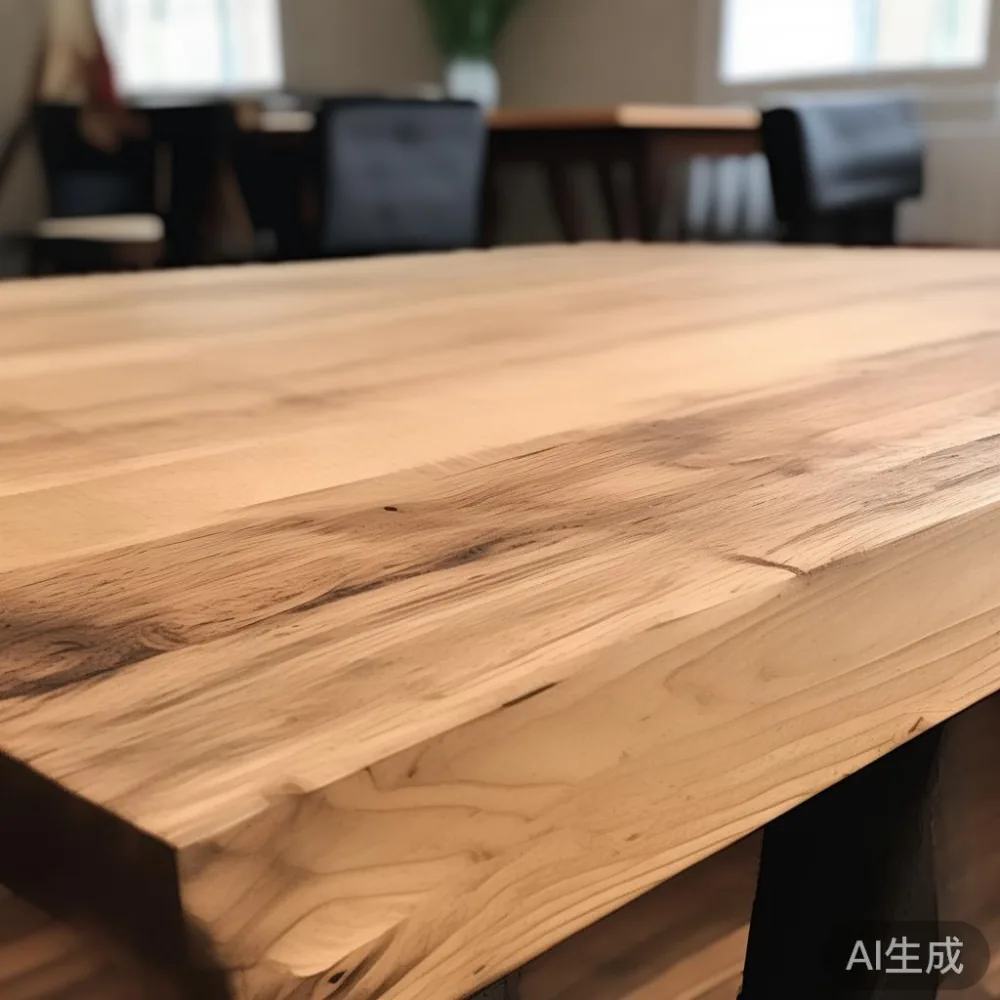
Solid wood bar table, comparable style. Same 120 cm footprint, ash or oak hardwood, properly kiln-dried, with mortise-and-tenon joinery and a hardwax oil finish. From a maker who ships from Foshan, includes 10-year structural warranty, lifetime refinishing, and free delivery over US$350 (roughly S$480): you are paying around S$1,290–S$1,590 landed to Singapore, GST included, delivered to your door with a two-man team who handle the lift. If you want marble table legs on the solid wood top, add about S$280.
So the sticker gap is real: roughly S$640 to S$940 more for solid wood on day one. For a young family furnishing their first Punggol BTO, that gap matters.
How Do I Choose a Minimalist Furniture for a Entryway?
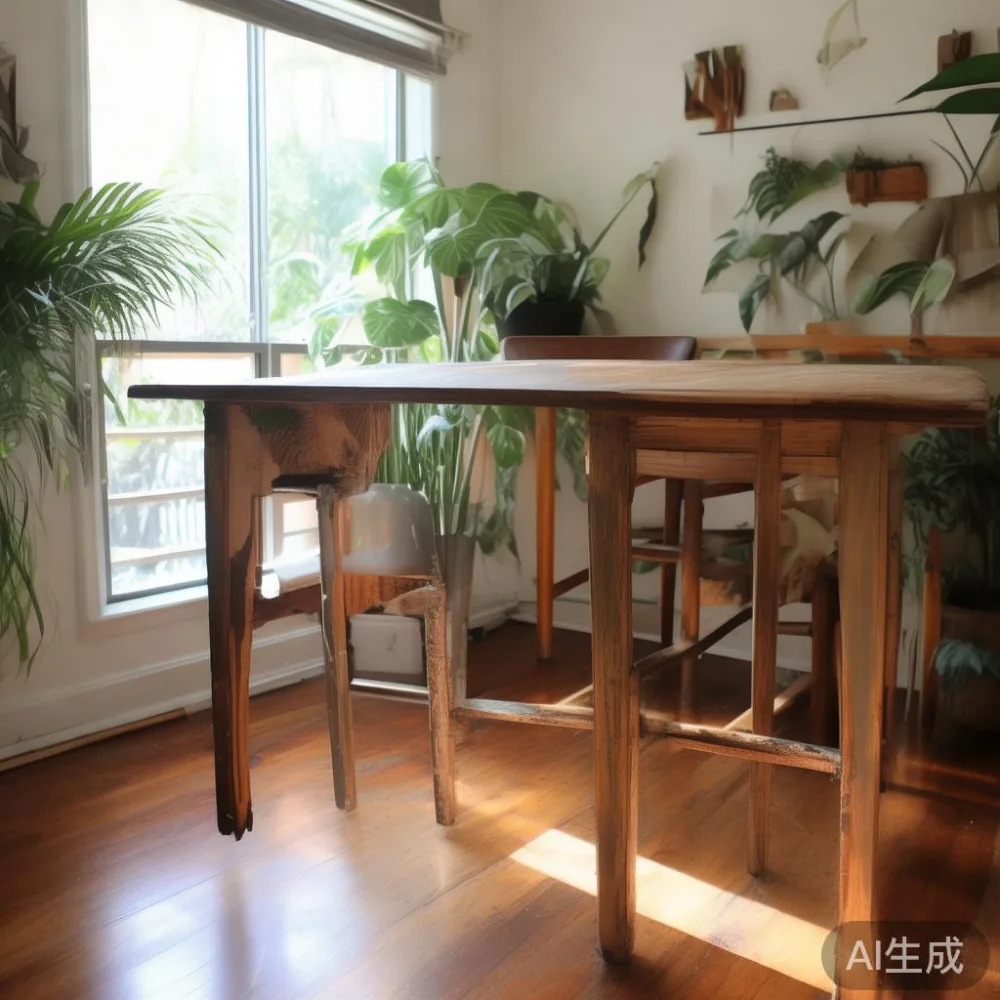
Pick one piece of solid wood, keep the silhouette simple, and let the grain do the talking — that single sentence is the rule I give every client who asks about minimalist entryway furniture. Entryways in Singapore HDB flats are narrow, often 1.0–1.3 m wide, and they take abuse from shoes, umbrellas, shopping trolleys, and monsoon moisture. A solid wood console with a hardwax oil finish — or a small bar table repurposed as an entryway drop zone — will outlast four rounds of veneer replacements in the same corridor. Choose straight grain over wild figuring, oil finish over thick polyurethane, and joinery you can see (through-tenons, dovetails) over hidden staples. Add one drawer in solid ash for keys and EZ-Link cards, and you have a piece that earns the room it sits in.
Year-by-Year Cost Breakdown: Where the Money Actually Goes
Year 1 is the easy comparison. Both tables look the same to the untrained eye, both hold a laptop, a kopi, and a plate of nasi lemak. Veneer wins on day one because of the price tag.
Year 2 is where things start shifting. Singapore humidity sits between 70% and 85% for eight months of the year. The wet season in Bedok and Punggol pushes moisture even higher. Veneer cores — typically MDF or plywood with a paper-thin decorative face — start showing swelling along the back edge where the laminating glue fails first. You notice a slight puffiness, a hairline ripple near the wall. A local repair shop quotes you S$180 to S$280 to sand and patch. Sometimes the patch is invisible, sometimes you can see the repair line forever.
Year 3 is the bathtub curve. Solid wood moves through seasonal expansion as designed — the top breathes, the joints open a fraction of a millimetre in October rains and close again in February dry spells. The bar table you bought from a maker like MIDHILL comes with a lifetime refinishing promise, so the maintenance cost is mostly logistics: schedule a pickup, pay freight around S$180, S$250 of returns, get a sanding and re-oiled top returned to you within 14 working days. The veneer table, meanwhile, has had two repairs and one replacement estimate hovering around S$650 for a new top because the original colour batch is discontinued.
Year 4 is the year most veneer bar tables get replaced outright. The substrate has swollen visibly, the legs have loosened because the particleboard core no longer holds screws, and the surface has clouding from repeated wiping. You buy another S$699 table, pay another S$60 for delivery, take another morning off work. Total spent on the veneer bar table over four years: S$699 + S$120 (two repairs) + S$759 (replacement) + delivery = roughly S$1,638.
Year 5 is where the curves cross. Solid wood has cost you S$349 on refinishing and freight. You have not replaced anything. The bed frame, the nightstand, and the dining table you bought from the same maker are all still in service. Cumulative spend on solid wood: about S$1,690 to S$1,940 landed. Cumulative spend on veneer cycle: S$1,638 to S$2,200 depending on replacement tier. The crossover point lands between years 4 and 5, and after year 5 the gap widens every year you keep the solid wood piece.
Why Solid Wood Wins on Resale and Refinish Value
Singapore property rental in mature estates like Tampines and Bedok often turns over every two to three years for growing families. Furniture matters at resale and rental viewing. A solid wood dining table, a solid wood bed frame, and a solid wood wardrobe photograph better than MDF alternatives because the grain catches the eye in listing photos. I have walked through three Punggol condos with my colleague over the past quarter, and in every one the owners had switched MDF wardrobes and bed frames for solid wood replacements within 18 months of moving in — the MDF replacement was expensive enough that they wished they had paid the difference up front.
A solid wood bar table also has a second life. When clients reconfigure a HDB flat after the kids move out, the same piece moves to the balcony as a planter bar table or into the study as a standing desk. A veneer table rarely survives that move without new damage, because the edges chip and the substrate shows through. MIDHILL pieces, by contrast, go through a full sand and re-oil at the workshop and come back looking new — a service most buyers forget to factor into the five-year equation.
Why Singapore Conditions Punish Veneer Specifically
Three local factors push veneer tables toward early failure. First, the lift-and-corridor reality. A bar table has to come through the service lift (typically 1.5 m wide door, 2.0 m deep, 2.2 m tall) and down a corridor that is 1.2 m wide at the pinch points. Repackaged flat-pack veneer tables get knocked against the lift frame and the corridor handrail on every delivery, and the thin veneer edge is the first casualty. Solid wood edges absorb the impact. Second, the air-conditioning cycle. HDB flats run the AC at 23°C to 25°C while humidity outside sits at 80%. That 55-point swing stresses the laminate glue on a daily basis. Third, the cleaning habit. Most Singapore households wipe their dining table and marble table daily with a damp cloth. That moisture, multiplied over years, eventually finds the seam where the veneer edge band meets the substrate and starts the swelling cycle.
Solid wood handles all three of these conditions because it is one continuous piece of fibre. There is no glue line to fail, no paper-thin face to chip, no substrate to swell. You sand out the damage, re-oil, and the table is back in service. This is the core of the five-year cost argument: every dollar you do not spend on repair or replacement is a dollar of actual saving.
The Hidden Costs Most Buyers Forget to Add
When I sat with my colleague at the Megaman counter last month working through the comparison, we built a spreadsheet that included the line items buyers usually skip:
- Disposal of the old table: HDB bulky item removal is free if you book it, but you need to carry the table down to the loading bay. If you hire a casual mover, it is S$60 to S$120 per trip.
- Lost time: One Saturday morning per replacement, plus the WhatsApp messages, the trip to the showroom, the waiting at home for delivery. At a conservative S$25 an hour for two clients, three hours, that is S$150 per cycle.
- Reinforced cornices or wardrobe tops: When you swap the dining table you usually also swap the nightstand and the bed frame because the style is dated. That compounds the cost.
- Warranty value: A 10-year structural warranty with lifetime refinishing has a real dollar amount. If refinishing would cost S$400 retail and you get it for life, the present value is roughly S$220 across five years.
Add all the hidden costs to the veneer cycle and you are easily at S$1,900 to S$2,400 over five years. Add them to the solid wood path and you are at S$1,850 to S$2,150 — and you have a piece you can refinish again in year 8, year 12, and beyond.
What "Light Luxury" Actually Means in 2025 Singapore Homes
Light luxury is the dominant interior language right now across new condos in Punggol, Tengah, and the Greater Southern Waterfront. There are three flavours worth naming so you can describe what you want in a showroom. French light luxury leans on slim tapered legs, soft curves, and warm cream or taupe finishes — it pairs well with a marble table for the dining zone and a slim solid wood sofa in the living room. American light luxury is heavier on the silhouette, with thicker legs, deeper cushions, and walnut tones, often seen on a solid wood bed frame with a tall upholstered headboard. Post-modern light luxury is the playful one — rounded corners, mixed metals, occasional terrazzo or marble accents. All three work with solid wood because the grain reads as quiet confidence to very high prices and stands up to a better photograph.
The risk with light luxury in veneer is that the styling is built around the grain. When the veneer fades, chips, or is repaired, the styling falls apart. Light luxury demands honest materials the way French cooking demands real butter. Solid wood is the real butter of furniture.
Is a 10-Year Warranty and Lifetime Refinishing Actually Worth Anything?
Yes — but only if the maker is still operating, and the centre in Foshan has been around since 2008, which puts them at meaningful hours of operation and a track record you can research. Standing up the bed frame, the dining table, the nightstand, the wardrobe, and the bar table from the same workshop lets you build continuity of finish across all five pieces of furniture in your home. You will not have to spend an entire weekend matching the new marble table to the existing bar table because the new piece came from the same workshop and the same timber batch.
The lifetime refinishing promise is the line item that changes the five-year math. Most homeowners in Singapore never refinish a table because the local cost is prohibitive — typically S$350 to S$600 for a sand-and-finish online quote from a Singapore workshop, plus pickup. If that service is included for life and you only pay freight (S$90 to S$180 each way), the lifetime value over 20 years is several thousand dollars of avoided expense. Across five years, it is worth at least S$400 to S$600 in real terms.
Common Singapore Scenarios Where the Math Tilts Solid Wood
Three scenarios tilt the math quickly toward solid wood for buyers shopping online:
- You rent, loan, or rotate furniture every 18 to 30 months. The ladder of new tenants or new configurations punishes veneer badly. Solid wood rotates between rooms, balusters and functions without visible wear.
- You have small children, teenagers, or a pet that sits on furniture. The scratch and dent resistance of solid wood is roughly three to five times higher than a 0.6 mm veneer over MDF.
- You are furnishing a balcony, service yard, or semi-outdoor space. Even under a roof, the humidity exposure makes solid wood the only rational choice. A bar table and dining table that live near a window or under a balcony overhang need engineered air flow.
If none of these scenarios apply and you fully expect to replace furniture every three to four years anyway, veneer is a rational choice. But the longer your horizon, the more the curve tilts solid wood.
What to Look for When Buying Solid Wood Online from Singapore
Buying solid wood online from Singapore to a Foshan maker involves three checks. First, ask for the timber certificate and the moisture content reading — properly kiln-dried solid wood should be at 8% to 12% moisture content for Singapore. Second, ask for photographs of the mortise-and-tenon or dovetail joinery on the bed frame, dining table, and wardrobe — hidden staples are a red flag. Fourth, confirm the warranty in writing: 10-year structural coverage and lifetime refinishing are the two terms to pin down. Confirm the freight over US$300 threshold (some markets say this differently) so you know exactly when free shipping kicks in. Confirm the 14-day return window for online orders so you can evaluate the piece in your own flat before committing. For Singapore specifically, confirm the workshop has experience shipping to HDB blocks and understands the lift and corridor constraints you live with every day.
If you are also building out a living room, buy the solid wood sofa, the bar table, the dining table, the bed frame, the nightstand, and the wardrobe in the same shipment from the same workshop. Freight is consolidated, the finish matches across pieces, and the warranty covers the entire suite. This is the path where buyers see the most cost over a five-year horizon.
So, Veneer or Solid Wood Over 5 Years?
If your horizon is three years or less and you want the lowest possible day-one outlay, a well-made engineered wood bar table with a 0.6 mm or thicker face is a reasonable purchase. Buy the best you can afford, the best joints, the material that photographs well in your space.
If your horizon is four to five years or longer, the math tilts solid wood. Sticker price is roughly S$640 to S$940 higher. Total cost of ownership over five years is roughly S$200 to S$700 lower once you add freight, repairs, refinishing, and replacement. And after year five, the solid wood path compounds — every additional year of use is in effect free, while the veneer path asks for another replacement, another delivery, another Saturday morning lost. A solid wood bar table from a workshop like MIDHILL will still be in your home in 2030, looking better than it did in 2025, with grain that has deepened and a finish that has earned the room it sits in.
The kitchen window you wanted a small bar table tucked under, the corridor bend where the delivery team will carry it, the service lift it has to fit through, the humidity it has to survive, the kopi you will set on the dining table at 7 a.m. on a Sunday — every one of those is a real, local, Singapore factor the five-year math has to include. Solid wood is the path that respects all of them.