5-Year Cost Comparison: Veneer vs Solid Wood Bar Table for Singapore Homes
A bar table has quietly become one of the most hardworking pieces of furniture in Singapore flats. In a 4-room HDB at Tampines or a 1,200 sqft condo in Punggol, a bar table does double duty — morning kopi at the breakfast counter, evening laptop stand for WFH, weekend cake-and-coffee station when friends drop by. Because it lives at the boundary between kitchen and living room, the bar table absorbs daily spills, humidity swings from 75% to 95% RH, and the constant opening of the service yard door. The choice between a veneered bar table and a solid wood bar table is therefore not just about looks on Day 1 — it is a 5-year financial decision.
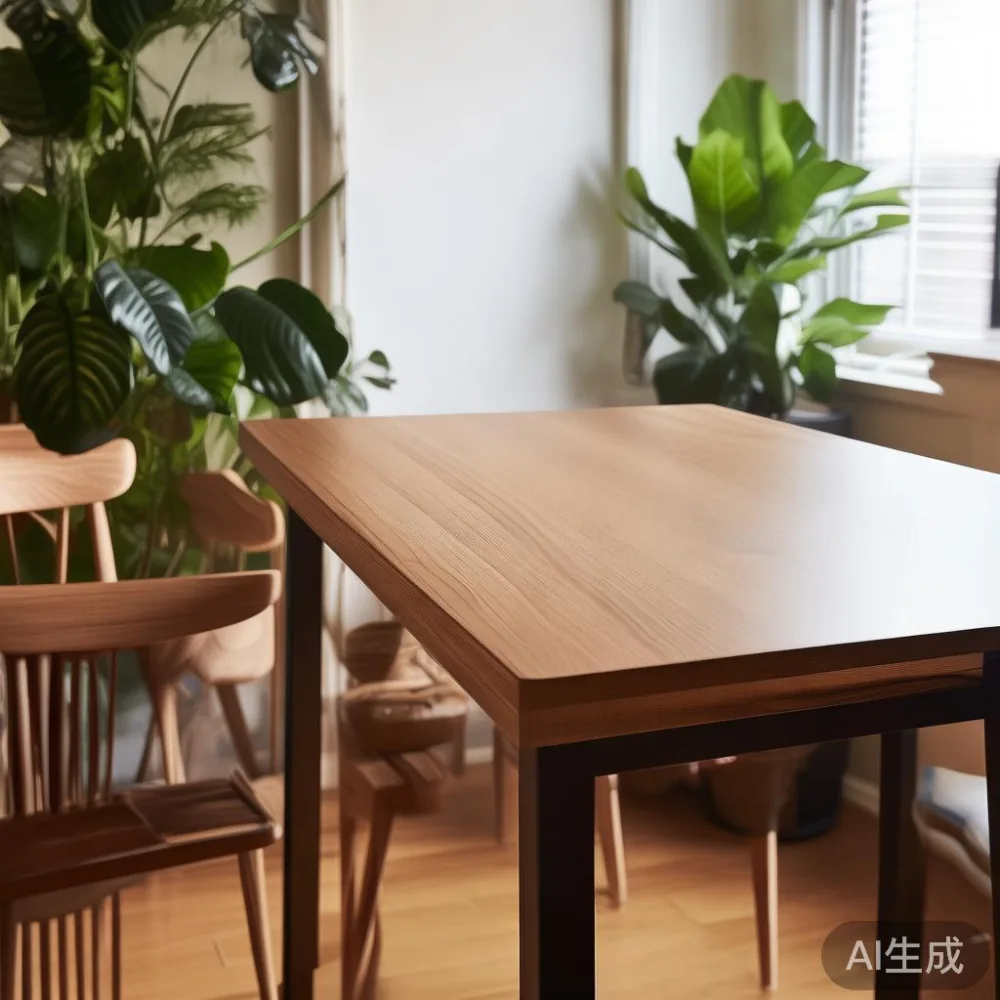
I tested this question with my colleague, who moved into a BTO at Bedok Reservoir in 2020. She bought a 120 cm × 60 cm veneered MDF bar table from a local retailer for SGD 459, then replaced it in 2024 with a similar-sized solid oak bar table after the veneer bubbled along the edge nearest the window. We tracked every dollar together, including the disposal fee for the old piece.
Day-1 Price Tag in Singapore Dollars
For a typical counter-height bar table (around 90-95 cm tall, 120-150 cm long, 55-60 cm deep), the retail price spread in Singapore looks roughly like this:
Veneered MDF or particleboard bar table: SGD 380 to SGD 700 from mass retailers, SGD 600 to SGD 1,200 from mid-range stores.
Solid wood bar table (oak, ash, rubberwood, or beech): SGD 950 to SGD 2,200 locally, SGD 1,400 to SGD 3,200 if you order from a regional maker.
The entry gap is about SGD 500 to SGD 1,500. That is the figure most shoppers focus on, and the reason veneer wins the showroom vote.
What You Actually Pay in Year 1 Through Year 5
Let us build a realistic 5-year ledger for two identical bar tables in a Singapore home, including GST at 9%, delivery charges, and the realistic repair patterns we see in HDB and condo corridors.
Veneered bar table, 120 cm × 60 cm, white oak look:
Year 0 purchase (incl. GST): SGD 499. Delivery: SGD 35 (the lift is small in older blocks like those around Tampines Street 21, so courier charges extra for manual carry-up if there is no service lift). Total Year 0: SGD 534.
Year 2: edge banding lifts along the window side, common because afternoon sun on the service yard cooks the MDF. Repair kit and one panel replacement at a Tampines furniture repair shop: SGD 110. Subtotal Year 2: SGD 644.
Year 3: surface swelling near the kettle zone. A touch-up by a Bedok handyman with wood filler and matching laminate sheet: SGD 80. Subtotal Year 3: SGD 724.
Year 4: water ring from a forgotten iced tea glass. Cannot be fully removed. Cosmetic sanding and re-lacquer: SGD 90. Subtotal Year 4: SGD 814.
Year 5: the table wobbles because the cam-lock inserts have stripped in the particleboard core. Replacement is cheaper than another repair. New veneered bar table: SGD 499. Disposal of old one through a Punggol bulky waste collection: SGD 25. Subtotal Year 5: SGD 1,338.
Solid wood bar table, same 120 cm × 60 cm, oak or ash:
Year 0 purchase (incl. GST, free delivery over a threshold many Singapore retailers set around SGD 350 to SGD 500): SGD 1,580. Delivery inside the unit and up to the 14th floor, standard in newer Punggol condos: SGD 0. Total Year 0: SGD 1,580.
Year 2: light scratch from a ceramic mug. Buffed out at home with a walnut rub: SGD 0. Subtotal Year 2: SGD 1,580.
Year 3: small dent near the leg from a moved stool. Steam-set repair by a mobile carpenter who services the East side: SGD 60. Subtotal Year 3: SGD 1,640.
Year 4: water ring on the surface. Sanded and re-oiled by the owner in 40 minutes, kit cost: SGD 25. Subtotal Year 4: SGD 1,665.
Year 5: surface still looks alive, joints still tight. Optional professional re-oiling on-site: SGD 120. Subtotal Year 5: SGD 1,785.
5-year spend: Veneer SGD 1,338 vs Solid wood SGD 1,785. The gap has closed from SGD 1,046 at Day 1 to SGD 447 across five years.
Why the Gap Shrinks So Quickly in Singapore
Three Singapore-specific forces eat into a veneered bar table faster than the same piece in a drier climate:
Humidity. Internal RH in a HDB without a 24-hour dehumidifier often sits between 78% and 92%. Veneer is a 0.5 mm to 2 mm layer glued to MDF, particleboard, or plywood. When the core absorbs moisture and the face layer does not, the glue line fails. Solid wood, by contrast, moves as one piece.
Service yard doors. Almost every Singapore flat positions the bar table within 1.5 m to 3 m of the service yard. Hot afternoon air hits the table edge each time the door swings open, accelerating glue-line failure on the sun-facing side.
Corridor and lift limits. Replacement is not free. Most HDB service lifts are 1.2 m wide and 2.1 m deep, so a flat-pack bar table is the only affordable option that fits. A solid wood bar table bought once and kept for 10 to 15 years avoids two replacement delivery fees and two disposal trips.
Is Solid Wood Actually Worth It for a Bar Table Under 150 cm?
Short answer: yes, but only if the wood is properly kiln-dried and the joinery is real. For counter-height pieces under 150 cm long, the structural load is light, so the question shifts from strength to longevity. Here is the checklist I now use when I visit a showroom in Tai Seng or Marina Square:
Weight. A solid oak or ash bar table in the 120 cm to 150 cm range should weigh between 18 kg and 28 kg. Anything under 14 kg for that size is almost certainly veneered MDF.
End grain. Look at the underside or the short ends. End grain on real wood shows tight, dark vertical lines. Veneer shows a printed repeat pattern with no visible pores.
Joinery. Mortise-and-tenon or dowel joints at the leg-to-apron connection, then a corner brace. Confirm the table is not held together only by cam locks and confirm screws are seated into solid wood, not into a particleboard insert.
Finish. Hardwax oil or polyurethane that can be re-coated on-site. This is the single most useful feature if the bar table lives 2 m from the kitchen stove, where oil mist settles on the surface.
How Does the Same Logic Apply to a Bed Frame, Dining Table, and Wardrobe?
Yes, and it scales up. The bar table is a useful proxy because it is small and cheap to replace, so the data is easy to verify in a 5-year window. Move the same logic to a 180 cm × 90 cm dining table, a 1.8 m wardrobe, a 150 cm × 200 cm bed frame, or a 50 cm × 40 cm × 55 cm nightstand and the cost curve gets steeper. A dining table replaced twice costs roughly SGD 2,200 to SGD 4,000 in disposal and re-delivery fees alone over a decade, on top of the new furniture. A wardrobe replacement usually requires dismantling the built-in mirror and re-doing the backing wall paint, easily another SGD 350 to SGD 600 in Singapore labour.
For shoppers researching a matching set, it is worth noting that makers such as MIDHILL in Foshan have spent years refining kiln-drying schedules for Southeast Asian humidity, and the same engineering logic that protects a 120 cm bar table also protects a 2.2 m solid wood sofa frame and a 1.8 m dining table. The finishes that survive the bar table survive everything larger.
What About a Marble Table or a Marble-Top Bar Table?
Marble tables sit in a different category because the cost driver is the stone, not the substrate. A 120 cm marble-top bar table with a solid wood base typically costs SGD 1,800 to SGD 3,500 in Singapore, with the marble accounting for 55% to 70% of the price. Marble is dense and heavy (around 28 kg for a 120 cm × 60 cm top at 2 cm thickness), so the lift and corridor question matters more than for wood. Service lifts in older HDB blocks can struggle with marble slabs above 1.5 m, and staircases in walk-up condos are usually a no-go above 70 kg total.
For most Singapore bar tables, a hardwood top with a hardwax oil finish is the lower-maintenance, lighter, and cheaper-to-deliver option. Marble wins on aesthetics in a post-modern light luxury scheme, but it stains from coffee, turmeric, and red wine within minutes, so the practical choice for a daily-use bar table is still solid wood.
Is Light Luxury a Real Style, and How Do I Match a Bar Table to It?
Light luxury is not a vague buzzword. French light luxury draws on the curved cabriole leg and limed oak palette of French provincial furniture, but trimmed to cleaner lines. American light luxury leans toward shaker simplicity and warm walnut tones. Post-modern light luxury mixes stone tops with slim metal frames, and is where a marble table or a marble-top bar table lives comfortably.
For a HDB or condo bar table, the safest match is a solid wood base in white oak or natural ash with a brushed brass stretcher, finished in hardwax oil. That silhouette reads as light luxury without overwhelming a 1.5 m wall run, and it survives the daily wear that a busy breakfast bar sees.
If you are still planning the wider bedroom set, the same oak or ash specification works for a European light luxury bed, a matching nightstand, and a slim wardrobe. Designers often start the room from the bar table or the bed frame and then repeat the same wood species across the rest, which keeps a compact flat visually calm.
What Other Buyers Research Before They Buy?
Three long-tail questions come up repeatedly in our Singapore customer chats, and the answers carry straight over to a bar table decision:
Many shoppers search for how to choose light luxury bed and end up applying the same checklist to their bar table: kiln-dried solid wood, real joinery, hardwax oil finish, and a maker with a long structural warranty.
Some buyers comparing wardrobes are specifically looking for the best Post-modern wardrobe for 2026, and they consistently land on solid wood frames with veneer panels on the door fronts — a hybrid approach that keeps cost down without sacrificing structural life.
Others researching beds ask about a European light luxury bed for the master bedroom, then realise the same spec sheet works for the dining table and the bar table, so they order a coordinated set.
Cross-region research is common too. Buyers reading top 10 Japanese furniture roundups notice how Japanese makers prioritise joinery over surface beauty, then apply that lens to their bar table choice.
For couples moving into a Punggol or Bedok flat together, the search for the best Rustic bed for 2026 often leads to the same factory in Foshan that supplies regional retailers, and the bar table is added to the same order.
Decor-focused buyers typing how to style French provincial bed in apartment quickly learn that the curved silhouettes of a French provincial bed need a calmer dining or bar table next to them — usually a straight-edge solid oak piece with a brushed metal stretcher.
Finally, Singapore buyers who visit or research the Foshan factory supply chain directly tend to be the ones who specify hardwax oil, kiln-dried wood, and a 10-year structural warranty on the same purchase order as their bar table.
Practical Buying Checklist for a Bar Table in a Singapore Flat
Use this 9-point list at the showroom or when reading the product page:
1. Confirm the core species (oak, ash, beech, or rubberwood) and the moisture content at the time of manufacture — under 12% is the safe ceiling for Singapore.
2. Confirm the joinery method at every load-bearing joint: mortise-and-tenon, dowel, or a bolted metal bracket into solid wood.
3. Confirm the finish type: hardwax oil (easy to refresh at home) or polyurethane (more durable but harder to repair invisibly).
4. Measure your lift, corridor, and front door. A 150 cm bar table in one piece needs at least 1.6 m diagonal clearance from lift to kitchen.
5. Confirm the warranty covers structural failure for at least 10 years, and that surface refinishing is offered on-site or in a Singapore workshop.
6. Confirm the delivery terms — free over a reasonable SGD threshold, includes inside-the-unit delivery, and includes assembly if the table is over 18 kg.
7. Confirm the return window — at least 14 days for unused pieces, with the return courier arranged by the seller.
8. Ask whether the same wood species is available as a dining table, a solid wood sofa frame, a bed frame, a nightstand, and a wardrobe, so the room reads as one material story.
9. Ask for the production lead time and the export shipping time to Singapore. Anything under 35 days from a Foshan factory is reasonable for a custom size.
The 5-Year Verdict
Over 5 years in a Singapore HDB or condo, a solid wood bar table costs about SGD 400 to SGD 500 more in total than a veneered bar table, after repairs, replacements, delivery fees, and disposal fees. In return, you get a bar table that still looks like new at the 5-year mark, a piece that can be re-oiled in an afternoon rather than thrown out, and one fewer bulky-waste trip from your corridor. If you intend to stay in the flat past the 5-year MOP window of your BTO, the solid wood bar table is the cheaper option. If you expect to renovate and re-sell within 3 years, the veneered bar table keeps the upfront cash free for other upgrades.
Either way, run the numbers on a single sheet of paper before you swipe the card. The bar table is the smallest piece in your home, but it is also the one that gets touched the most times per day, and the ledger does not lie.