Delivery and Assembly Realities When Buying Furniture Online in Singapore — A Bar Table Buyer's Guide
Last month I helped my colleague Rachel unbox a 160 cm solid oak bar table she had ordered online for her new Punggol HDB flat. The courier arrived at 11:40 am on a Tuesday, two gentlemen in a covered lorry, and the whole thing — frame, base shelf, and four stools — was carried up to her 9th-floor unit in about 18 minutes. We had measured her lift the week before. We had measured the corridor on the 8th. And we had not, until the box was on the kitchen floor, realised how heavy a properly built bar table actually is. That little exercise is exactly why I am writing this article: buying a bar table, dining table, or any piece of larger solid wood furniture online in Singapore involves a chain of decisions that nobody explains well on a product page.

What does "delivery" actually mean when you order a bar table from an overseas brand?
Most Singapore buyers assume delivery is a single, simple event: a van arrives, a man hands over a box, you sign. The reality has three stages — origin warehouse, sea freight, and final-mile — and each one shapes what reaches your door.
Brands like MIDHILL, which designs and manufactures solid wood furniture in Foshan and exports to 15+ countries, ship from a single origin warehouse rather than dropshipping from multiple suppliers. For a Singapore buyer, that typically means the order is loaded into a consolidated container at the Port of Shenzhen or Guangzhou, clears customs in Singapore within 5 to 8 working days, and is then routed to a local 3PL for last-mile delivery. From the moment you click "pay," a realistic timeline is 18 to 28 working days for an in-stock bar table, and 35 to 50 days if a custom finish is requested. That is faster than many local made-to-order sofa makers, and slower than an off-the-shelf flat-pack from a Tampines mall retailer.
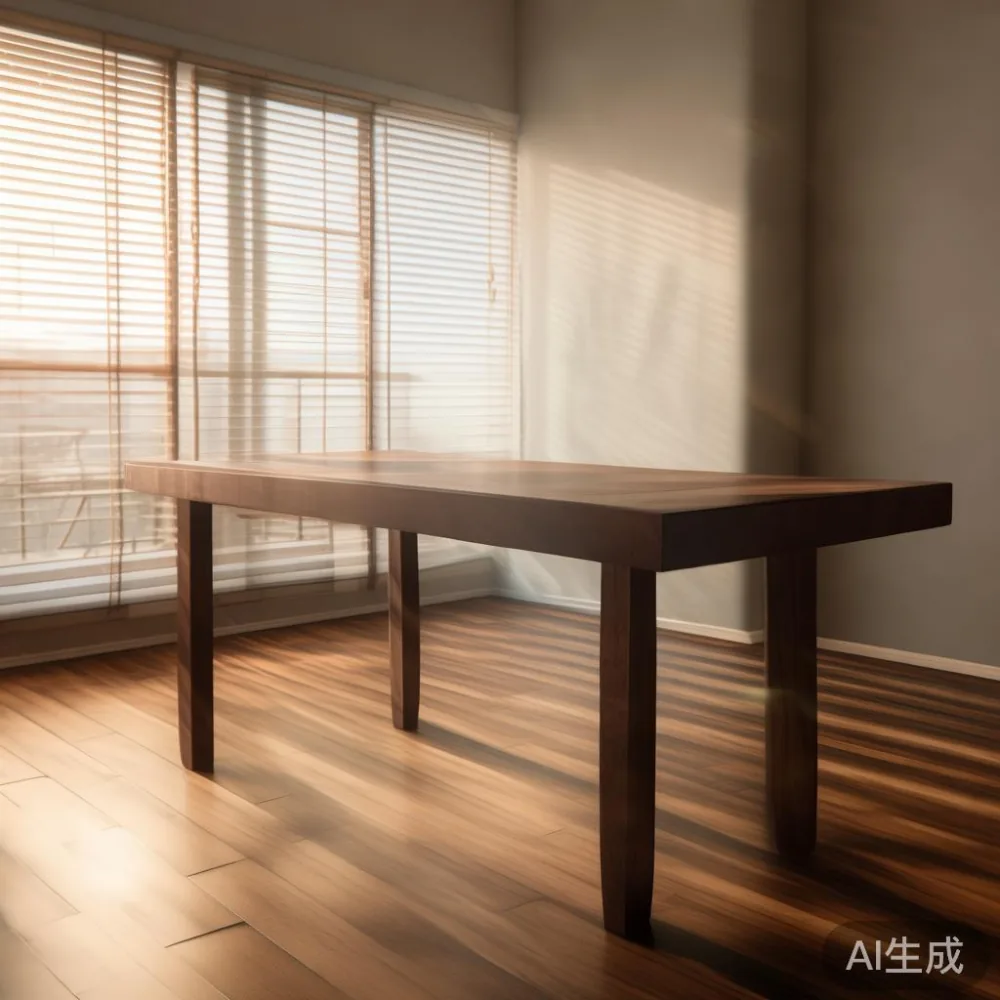
The final-mile leg is where Singapore becomes unusual. HDB corridors in estates like Bedok Reservoir and Tampines West are typically 1.2 m to 1.4 m wide, and lift doors are usually 0.9 m wide. A 160 cm × 60 cm bar table in its carton often measures 168 cm × 68 cm × 22 cm and weighs between 38 kg and 55 kg depending on whether you choose oak, ash, or walnut. That is just manageable in most modern lifts, but only if the carton is turned on its side. In older blocks with cargo lifts of 1.1 m × 1.4 m and a single swing door, an L-shaped corner requires serious forethought.
Is French provincial sofa furniture worth it?
Yes — if you want a defined aesthetic, accept the weight, and buy from a maker who can back the frame for a decade. French provincial sofa furniture typically uses a solid hardwood frame, hand-carved detailing, and either linen-blend or top-grain leather covers, with rolled arms and cabriole-style feet that nod to 18th-century French country estates. The trade-off is weight: a three-seater in this style commonly weighs 70 kg to 95 kg, versus 45 kg to 60 kg for an equivalent American leather mid-century modern sofa. In a 1.1 m cargo lift in Punggol, that 95 kg frame on a rainy afternoon is a logistics event, not a delivery. Worth it for the look and the longevity, but plan the move.
What about flat-pack versus fully assembled furniture shipping?
Flat-pack reduces volume and therefore sea-freight cost, but it adds assembly time at your end. A bar table in flat-pack form usually arrives as 3 to 5 cartons: tabletop, two leg assemblies, base shelf, and hardware. Tools are sometimes included and sometimes not. Budget 45 minutes to 90 minutes for assembly if you are reasonably handy, and 2 to 3 hours if it is your first time.
Fully assembled (sometimes called "assembled-on-delivery" or "white-glove") shipping skips the DIY step but adds roughly SGD 80 to SGD 220 to the bill, depending on size and floor. For something like a 1.8 m dining table or a king-size solid wood bed frame, fully assembled delivery is worth considering because the alternative — assembling a 65 kg bed frame inside a small HDB bedroom — is rarely fun.
For bar tables specifically, my advice is hybrid: order the top and base shipped in two cartons, and have the legs pre-fitted where possible. This gives you the freight savings of flat-pack without the worst of the Allen-key marathon. MIDHILL, for one, offers this configuration on most of its bar table range, and the two-carton approach is what kept Rachel's staircase clear and her storage room usable.
How do you measure your space before the truck arrives?
Five numbers, written down, photographed, and shared with the delivery team the day before:
1. Lift door width and height — usually 0.9 m × 2.1 m for passenger lifts, 1.1 m × 2.1 m for cargo lifts. If your block has only a passenger lift, confirm whether a service lift can be booked on moving day.
2. Corridor width on every floor the carton will travel through — measure at the narrowest point, including any pipe recesses or fire-hose cabinets that eat 5 to 8 cm.
3. Front door frame width and height — HDB gates are typically 0.9 m wide, condo doors 0.9 m to 1.0 m. A 65 cm-wide bar table top turns into a 65 cm-wide obstacle at 90 degrees.
4. Corner from lift to front door — the diagonal that often defeats you. A 1.0 m × 2.0 m corridor turn can swallow a 170 cm long carton if you angle it correctly, but only if you have planned the angle.
5. Final placement spot — distance from door to where the bar table will live. Most bar tables weigh 38 kg to 55 kg and drag easily across vinyl, but not across tile grout lines or over a raised kitchen threshold.
Photograph all five and send them to the delivery coordinator two days before. If the brand's customer service replies with a layout plan rather than a generic "we'll manage it," that is a brand worth keeping.
What should I expect to pay for shipping, GST, and assembly in 2025?
Three buckets of cost. Freight into Singapore is usually included in the quoted price for orders above a threshold — MIDHILL, for instance, offers free shipping on orders above US$350 (about SGD 470 at current rates), which most bar tables and dining table orders will clear. Orders below that threshold attract a freight surcharge of roughly SGD 60 to SGD 120.
GST in Singapore is 9% on imported goods valued above SGD 400, declared at customs by the local 3PL on your behalf. For a bar table retailing at SGD 1,200, expect SGD 108 in GST to be added at the final invoice stage, not at checkout. Some local checkout systems pre-collect GST; others bill it after customs clearance. Read the fine print or ask.
Final-mile delivery within Singapore for a single bar table typically costs SGD 60 to SGD 120 to the ground floor, SGD 90 to SGD 180 to upper floors without a lift, and is often free for upper floors with lift access above a minimum order size. Disposal of the cartons is sometimes included, sometimes SGD 20 extra. Full assembly at the doorstep adds SGD 40 to SGD 90 per piece. Weekday slots are cheaper than Saturday slots; Sunday slots are rare for overseas shipments and command a 20 to 30% premium.
Are returns really free, and what happens if the bar table arrives damaged?
Honest answer: returns are rarely truly free, and damage claims succeed when you follow procedure.
Most reputable online sellers offer a 14-day return window for unused, unassembled furniture in original packaging. The catch is "original packaging." Once you have opened the cartons, started assembly, and discarded the foam inserts, you have usually waived the return right. If you genuinely need to return, the return freight from Singapore back to a Foshan warehouse can cost SGD 200 to SGD 400 for a bar table, which makes the "free returns" tagline misleading at the order level. MIDHILL's published 14-day return policy is one of the more transparent ones I have seen, because it states the conditions and the inspection process on a single page rather than burying them in terms-of-service links.
For transit damage, the procedure is always: photograph before opening, photograph during opening, photograph after opening, note it on the delivery receipt before the courier leaves, and email the seller within 24 hours with the photos and the delivery note number. Brands offering a 10-year structural warranty will usually send replacement parts or arrange a pickup-and-replace for transit damage within the first 30 days at no cost. Brands without a parts inventory will offer a discount on your next order, which is rarely what you want when there is a 12 cm crack across your new marble table top.
Which furniture categories travel well, and which need extra planning?
Solid wood furniture in flat-pack form travels well because the joints are usually doweled or mortise-and-tenon with a tolerance of 1 to 3 mm. A bar table, dining table, bed frame, wardrobe, and nightstand all fit comfortably into standard 168 cm × 68 cm cartons and clear Singapore lifts with a small margin.
Upholstered pieces travel less predictably. A solid wood sofa with removable cushions compresses to roughly 1.0 m × 1.0 m × 0.6 m in a protective bag, but a fully upholstered American leather mid-century modern sofa with a fixed back can be 1.8 m × 1.0 m × 0.7 m in its protective wrap, which is bigger than a passenger lift in some older HDB blocks. Marble table tops are the trickiest: a 120 cm round top can weigh 55 kg on its own and must be shipped in a custom wooden crate with foam bracing, which adds 8 to 12 days to the timeline and roughly SGD 240 to the freight. Wardrobes usually arrive in 4 to 6 cartons and benefit from on-site professional assembly rather than DIY, because the 35 kg to 60 kg carcass panels are unwieldy to hold upright in a small room.
What does a sensible online bar table order look like end-to-end?
Walk-through example, using real numbers. Rachel's order, from click to furniture:
Day 0: Order placed, SGD 1,180 including a 160 cm solid oak bar table, a matching base shelf, and four stools. Freight quoted as free above the threshold; GST 9% (SGD 106.20) added at the post-customs invoice.
Day 1 to 4: Order processed, cartonised at the Foshan warehouse, loaded into a consolidated LCL (less-than-container-load) shipment.
Day 5 to 12: Sea freight Shenzhen to Singapore, customs declaration, GST posted.
Day 13 to 15: Local 3PL receives, inspects, schedules delivery slot for the following Wednesday between 10 am and 2 pm.
Day 18: Two-man team arrives at Rachel's block at 11:40 am, lifts both cartons to the 9th floor in 18 minutes, places the bar table and base shelf in the kitchen-dining area, removes all cartons. Final delivery fee SGD 0 (free above threshold, lift access available).
Day 18, afternoon: Rachel assembles the leg-to-top fixings using the included Allen key, around 50 minutes. The stools require no assembly.
Day 19: A small scratch noticed on the base shelf corner — photographed, emailed to customer service, replacement corner bracket dispatched within 36 hours under the structural warranty.
That is the realistic arc. Not a two-day Amazon dash, but a measured 18-day sequence that arrives in one piece, gets assembled in an evening, and is supported by a warranty that lasts a decade. For a piece of solid wood furniture that will live in your home for 10 to 20 years, 18 days of logistics is a fair trade. The mistake is treating the order as a single transaction rather than a four-stage process — and the second mistake is choosing a brand that cannot tell you, in writing, what happens at each of those four stages.