How to Read a Furniture Warranty Without Getting Caught Out: A Singapore Solid Wood Buyer's Guide
I learned this lesson the hard way last March, when a friend in Tampines bought a glossy dining table from a homegrown brand. The price tag looked fair at S$1,490, but within nine months the lacquer along the table edge began to craze. When he pulled out the warranty card, the fine print said "cosmetic wear not covered" — a clause no one at the showroom had mentioned. He was stuck. That conversation is the reason I now read every furniture warranty the way I read a renovation contract: line by line, with a pencil in hand.

If you live in a Singapore HDB flat or a condo in Punggol or Bedok, you are probably shopping for a solid wood sofa, a bed frame, a dining table, a wardrobe, or a bar table that will need to survive narrow lift doors, tight service corridors, and four seasons of air-conditioning. The warranty is your real protection. Below is a walkthrough of the clauses that matter, the ones that are designed to confuse, and the questions you should ask before you swipe your card.
Why a "10-Year Warranty" in Singapore Usually Means Something Narrower
Headline warranty numbers — 5 years, 10 years, even 25 years — are the single most quoted marketing phrase in furniture retail. They are also the single most misleading. The number almost always refers only to the structural frame: the joinery, the load-bearing components, the internal frame of a bed frame or a solid wood sofa. Surfaces, finishes, hardware, upholstery, and moving parts are almost always carved out into shorter windows.
When I visited a regional furniture expo at the Singapore Expo last quarter, three different sales staff gave me three different definitions of "structural" within the space of an afternoon. One included drawer runners, another excluded them, and a third said the term was "industry-standard and self-explanatory." None of this is helpful to a buyer in Tampines who needs a clear answer about whether a sagging wardrobe shelf counts.
For a brand like MIDHILL, which publishes a 10-year structural warranty on its solid wood furniture, the practical meaning is this: the frame and load-bearing joints of a bed frame, a dining table, a wardrobe, or a bar table are covered for ten years against breakage and joint failure. Surfaces — wood, lacquer, marble — are covered separately, usually for one to two years, and refinishing is treated as a service you pay for or claim against a specific clause. Read the breakdown, not the headline.
What Exactly Does "Structural" Cover?
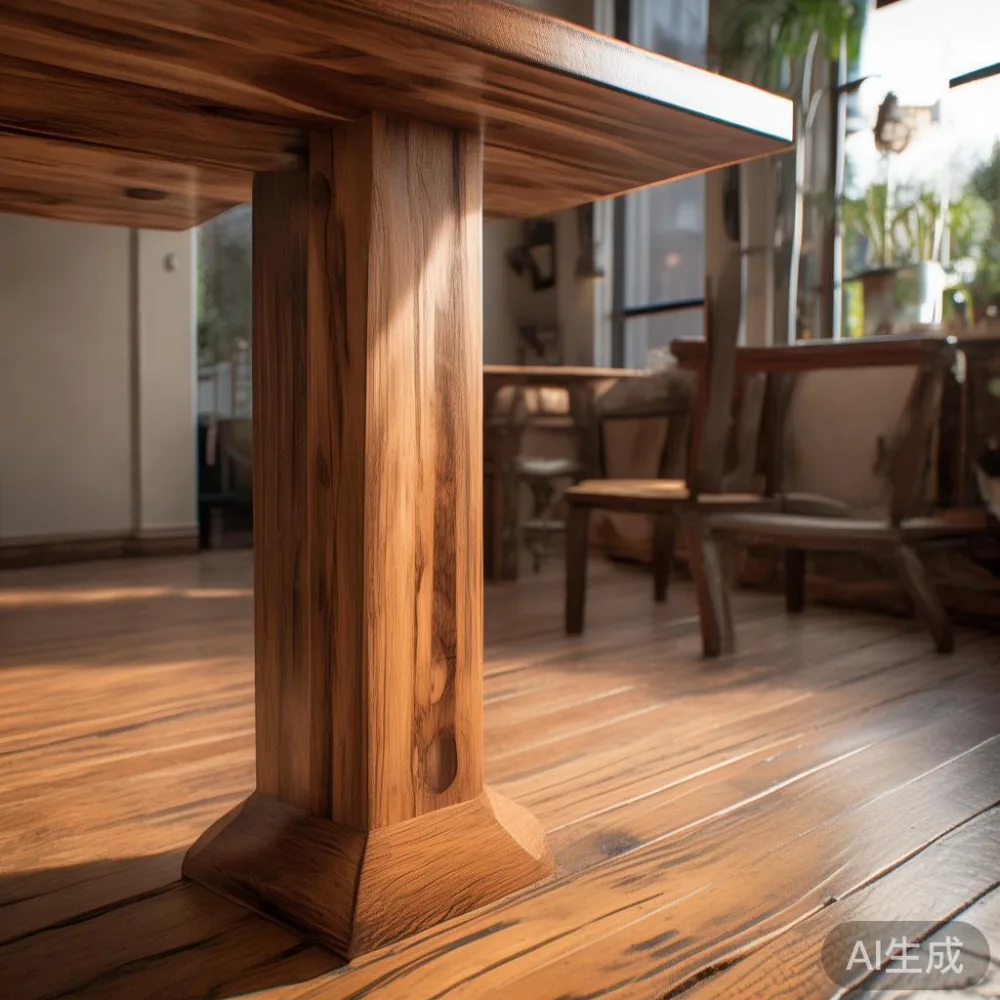
Structural should mean the parts of the furniture that, if they fail, make the piece unsafe or unusable. For a dining table, that is the leg-to-apex joint, the apron, and the central stretcher. For a bar table, that includes the pedestal base and the cross-brace under the top. For a solid wood sofa, structural typically covers the kiln-dried hardwood frame, the corner blocks, and the webbing or sinuous spring system that holds the cushions. For a wardrobe, structural means the carcass, the back panel, and the hinges that support a hanging load of at least 12 kg per door.
Everything else — paint, stain, lacquer, marble veining, fabric pilling, gas-lift cylinders on stools, drawer glides, and soft-close mechanisms — usually falls into a different bucket. Some brands group these as "finishes and hardware" with a 1- to 3-year warranty. Others exclude them outright. A few good brands, including MIDHILL, offer lifetime refinishing on solid wood surfaces as a separate service that is not technically part of the warranty but is a contractual promise that runs alongside it. That distinction matters because a refinishing offer can rescue a piece years after the structural warranty has expired.
What Is the Difference Between a Warranty and a Guarantee in Singapore?
Under the Singapore Consumer Protection (Fair Trading) Act, a "warranty" is a voluntary promise by the seller about the goods. A "guarantee" — for example, the Consumer Goods Guarantee under Part III of the Lemon Law — is a statutory right that cannot be taken away by contract. In plain English: even if your warranty card says "no refunds," you still have a statutory right of repair, replacement, or refund if the goods fail to be of acceptable quality within a reasonable time.
This is important because warranty clauses sometimes try to override your statutory rights. Any clause that says "this warranty replaces all other warranties, express or implied" is not enforceable to the extent it removes your statutory remedies. Practically, it means that if your dining table arrives with a cracked marble top that was clearly damaged before delivery, you do not have to wait for an internal claims process — you can claim under the Lemon Law within six months and the burden of proof is on the seller to show the damage was not pre-existing.
How Do I Style a American Country Corner Sofa in a Small Apartment?
Pick an American country corner sofa with a neutral linen-look fabric in cream, sage, or stone, raise it on warm-toned solid wood legs, and pair it with a low oak coffee table, a braided jute rug, and two linen bolster pillows — that combination reads country without crowding a 12 sqm HDB living room.
For HDB flats in Punggol or Bedok where the living room is often 14 to 18 sqm, an American country corner sofa in an L-shape with a 240 cm by 180 cm footprint is the practical sweet spot. Pull the short side flush against the service wall, slide a slim 110 cm solid wood coffee table in front, and let a bar table behind the sofa act as a room divider between the dining and living zones. Use a warm 2700K ceiling light, a single oak floor lamp, and one vintage-style runner rug in muted terracotta to tie the country palette together. Avoid heavy carved trunks, dark mahogany cabinets, or French provincial extendable dining table sets in the same room — the silhouettes compete and the room will feel smaller than its floor plan.
Which Warranty Clauses Should You Flag Before Paying?
There are six clauses that consistently trip up Singapore buyers. Read each one carefully.
1. "Acts of nature" or "environmental damage." Singapore humidity sits between 70% and 88% for most of the year. If the warranty excludes damage caused by "humidity, temperature fluctuation, or direct sunlight," and you live on a high floor in Punggol with afternoon sun on the balcony door, your lacquer crack on a dining table may not be covered. Solid wood moves — that is its nature — so a fair warranty will cover manufacturing defects that look like environmental damage but are actually poor sealing or unstable joinery.
2. "Improper use or care." Vague phrases like "failure to follow care instructions" are the most common reason claims are denied. The instructions need to be reasonable and they need to be in writing. If the brand does not provide a care sheet at delivery, ask for one in the same email thread.
3. "Normal wear and tear." Every warranty has this exclusion, but the definition of normal varies. A bar table that sees four hours of daily use in a Bedok coffee shop is not the same as one that sees two hours of weekend use. Good brands like MIDHILL distinguish between structural wear (covered) and surface wear (refinishable under a separate service).
4. "Transferability." Some warranties are voided if you move house or transfer ownership. In Singapore, where resale flats change hands every seven to ten years on average, this clause can quietly halve the value of your warranty. Look for explicit language that the warranty travels with the piece.
5. "Original purchaser only." Same issue as transferability. A transferable warranty is worth more in the HDB resale market.
6. "Warranty void if assembly is not by us or an authorised agent." This is common for wardrobes and bar tables that arrive flat-packed. If you assemble the bar table yourself in your Tampines living room on a Sunday afternoon and the cross-brace cracks six months later, the brand may refuse the claim. Document your assembly with photos and videos — it is your proof of proper care.
Does Free Shipping Above S$350 Change the Warranty?
It should not, but in practice it often does. Free shipping usually means curb-side delivery to your HDB block, not into your flat. The lift opening in most Singapore HDB blocks is roughly 80 cm wide by 210 cm high, and service corridors run 1.2 m to 1.5 m wide. A bed frame that is 198 cm long and a wardrobe that is 220 cm tall can usually be manoeuvred in, but a 240 cm dining table or a 180 cm solid wood sofa will need the delivery team to remove packaging, door stops, and sometimes window louvres. If the warranty excludes damage during self-arranged delivery or third-party movers, you have just lost cover for the most damage-prone moment of the entire purchase.
MIDHILL publishes a free-shipping threshold of US$350 (roughly S$475 at current rates), with doorstep delivery for HDB addresses — meaning inside the unit, not just the lift lobby. That detail is worth more than it looks, because it keeps the warranty intact for the first 14 days when transit damage is most likely.
GST matters here too. From 1 January 2024, the Singapore GST rate is 9%, applied on the full landed cost including shipping. If you are comparing two quotes that both claim "free shipping," check whether the seller is showing GST-inclusive or GST-exclusive pricing. The brand that shows a single inclusive number is the one whose warranty terms you are actually reading.
What About Returns and Refunds — Where Does the 14 Days Sit?
A 14-day return window is standard for online furniture in Singapore, partly because the Consumers Association of Singapore (CASE) recommends a "reasonable period" that is often interpreted as two weeks. The warranty and the return window are separate mechanisms. Returns are for change-of-mind, sizing errors, or visible defects on arrival. Warranties are for defects that appear after normal use.
If your bar table arrives with a chipped edge on the marble insert, that is a return, not a warranty claim. If the same bar table develops a wobble in the pedestal after three months, that is a warranty claim. Do not let the seller route a warranty issue through the return process just to close the file. Under the Lemon Law, you can refuse a repair and ask for a replacement or refund if the same defect appears more than once.
What Should You Ask the Salesperson Before You Pay the Deposit?
Five questions, every time.
- What exactly is covered for 10 years, and what is covered for 1 or 2 years? Ask them to point to the clause.
- Is the warranty transferable to the next owner if I sell the flat?
- Does the warranty cover humidity-related defects on solid wood, given Singapore's climate?
- If the marble top on my dining table cracks within the first year, is that a replacement or a repair, and who pays the transport?
- Does the assembly need to be done by your team to keep the warranty valid, and what is the cost if I want it done?
If the salesperson cannot answer any of those in writing, treat that as a red flag the size of a wardrobe. A serious warranty is one a salesperson can defend with a document in front of them.
How Does MIDHILL's Warranty Stack Up in the Singapore Context?
Setting aside marketing language, MIDHILL's published terms cover three things Singapore buyers actually care about: a 10-year structural warranty on solid wood frames across the dining table, bed frame, wardrobe, and bar table ranges; lifetime refinishing on solid wood surfaces (so a 12-year-old piece can be sanded and re-oiled rather than discarded); and a 14-day return window with free shipping above US$350. The lifetime refinishing clause is uncommon in this category and is the one that gives a piece of solid wood furniture a realistic working life of 25 to 30 years in a Singapore home — well beyond the standard resale cycle of an HDB flat.
Final Checklist Before You Click Buy
Keep this list on your phone before you finalise any furniture order over S$500.
- Read the full warranty PDF, not the summary on the product page.
- Confirm whether structural covers the legs, the joints, and the frame only — or also drawer runners and hinges.
- Check whether the warranty is transferable and whether it survives self-assembly.
- Verify the GST-inclusive price and the actual delivery scope (curbside, lift lobby, or inside the unit).
- Photograph the piece on arrival and unpack it on the same day if possible — most transit damage must be reported within 48 hours.
- Save the care sheet in a folder labelled with the piece name; this is your evidence if a claim is disputed.
A warranty is only as good as the document it lives in, and the document is only as good as the questions you ask before you sign. Spend twenty minutes reading the fine print now, and you will not have to spend twenty weeks arguing with a customer service team later.