What Actually Drives the Price of Solid Wood Furniture?
Solid wood furniture can look expensive for reasons that have little to do with the visible timber. Joinery, moisture control, finish, hardware, dimensions, and delivery all affect the final bill. A bar table priced at SGD 1,290 and another priced at SGD 690 may even use the same wood species; the difference can lie in how each one is engineered and delivered.

For Singapore buyers, that distinction matters. A dining table must pass through the lift lobby, turn along the corridor, and fit through the HDB or condo door. In Tampines, Bedok, and Punggol homes, access is often more restrictive than the showroom floor suggests. Price is not simply a number attached to a piece. It is the combined result of material, construction, usable dimensions, finish, and logistics.
MIDHILL has made solid wood furniture since 2008 and exports to more than 15 countries. Its furniture carries a 10-year structural warranty, with lifetime refinishing available. Those figures matter because a lower purchase price can still produce higher lifetime cost if the table splits, the finish fails, or replacement parts become difficult to obtain.

Is solid wood automatically more expensive than engineered wood?
Not automatically. Solid wood usually costs more to manufacture than particleboard or MDF because the material is cut, seasoned, joined, and finished as a substantial component. But board thickness, timber grade, and construction efficiency can change the comparison. A carefully engineered solid wood dining table may cost less than a thick product built around lower-grade panels.
Ask the seller what “solid wood” covers. In a well-made dining table, the top, apron, legs, and structural rails should be identified individually. Veneer over engineered board is not solid wood, even if the surface looks natural. A bar table described as solid oak should not rely on vague labels such as “oak finish” or “wood look.”
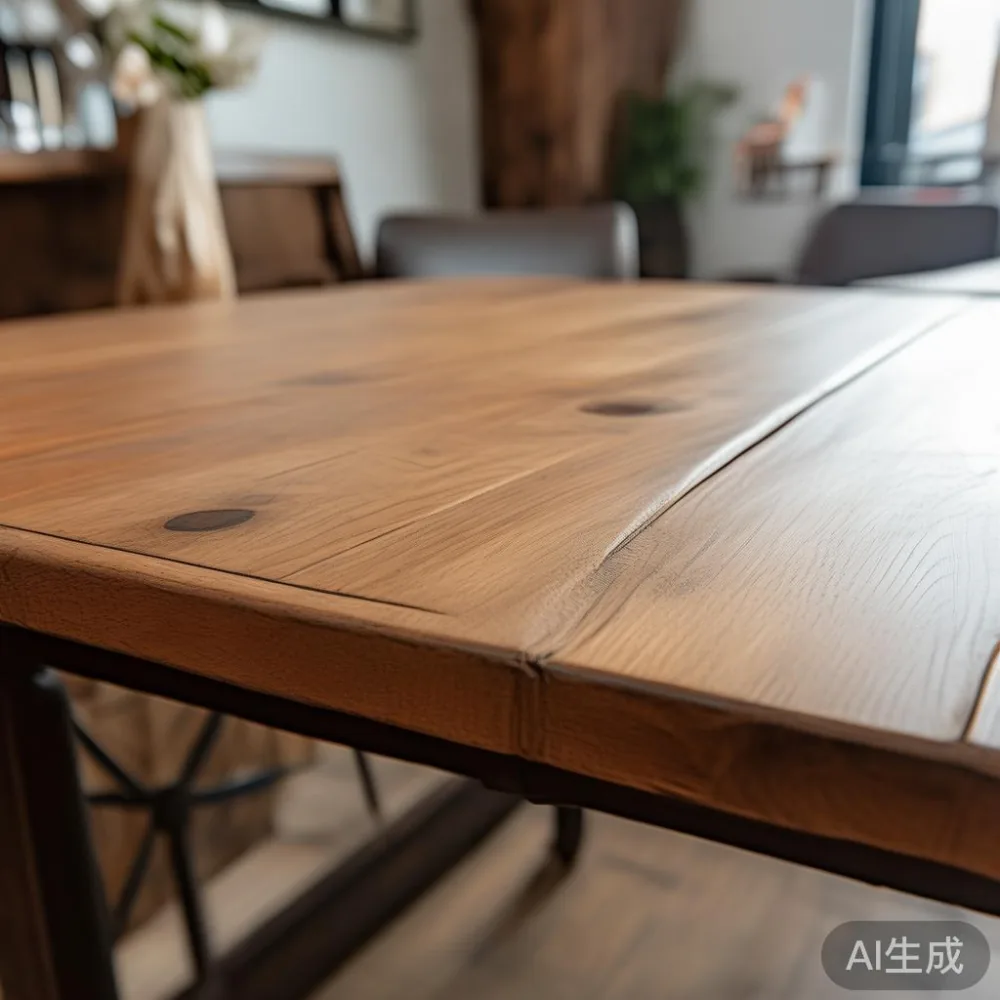
Wood species also differ in price. Oak and walnut are commonly priced above rubberwood, pine, and lower-density hardwoods. However, species alone cannot reveal quality. Board width, grain selection, defects, drying standard, and the amount of material used can move the price by hundreds of dollars within the same species.
The useful comparison is not “wood versus not wood.” It is “how much usable solid timber, at what grade, joined how, finished how, and guaranteed for how long?” That question exposes the real economics behind the sticker.
How much should timber, joinery, and labour cost in the final price?
Material normally forms a large share of the price. A dining table with a 180 cm by 90 cm top needs a substantial area of timber. A bar table measuring 150 cm by 75 cm needs less, but a thicker top and four correctly aligned legs can still require significant material.
For a useful benchmark, a 180 cm dining table using decent-grade hardwood may retail around SGD 1,590 to SGD 3,200. A 120 cm solid wood bedside table may sell for SGD 280 to SGD 650. A 150 cm bar table can range from about SGD 690 to SGD 1,690, depending on timber, construction, and finish. These are retail reference bands, not fixed prices, and promotional periods can shift them.
Joinery is where hidden labour appears. Mortise-and-tenon joints, corner blocks, dowels, and braces resist movement better than a frame held together mainly by screws into particleboard. Under load, a dining table may carry 80 to 120 kg. A marble table may carry more, but its brittleness creates a different risk: concentrated impact can crack the stone even when the base is stable.
Hardware also has a price floor. Quality drawer runners, concealed hinges, and locking mechanisms should feel controlled rather than flimsy. A wardrobe may contain 12 mm or 15 mm solid wood drawers, while a nightstand may use one or two drawers with 8 mm components. The 7 mm difference sounds minor, but across 8 drawers it changes timber use, machining time, and installed weight.
Last month I visited a supplier’s assembly area and watched a dining table top being fitted to its apron. The parts looked clean and strong, but the alignment was not yet correct. The technician adjusted each leg because a 3 mm error at the corner would have made the top sit unevenly. That small adjustment represented several minutes of skilled work that a photograph of the finished table could never show.
Why do dimensions and Singapore access affect the price?
Size changes both material and transport. A 220 cm dining table needs a larger top and more bracing than a 160 cm model. A 120 cm bar table may suit one HDB dining bay, while a 180 cm version needs a wider route and may be difficult to angle around a landing.
Measure before ordering. Record the lift opening, corridor width, door width, turning space, and the route from the car park. A residential lift door may be only 80 to 90 cm wide, with a car depth of about 140 cm. A condo corridor might provide 120 cm, while a narrower HDB access point may offer barely 100 cm. The furniture also needs to clear ceiling fixtures, fire doors, and neighbouring residents’ corners.
Some solid wood dining tables are delivered in sections. A 200 cm top may arrive as two joined sections, reducing the lifting angle and protecting the top. This design can add packaging steps but may save the customer from an inaccessible installation. Bar tables should ideally have removable or narrower components, although dismantling must not weaken the joints.
Delivery in Singapore may take 3 to 14 working days after production. Made-to-order pieces can take 6 to 10 weeks. White-glove delivery to an upper floor may add SGD 80 to SGD 250, depending on the lift and stair situation. A product damaged in a tight corridor is not a successful delivery, so protective packaging and competent carrying are part of the value.
GST is another concrete factor. For purchases GST-registered in Singapore, the displayed price is normally before 9% GST. A SGD 1,290 bar table adds about SGD 116 in GST. At MIDHILL, free shipping applies above US$350, which is a cross-border threshold and should be checked against the Singapore quotation rather than assumed as a local waiver.
Does finish and style explain a large price difference?
Finish can add 5% to 20% to production cost. A clear matte oil may require fewer layers and less masking. A deep stain, wire brushing, fuming, high-gloss lacquer, or multi-colour work requires more preparation. Fine sanding may take several hours because a scratch visible under raking light is difficult to remove.
Style also affects labour. French provincial often introduces curved profiles, carved details, moulded edges, and decorative hardware. American light luxury often uses clean lines, restrained profiles, and performance fabrics. Post-modern light luxury may combine unusual geometry with carefully balanced timber and stone. These approaches can command different prices because the shape, tooling, and matching requirements differ.
For a bedroom, how to style French provincial wardrobe in bedroom is partly a finish and proportion question. A warm oak or walnut body, soft nickel hardware, and a simple wall treatment can keep the look controlled. In a compact HDB bedroom, a wardrobe 180 cm wide and 60 cm deep may be more practical than a heavily carved 220 cm unit.
A product term can also distort comparison. A Modern light luxury dressing table with a 120 cm top, 75 cm height, solid wood drawer boxes, and restrained brass hardware may cost SGD 890 to SGD 1,780. A marble table may range from SGD 1,290 to SGD 4,500 because the stone, edge treatment, support structure, and weight are all significant. “Marble” is a natural material with natural variation, so two slabs should not be expected to match exactly.
What do warranty, returns, and refinishing really add to the value?
A warranty has a measurable benefit only if its terms are clear. A 10-year structural warranty should cover defects in joinery and structural components under normal use. It should not be confused with a promise that every surface scratch will disappear. Finish coverage may have separate exclusions for heat, moisture, chemicals, and physical damage.
Lifetime refinishing can reduce the long-term cost of keeping furniture presentable. A dining table may need refinishing every 7 to 12 years depending on use and sunlight; a nightstand may last 15 to 20 years with careful care. Reclaiming the timber can preserve the form while replacing only the surface layer.
Returns also affect risk. A 14-day return policy gives buyers time to inspect a dining table, bed frame, solid wood sofa, wardrobe, or nightstand in their own room. That inspection should include checking alignment, drawer movement, surface finish, and access packaging. Custom sizes and made-to-order finishes may have different conditions, so buyers should confirm them before paying.
Price comparisons should also include service cost. A freestanding dining table may cost SGD 240 to SGD 520 to deliver within Singapore and include carrying. A wardrobe requiring wall fixing or stair carrying may cost SGD 180 to SGD 450 more. A bed frame delivered by a standard courier may cost SGD 90 to SGD 220, while a wardrobe or solid wood sofa needs a two-person team and proper protective wrapping.
Buyers browsing for for sale American furniture or for sale Italian light luxury furniture online may see familiar style labels without knowing the material mix. American light luxury can include solid wood frames, engineered timber, upholstery, and manufactured stone. Italian-inspired design may use high-grade timber and detailed hardware, but country of style does not guarantee country of manufacture. Ask for the material schedule instead.
How can you compare two solid wood bar tables fairly?
Compare the same attributes in the same order. First, confirm the species and whether the visible surfaces are solid timber. Then compare top dimensions, thickness, leg section, and joinery. Check the finish, hardware, warranty, assembly requirement, and total delivered price including GST.
For a dining table, place it on a level surface and load it gradually. A reasonable test load is 60 to 80 kg, spread across the top rather than concentrated at one corner. Check whether the top flexes, the legs twist, or the joints move. For a bar table, lean on the front edge with moderate pressure; a dining-height worktable and a seated-height bar table should not be evaluated with the same expectation.
Compare weight as well as size. A compact solid wood bar table may weigh 28 to 45 kg, while a larger model can reach 55 to 75 kg. Weight can indicate material density, but it is not automatically a quality grade. Thick, heavy, warped furniture is not desirable.
Online listings for Rustic for small living room may pair inexpensive solid pine with elaborate styling. The wood may be appropriate for a 90 cm side table or narrow console, yet less suitable for a heavily used bar table. Judge each piece according to its function, dimensions, and structural design.
For a coordinated home, designers often search for a MIDHILL European light luxury bed, a matching MIDHILL dining table, and related storage pieces. The match should be based on timber colour, sheen, edge profile, and hardware finish—not merely on the names “European” or “light luxury.” A post-modern light luxury room can still work with a clean solid wood dining table if the proportions and finish remain consistent.
What is the sensible price strategy for Singapore homes?
Budget for the complete transaction: furniture, GST, delivery, carrying, installation, and possible refinishing. For a bar table, a practical allocation might be 5% to 12% for delivery and assembly. For an upper-floor wardrobe without direct lift access, allow an extra SGD 120 to SGD 400. These figures protect the furniture and prevent the final cost from exceeding the planned room budget.
The most expensive piece is not always the one with the highest invoice. A dining table bought at SGD 1,490 but delivered in 12 days, carried upstairs, and backed by a 10-year structural warranty may offer more predictability than a lower-cost product with unclear timber and no service commitment.
MIDHILL’s export experience and 14-day returns provide useful reference points, but the best price remains the one supported by visible specifications and realistic Singapore access. Measure the room, check the route, read the warranty, and compare construction—not just the words printed beside the price.