How Humidity in Southeast Asia Affects a Solid Wood Bar Table (and What Singapore Owners Can Actually Do About It)
I keep a small notebook on my desk in Tampines where I log client site visits. Last month, I walked into a 9th-floor HDB in Punggol that had just been renovated. The owners were proud of their new solid wood bar table — a 150 cm piece in American light luxury styling, paired with two low back stools and a small marble top accent tray. Two weeks later, during the December monsoon push, they messaged me photos: a 3 mm gap had opened along one long joint, and the bar table top had developed a faint crown — the middle sat about 2 mm higher than the ends. Nothing was broken. Nothing was rotten. The wood had simply done what wood does in Singapore: it breathed.
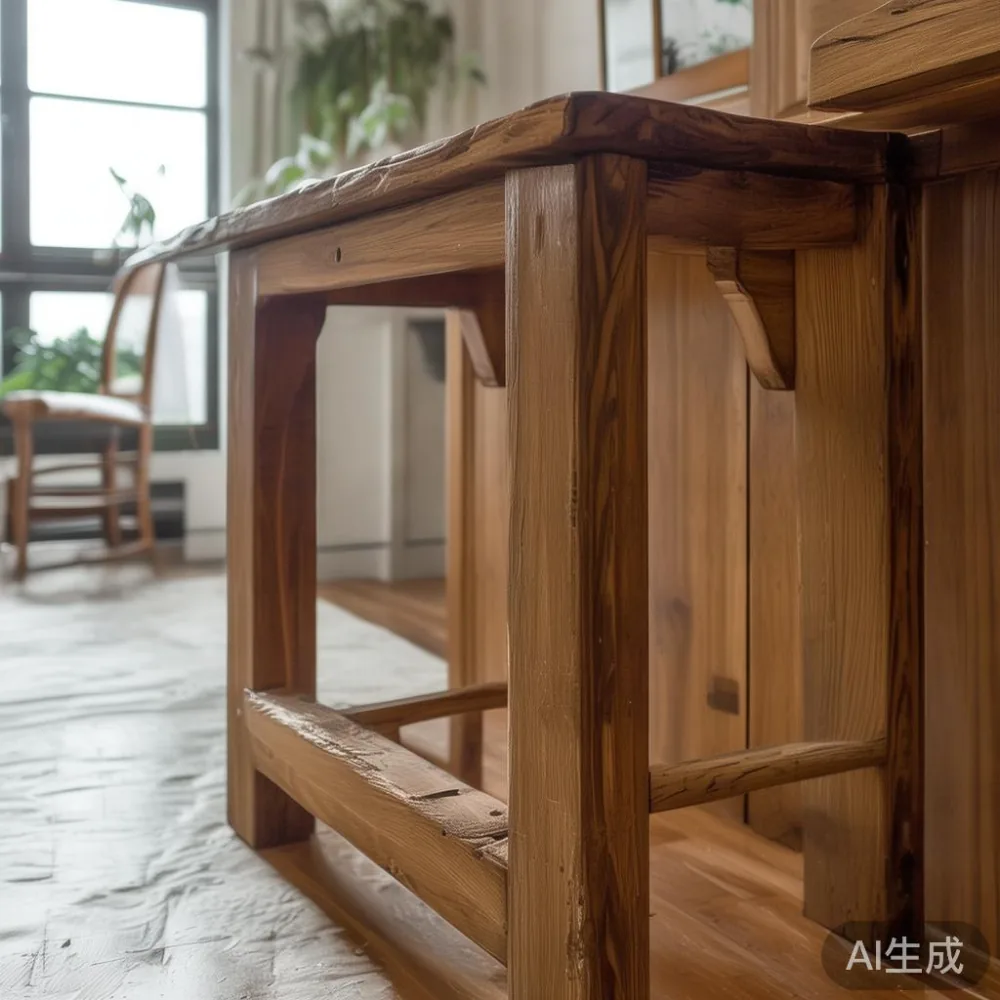
That call is the reason I am writing this guide. A bar table in a Singapore HDB or condo lives a harder life than the same piece in a 3-room apartment in Tokyo or a dry-climate flat in Perth. Year-round relative humidity here sits between 70% and 85%, with night-time peaks during the November to February monsoon and the June to September Southwest monsoon. Air-conditioning masks it, but it never fully disappears. If you understand the physics, you can pick the right bar table, place it correctly, and keep it straight for fifteen years instead of three.
Why a Solid Wood Bar Table Moves at All (And Why That Is Not a Defect)
Wood is hygroscopic. That is a technical way of saying it swaps moisture with the air around it until the two reach equilibrium. When humidity rises, wood absorbs water and swells across the grain — not along it. When humidity drops, wood releases water and shrinks. A 150 cm oak plank will change width by roughly 2 to 4 mm across a full Singapore seasonal swing. Across the grain, the same plank can move 6 to 8 mm between a dry air-conditioned afternoon (around 45% RH) and a humid pre-dawn hour after the windows have been shut for eight hours (around 80% RH).
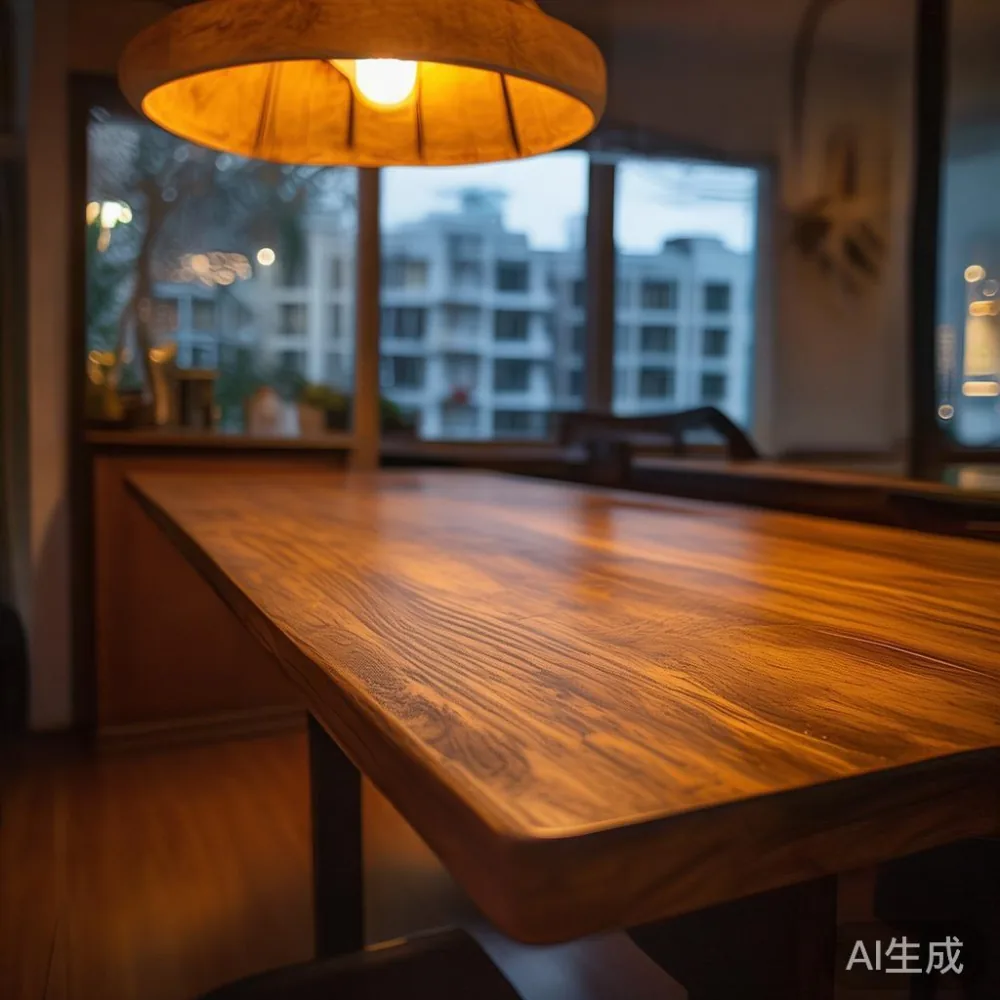
This is normal. A bar table built by a maker who understands Southeast Asian conditions — including Foshan workshops like MIDHILL that have shipped into the region for over a decade — accounts for this movement at the joinery stage. Mortise and tenon joints are cut slightly undersize. Breadboard ends are pinned with elongated slots, not tight holes, so the table top can slide as one piece expands and contracts. Panels inside a wardrobe or a nightstand are "floating" — set in grooves that let them shift without cracking the frame.
If your bar table shows small seasonal gaps in winter and closes up again by August, that is the wood doing its job. The problem is not movement. The problem is uneven movement — when one side of a top dries faster than the other, or when one face of a board is sealed and the other is not. That is what creates the cupping, the crowning, and the cracks that look scary but are almost always cosmetic.
What "Light Luxury" Means for a Bar Table in a HDB Flat
The phrase French light luxury gets thrown around in Singapore furniture forums, usually attached to a photo of a cream sofa and a brass floor lamp. In practical terms, it means restrained proportions, soft curves, neutral palettes, and materials that read expensive without shouting. Post-modern light luxury pushes this further with cleaner geometry and sharper edges — closer to a New York loft than a Parisian salon. American light luxury, the styling my Punggol clients had chosen, leans warmer: thicker tops, slightly turned legs, often a slim marble accent on a serving surface or a side tray.
For a 4-room HDB or a 1,200 sqft condo in Bedok, a bar table in any of these styles works at 120 to 150 cm long, 55 to 60 cm deep, and 95 to 105 cm tall — that last number matters because most Singapore counter stools are sold at 65 to 75 cm seat height, and you want a 28 to 32 cm leg clearance under the table. Lift widths in most HDB blocks are around 90 to 110 cm deep and 180 cm wide, so a flat-pack top longer than 200 cm will not fit through the lift door in one piece. Keep that number in mind before you fall in love with a 240 cm showpiece online.
How do I choose a marble top for a small apartment?
Pick a marble top under 120 cm long and under 60 cm deep, in a honed or leathered finish rather than polished, sealed with a penetrating sealer before delivery, and supported on a solid wood or powder-coated steel base that you can disassemble for lift access. For a small Singapore apartment, that combination gives you the visual lift of stone without the weight (a 120 x 60 cm marble top weighs 38 to 48 kg, against 90+ kg for a full slab), the slip resistance of a honed surface, and a fighting chance of fitting it through a 90 cm HDB lift door.
Two more details that matter in this climate. First, marble is cold to the touch — pleasant in our weather, but it sweats when the surface temperature sits below the dew point during a humid night. A penetrating sealer slows the moisture transfer; a marble top sitting directly on an untreated MDF base will leave a dark ring within months. Second, marble tops should always be specified as separate pieces from the bar table base if you want them to survive a HDB corridor. A 240 cm long, 70 cm deep marble top weighs 110 to 140 kg and cannot be tipped on its side through a standard doorway. The makers who understand this — including MIDHILL — typically ship marble as a detachable component with its own crating.
Singapore-Specific Risks: HDB Corridors, Air-Con Cycling, and Afternoon Sun
The three failure modes I see most often in Singapore are not exotic. They are predictable, and all of them relate to moisture.
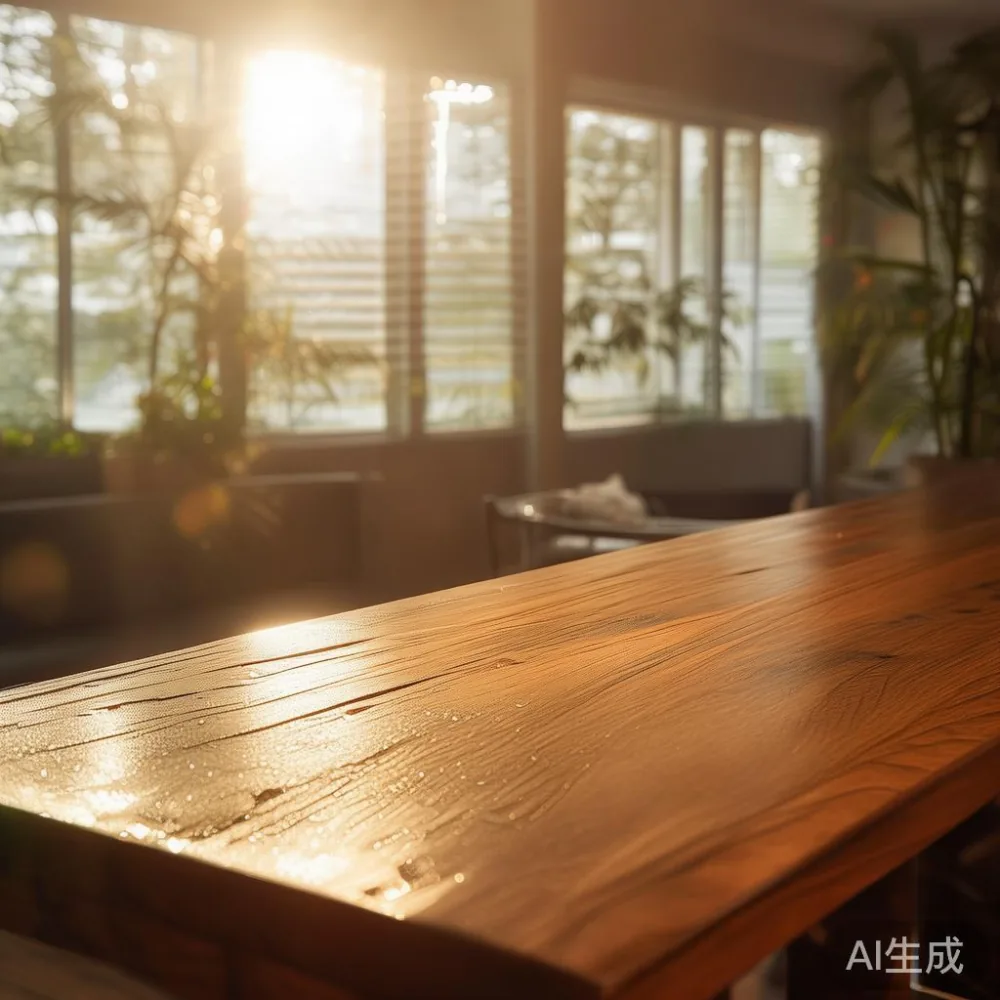
1. The afternoon sun trap. West-facing windows in Punggol, Bukit Batok, and Jurong west condos push afternoon temperatures above 32°C and surface temperatures on a dark solid wood bar table top above 45°C. The heated surface dries faster than the underside, the top tries to shrink while the bottom does not, and you get a cupped surface. A simple linen runner or a rotating spot on the floor solves 90% of this.
2. The air-con drought. A bedroom running at 22°C with the dehumidify mode on for eight hours drops to 40% RH. The living room bar table sitting next to the bedroom door experiences 40% on one face and 80% on the other. That is exactly the kind of gradient that opens glue joints. Keep the bar table at least 1.5 m from the direct air-con airflow.
3. The wet glass. A cold drink in a sweating glass on an unsealed oak top will leave a white ring within twenty minutes. Use coasters. A set of four solid brass or marble coasters costs SGD 25 to SGD 60 and will save you a SGD 180 refinishing visit.
A Practical Buying Checklist for a Bar Table in Singapore (With Real Numbers)
Use this when you are comparing options on a phone screen at 11pm.
- Wood species: White oak, white ash, and teak are the safest bets in our humidity. Engineered wood with a thin solid veneer is fine for a wardrobe or a nightstand, but for a bar table top that sees daily use, insist on solid wood throughout — at least 25 mm thick for the top, 35 to 40 mm if you want it to stay flat through five years of monsoon cycles. MDF cores wrapped in veneer will telegraph the seams within eighteen months.
- Joinery: Look for mortise and tenon, dowel, or domino joints at the legs. Avoid bar tables where the top is just screwed into the apron from underneath with confirmat screws — those will wallow out as the top moves and you will end up with a wobbly table by month eight.
- Finish: A hardwax oil (Osmo, Rubio Monocoat) is more forgiving in our climate than a polyurethane lacquer. It lets the wood continue to exchange moisture slowly rather than sealing it under a film that will eventually crack. Expect to re-oil every 18 to 24 months.
- Dimensions for HDB: 120 to 150 cm long, 55 to 60 cm deep, 95 to 100 cm tall. Confirm with the seller that the top and base ship in two cartons, each under 180 cm long and under 30 kg if possible — that lets one delivery man carry it up without a second trip.
- Warranty that means something: A ten-year structural warranty covers the frame, the joinery, and the wood against warping beyond cosmetic tolerance. Lifetime refinishing is rarer and worth real money — a full sand-and-refinish of a 150 cm bar table top in Singapore runs SGD 280 to SGD 420 at an independent shop, and you will want it done twice in the life of the piece.
- Returns: 14 days is the practical floor. Anything shorter and you cannot check the piece in your actual home with your actual air-con cycle.
What to Do in the First 30 Days After Delivery
New solid wood furniture arriving in a Singapore home is usually drier than the room it is entering. The factory in Foshan sits at 50 to 65% RH, the container ship holds 60 to 75%, and your HDB sits at 75 to 85% outside air-con. When the bar table arrives, it will gain moisture slowly over the next two to four weeks. Let it acclimatize.
Unbox it in the room where it will live. Leave the protective foam on for the first 24 hours so the surfaces equalize at the same rate. After that, remove the foam but keep the piece away from direct sunlight and direct air-con airflow for at least seven days. Do not place wet glasses, plants, or marble trays directly on the top for the first three weeks — the wood is still adjusting and will mark more easily.
After the first month, run a hygrometer (SGD 18 to SGD 35 on Shopee or Lazada) near the table for a week. If your home sits consistently above 75% RH, consider a small dehumidifier rated at 6 to 8 litres per day for the living area. If it sits consistently below 50%, your wood is too dry and you may see small splits at the ends of boards — those are normal and usually close back up when humidity returns.
Living With a Bar Table Long-Term: A Short Story
My colleague in Bedok keeps a 135 cm American country loveseat for first home clients as a reference piece in his shop — he uses it to demonstrate how solid wood feels in a Singapore-sized room. Across the same floor sits a 150 cm solid wood bar table in the same warm oak finish, which has lived in the shop for four years and through four monsoons. The top has opened a 2 mm seasonal gap along one breadboard joint each December and closed again by March. The legs have never cracked. The finish has been re-oiled twice, each time costing him about SGD 60 in materials and three hours on a Saturday morning.
When clients ask whether solid wood is worth the price premium over a veneered MDF bar table at SGD 450 from a large e-commerce platform, he shows them the four-year-old piece, then opens a drawer to show them a veneered top that has peeled at the corner after eighteen months near a west-facing window. The math is simple: a properly built solid wood bar table at SGD 1,800 to SGD 2,800, refinished twice in twenty years, will outlast three or four cheaper replacements. The delivery for a piece in that price band is usually free above SGD 350, arrives flat-packed in two to three cartons, and takes 18 to 28 days from a Foshan warehouse to a Singapore door with no GST surprise at the border.
When a Bar Table Is the Wrong Choice (And What to Pick Instead)
If your home is fully glass, west-facing, and you refuse to run the air-con when you are out, a solid wood bar table will fight you for five years and then start losing. In that case, a powder-coated aluminum bar table with a teak top — heavy, stable, and largely indifferent to humidity — is the honest answer. It will not have the warmth of a French light luxury oak piece, but it will not crown, cup, or crack.
For most HDB and condo owners reading this, the answer is still solid wood. Pick a piece sized for your lift, sealed with hardwax oil, joined with mortise and tenon, and backed by a warranty that names the country you live in. Place it 1.5 m from the air-con, out of direct afternoon sun, on coasters, with a small dehumidifier running in the room during the December to February monsoon. That is the entire programme. A solid wood bar table built this way, cared for this way, will still be the centre of your kitchen in 2039 — and that is the only honest test of any piece of furniture sold in Singapore today.