Bar Table Delivery and Assembly in Singapore HDB Flats: A Honest Buyer Guide
I spent last Saturday morning at a friend's new 4-room HDB in Punggol watching two delivery men try to carry an 18 kg bar table up a service corridor that, by my estimate, was no more than 1.2 metres wide at its tightest point. The carton had to be tilted at a 45-degree angle, pivoted around a fire-hose cabinet, and re-angled again before it would clear the lift door. None of this showed up in the product photos online. That single morning is what prompted this article, because the gap between an e-commerce product page and the reality of getting a solid wood bar table into a Singapore home is, in my experience, wider than most buyers expect.
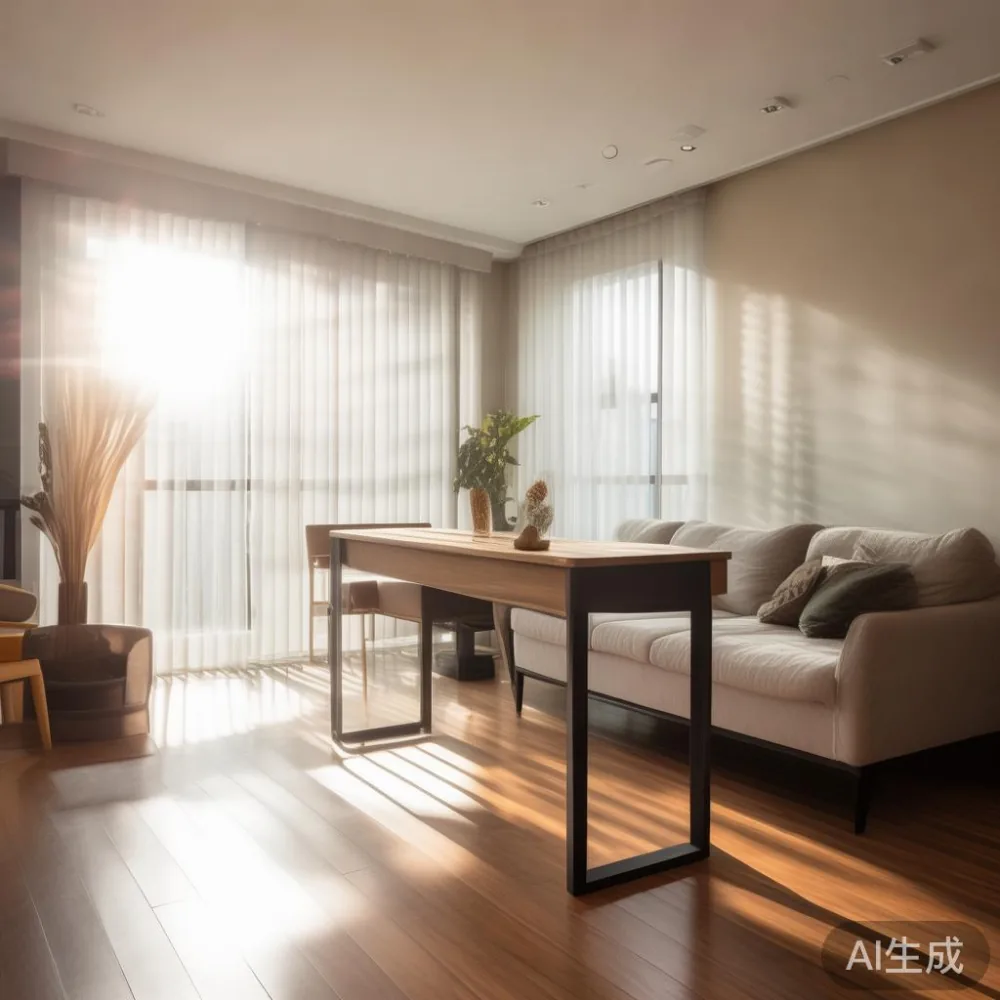
Buying a bar table, a solid wood sofa, a bed frame, a dining table, a wardrobe, or a nightstand from an overseas maker such as MIDHILL is genuinely convenient. Pricing in SGD is often 25 to 40 percent below what you would pay at a local showroom, and the breadth of American light luxury and post-modern light luxury designs on offer is hard to match on Orchard Road. But a bar table, by its very shape, presents packing and access challenges that a flat-packed wardrobe or a bed frame simply does not. A typical 120 x 60 x 95 cm bar table for two weighs between 16 and 22 kg, and the carton dimensions routinely exceed 1.3 m on the longest side, which is the precise moment a Singapore corridor or lift becomes a geometry puzzle.
How Wide Are HDB Lifts and Corridors, Really?
For HDB blocks built in the last 20 years in Tampines, Bedok, and Punggol, the standard passenger lift car is roughly 1.1 m wide by 1.4 m deep with a door opening of about 0.9 m. Older blocks, particularly those from the 1980s and early 1990s in Bedok, sometimes have lifts closer to 0.9 m wide with doors that open only 0.8 m. On the corridor side, the clear passage between handrails and walls is usually 1.0 to 1.2 m, but it shrinks to around 0.9 m at every fire-hose cabinet, refuse chute access, and staircase landing. A bar table carton measuring 130 x 25 x 22 cm will fit, but it will not fit gracefully, and it cannot be carried horizontally end-to-end. This is the single most overlooked specification on any online furniture listing.
For private condos, the situation is more variable. Most new launches in Punggol and the Greater Southern Waterfront area specify lift cars of 1.2 to 1.5 m, but the door widths are not always proportional. I have personally measured a lift door at 0.95 m in a relatively new condo off Anchorvale Crescent, and the delivery team simply would not attempt the second piece until the resident walked down to confirm the clearance. If you live above the 15th floor in a tower with a service lift, the service lift is almost always the correct answer, provided your delivery slot is during service-lift operating hours, which is typically 9 am to 5 pm on weekdays.
Will the Bar Table Carton Fit My Lift?
Yes, in the vast majority of HDB and condo lifts, the carton will physically fit, but it may need to be tilted, stood on its side, or carried in at an angle. Before checkout, message the seller and ask for the exact carton length, width, height, and weight, then measure the narrowest point between your lift door and the inside wall of the car. A 120 cm bar table packed in a 130 cm carton needs at least 135 cm of diagonal clearance when tilted, and that is the figure you should be checking, not the 130 cm on the spec sheet. A reputable seller such as MIDHILL publishes carton dimensions on the product page or ships them in the order confirmation email within one to two business days.
What Does Delivery to a Tampines or Punggol HDB Actually Cost?
For cross-border furniture from a Foshan factory to a Singapore HDB, the cost stack in 2025 typically looks like this. Sea freight from Shenzhen or Hong Kong to Singapore port runs between SGD 180 and SGD 320 per cubic metre for LCL (less than container load) shipments, which is how most bar tables and small dining table orders travel. Port handling, customs clearance, and the 9 percent GST on the landed value add another SGD 60 to SGD 140. Last-mile delivery from the Singapore warehouse to your door in Tampines, Bedok, or Punggol is usually SGD 45 to SGD 90 for a single item under 30 kg, and SGD 20 to SGD 35 for each additional piece on the same trip.
Some sellers, MIDHILL included, absorb the last-mile cost for orders above a threshold, in their case US$350, which at the current exchange rate of roughly 1.34 is about SGD 470. Below that threshold, expect to pay the full SGD 45 to SGD 90. Staircase surcharges apply if you live on a floor that the lift cannot serve due to maintenance, and these range from SGD 10 per floor for a 5 kg carton to SGD 25 per floor for a bar table or solid wood sofa above 20 kg. Always ask for the staircase rate in writing before confirming the delivery slot.
How Long Does Sea Freight from China to Singapore Take?
From Foshan to your Tampines doorstep, the realistic timeline is 18 to 32 days for a single bar table or small dining table shipped by LCL sea freight. The breakdown is approximately 2 to 3 days for factory packing and export customs in Guangdong, 7 to 12 days for ocean transit to PSA or Jurong Port, 2 to 4 days for Singapore customs clearance and port handling, and 3 to 7 days for local warehouse processing before final delivery is scheduled. Air freight is available and cuts the transit to 5 to 8 days door-to-door, but it roughly triples the freight cost and is rarely used for a single 18 kg bar table unless the buyer is in a genuine rush.
My colleague ordered a French light luxury bar table and two matching nightstands from a Foshan supplier in early March, paid on the 5th, and received the pieces on the 27th. That 22-day window included the Qingming public holiday, which shut the factory for three days. Without the holiday, the order would almost certainly have landed inside 19 days. Plan for three weeks as the working assumption, four weeks if you are ordering around Chinese New Year (usually late January or mid-February) or the October Golden Week.
Is Nordic Loveseat Furniture Worth It?
Nordic loveseat furniture is worth it for Singapore HDB living rooms if you want a compact, light-toned seat that visually opens a small space, but only if the frame is genuinely solid wood and the cushion foam density is at least 32 kg per cubic metre, otherwise the seat will sag within 18 months in our humidity. The loveseat format (a two-seater, typically 140 to 160 cm wide) is the right scale for most 4-room HDB living rooms, and the Nordic palette of pale oak, ash, and off-white linen photographs beautifully against the warmer tones of a typical Tampines or Bedok flat. A Nordic-inspired loveseat also pairs naturally with a solid wood bar table on a small balcony or in a study nook, which is a layout I have started seeing more often in newer Punggol BTOs.
The risk with the Nordic category is the word itself. Some sellers use "Nordic" to describe any pale-wood, minimalist piece, regardless of the actual construction. A real Nordic loveseat will have a kiln-dried beech, oak, or ash frame, mortise-and-tenon or dowel joinery at the corners, and a removable, washable cover. A look-alike will have a plywood frame, corner blocks glued with PVA, and a fixed cover you cannot remove for cleaning. In Singapore's 80 to 90 percent average humidity, the difference between these two builds becomes obvious within the second wet season. MIDHILL's light luxury positioning, whether you read it as American light luxury, post-modern light luxury, or the softer French light luxury sensibility, sits in a middle ground: solid wood frames with a more contemporary silhouette than pure Scandinavian, which often gives you the look without the structural gamble.
What About Assembly — Do Bar Tables Come Flat-Packed?
Most bar tables bought online ship in one of three configurations. The first is fully assembled, which is the easiest to receive but requires a carton that can be up to 130 cm long and 22 kg or more. The second is "knock-down," meaning the tabletop and the two leg panels are separate pieces that bolt together in 10 to 20 minutes with an Allen key. The third is flat-packed in an IKEA-style manner, with the legs folding inside the apron and the whole thing compressing into a 90 x 60 x 20 cm carton. For a Singapore HDB, knock-down is almost always the right choice, because the individual pieces are lighter, the carton is smaller, and the access problems I described at my friend's Punggol flat simply disappear.
Assembly itself, for a knock-down bar table, typically requires one person, an Allen key (usually included), 15 to 25 minutes, and a flat floor. The four bolts that join the legs to the apron should be tightened gradually in a cross pattern, not sequentially, otherwise the tabletop will sit at a 2 to 3 mm lean that is impossible to correct later. If your bar table has a marble or sintered stone top, which several post-modern light luxury designs do, expect the top to weigh 18 to 28 kg on its own, and never lift it solo. Two people, both wearing the cotton gloves that should be in the carton, are the minimum.
Returns, Refunds, and the 14-Day Reality
Most cross-border furniture sellers, MIDHILL among them, offer a 14-day return window from the date of delivery for unused pieces in their original packaging. For a bar table, this is a real option, but it is also a logistical one. You are responsible for getting the piece back to the seller's Singapore consolidation point, repacked if you have discarded the carton, and the refund will typically exclude the original outbound sea freight and the return leg freight. On a SGD 600 bar table, that can easily be SGD 180 to SGD 250 in non-recoverable shipping.
For this reason, I would treat the 14-day window as an inspection period rather than a try-at-home period. Open the carton within 24 hours of delivery, check the tabletop for cracks or warping, run a hand along the underside for rough sanding, and confirm that all four leg bolts thread cleanly. Photograph any defect with a timestamped phone image, including a ruler in the frame for scale. A 2 mm gap at a join is within tolerance; a 5 mm gap is not. If the piece is unsatisfactory, you have evidence, the seller's policy on your side, and a real chance of a full refund or replacement.
Choosing a Bar Table That Will Actually Arrive in Good Shape
Pick a bar table that is built for the journey, not just the showroom. Solid rubberwood, kiln-dried oak, and ash are all forgiving of humidity swings between Singapore air-conditioned rooms (typically 22 to 25 degrees Celsius) and the humid corridor outside. MDF cores wrapped in veneer are cheaper but more vulnerable to swelling at the edges if the carton sits in a thunderstorm at Jurong Port for four hours. A solid wood sofa frame follows the same logic, and so does a bed frame, a dining table, a wardrobe, and even a small nightstand, so the principle generalises across every category you might buy from MIDHILL.
For a compact Singapore home, a bar table around 100 to 120 cm long and 55 to 60 cm deep will seat two comfortably and fit against a kitchen wall, inside a study nook, or at the end of a balcony. The weight should be between 14 and 20 kg if you want to move it for cleaning, and the leg geometry should be wide-set rather than single-pedestal, which is more stable on the slightly uneven tile floors common in older HDB kitchens. A marble or sintered stone tabletop will outlast three or four wooden ones, but it adds 6 to 10 kg and demands a more careful lift on delivery day.
The Quiet Advantages of a 10-Year Structural Warranty
One detail that does not show up in product photos is the warranty. MIDHILL has been exporting from Foshan since 2008 and offers a 10-year structural warranty on its solid wood frames, plus lifetime refinishing on most dining table, bed frame, and wardrobe pieces. In practice, that means if a bar table leg cracks or a bed frame slat fails through normal use in the first decade, the replacement part is shipped at cost or, in many cases, free of charge. The lifetime refinishing offer is rarer than it sounds: a typical sanding, re-staining, and re-sealing of a dining table in Singapore costs SGD 220 to SGD 380, so a piece you can refresh once a decade at no labour charge is, over 30 years, a real saving.
For a buyer in Tampines or Punggol, the practical question is whether the warranty is honoured locally or whether you have to ship the piece back to Foshan. Ask before you pay. The sellers that have a Singapore-based service partner or a local warehouse can usually dispatch a replacement part within 5 to 10 business days, which is the standard you should insist on. Anything slower and the warranty is, in honest terms, paperwork rather than protection.
A Short Checklist Before You Click Pay
Confirm the carton length, width, height, and weight in centimetres and kilograms. Measure the narrowest point on your lift and corridor in centimetres, including the diagonal clearance for any piece over 1.2 m long. Ask for the all-in landed price in SGD, including 9 percent GST, port handling, and last-mile delivery to your specific block. Confirm the staircase surcharge per floor if your lift is unavailable. Ask for the assembly time and tools required, and whether a knock-down option exists. Read the 14-day return policy for the exact freight deductions on a return. Verify the warranty terms in writing, including the local service turnaround. With those eight points answered, the bar table you order will arrive in roughly three weeks, fit your lift on the first attempt, assemble in under half an hour, and sit in your home for the next fifteen years, which is, after all, what a solid wood piece is for.