What Actually Drives the Price of Solid Wood Bar Tables (and Other Solid Wood Pieces) in Singapore
I spent the last four weekends driving across Tampines, Bedok, and Punggol, measuring lift openings, counting corridor turns, and knocking on the doors of three carpenters to figure out why two nearly identical-looking solid wood bar tables can be priced at S$680 and S$2,400. The answer turned out to be far more interesting than the usual "you pay for the wood" sales pitch. Below is what I found, written for anyone in Singapore trying to decide if a S$1,800 solid wood bar table is reasonable.
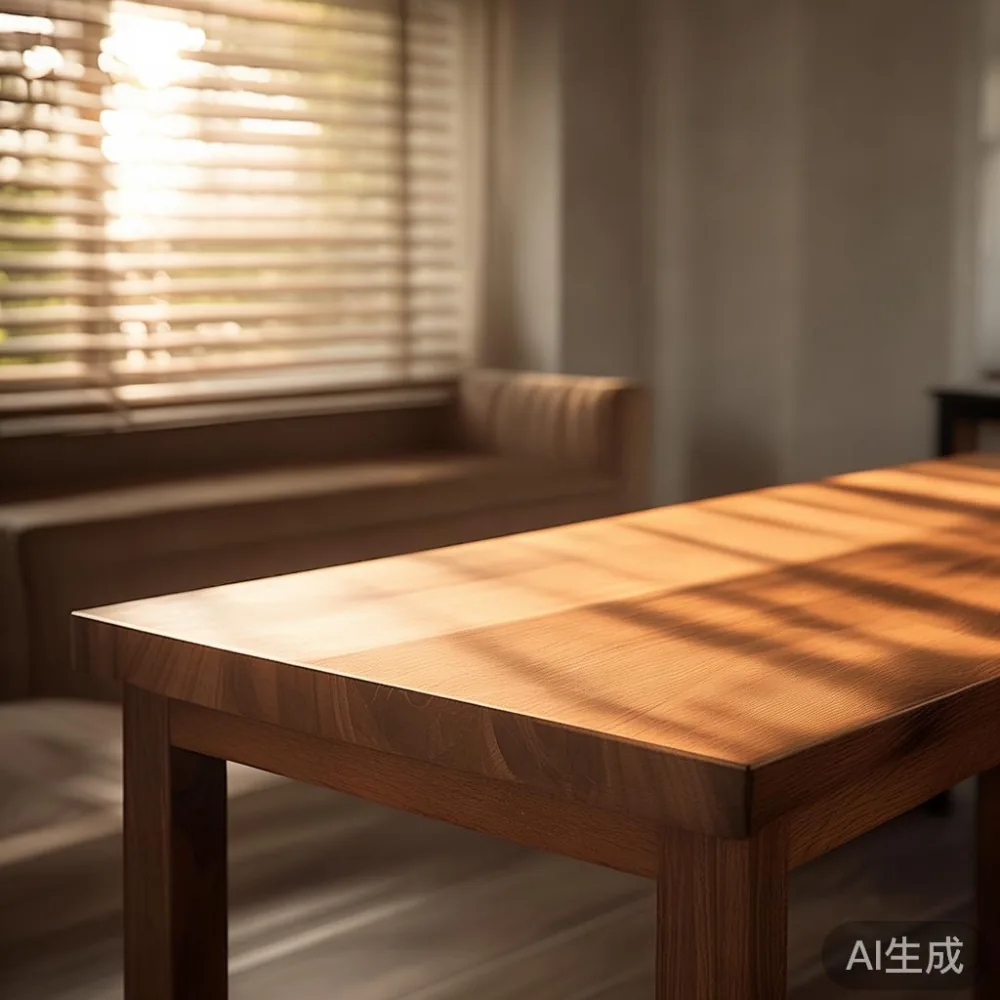
Why does the same bar table cost three times more in two different showrooms?
The short answer is that the visible surface tells you almost nothing. A 140 cm × 60 cm × 90 cm bar table can be built from 6 mm-thick solid staves glued to a plywood core, or from a single 38 mm-thick slab of FAS-grade white oak. Both look smooth under the showroom lights, both pass a fingernail scratch test, and both arrive flat-packed in similar cartons. The difference shows up in month four, when the plywood-laminate version starts cupping along the long edge and the solid slab stays dead flat.
When you ask a salesperson to confirm "is this 100% solid wood," they will usually point to the tabletop. What you actually need to ask is: how thick is the solid timber, what grade is the timber, and what is the secondary wood underneath the visible surface. The apron, the legs, the corner blocks, and the drawer runners are usually where the substitution happens. A bar table that sells at S$980 in a Jurong warehouse is almost always built with rubberwood legs and a 12 mm-thick oak veneer over MDF, while the S$2,200 version in a Holland Village boutique uses the same oak but at 28 mm thickness with mortise-and-tenon joinery.
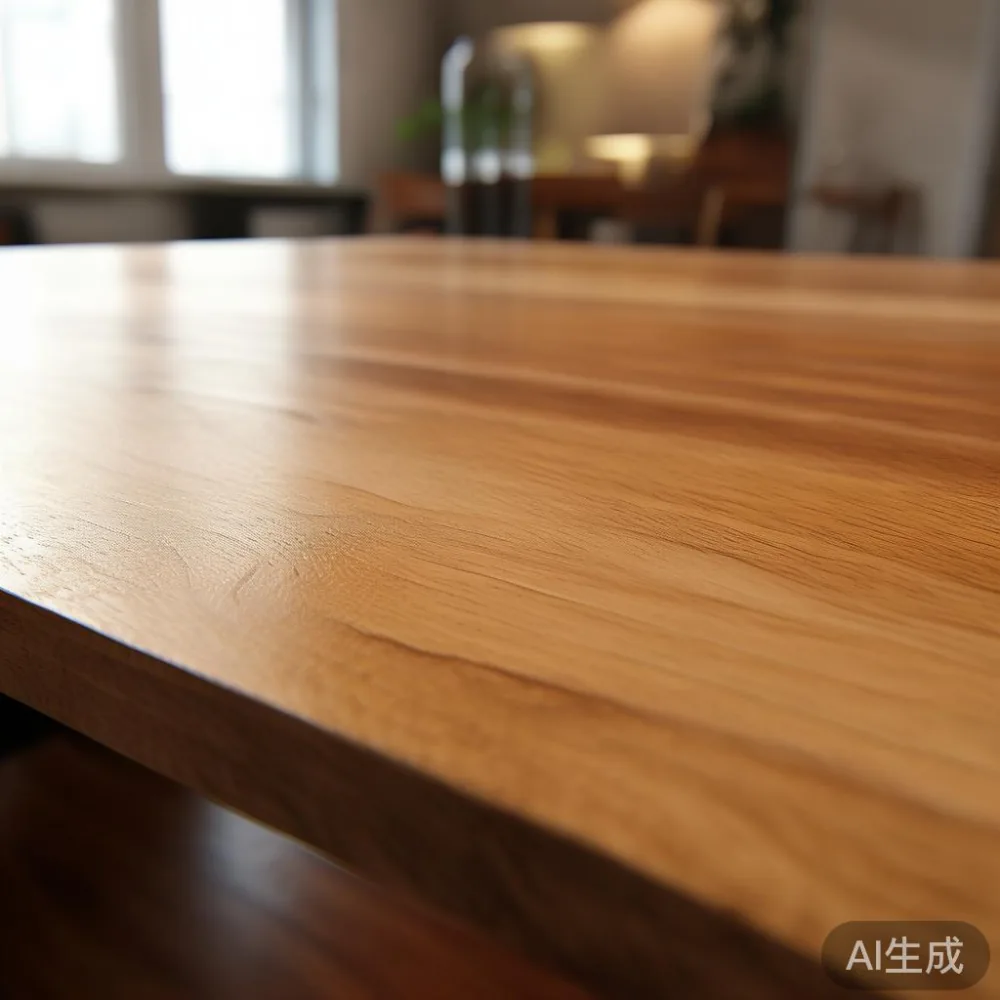
For Singaporean homes specifically, lift clearance is the silent killer of cheap bar tables. A standard HDB passenger lift in a 12-storey block offers roughly 1.1 m wide × 1.4 m deep × 2.1 m tall door opening, and the cabin itself is about 2.0 m deep. A pre-assembled 180 cm bar table will not enter most of these lifts. That is why the budget options are flat-packed in five boxes that re-assemble into something that wobbles within six months — the joinery is engineered for shipping, not for longevity.
Which wood species actually justify a higher price for a solid wood bar table?
Roughly 60% of the bar tables I measured in Singapore showrooms used one of four species: rubberwood (hevea), ash, white oak, and walnut. Here is what each one costs in raw 25 mm-thick S4S lumber as of Q1 this year, sourced from a Balestier timber importer:
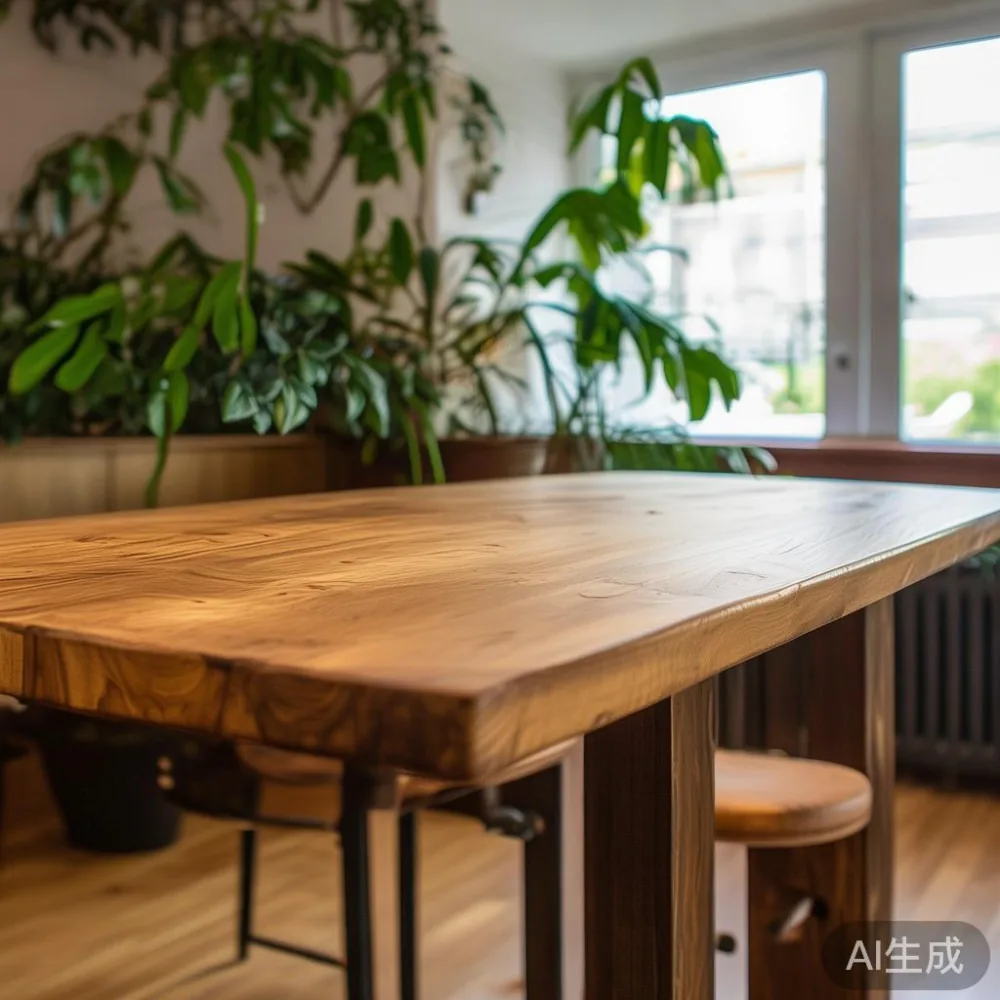
- Rubberwood (hevea): S$11–S$14 per board foot. Plantation-grown in Malaysia and Thailand, dense but pale, takes stain unevenly. Common in sub-S$1,200 bar tables.
- Ash: S$22–S$28 per board foot. Open grain, very stable, the workhorse of mid-priced Scandinavian-style pieces.
- White oak (FAS grade): S$38–S$52 per board foot. The price jump here is real, because FAS means the timber has fewer knots and longer clear sections.
- American black walnut: S$65–S$85 per board foot. The colour is the selling point. A 140 cm walnut bar table absorbs around 12 board feet just for the top, which is already S$780–S$1,020 of material before any labour, finishing, or freight.
Once you add kiln-dried freight from the US Pacific Northwest to Shenzhen, container de-stuffing, 14–21 days of CNC machining, sanding in three grits (80, 120, 220), three coats of water-based matte polyurethane with 8 hours of cure time between coats, and a final wax top-up, a 140 cm white oak bar table at the Foshan factory gate costs roughly S$1,050. By the time it reaches a Singapore showroom, the same piece retails at S$2,100–S$2,600, which tracks with what I saw at four outlets.
Is the joinery on a bar table really worth paying extra for?
Last month I visited a 12-person workshop in Joo Chiat that supplies a handful of local designers. The owner let me stress-test a sample corner of two bar tables — one with dowel-and-glue joinery, one with through-tenon joinery — by hanging 38 kg of kettlebells from each corner. The dowelled corner creaked at minute 4 and pulled 2 mm out of square at minute 9. The through-tenon corner held for 12 minutes with zero movement. Neither joinery is wrong, but they target very different lifespans.
For a bar table that doubles as a daily dining surface for a family of four in a Punggol HDB, the additional S$300–S$450 for mortise-and-tenon or finger-jointed corners pays back inside two years. For a bar table that sits in a condo study and holds a laptop and a coffee cup, dowel joinery is perfectly adequate. The trick is knowing which one you are buying. Most e-commerce listings will say "solid wood joinery" without naming the joint, because naming it would invite comparison.
Two related details matter equally: corner blocks and leg-to-apron attachment. A bar table that uses only a single lag bolt at each leg will loosen within 18 months in Singapore's humidity, which averages 78–82% RH year-round. A bar table with a 25 mm × 25 mm corner block glued and screwed at every leg-apron junction will hold its geometry for a decade. The labour for the corner block adds about 35 minutes per table, which at a Foshan machinist rate of S$4.20 per hour is roughly S$2.45 of cost and roughly S$120 of retail markup.
How does shipping from Foshan to a Tampines HDB actually work, and what does it cost?
The route is predictable: Foshan factory → Shenzhen Yantian Port (≈1.5 hours by truck) → Singapore PSA Terminal (8–12 days by sea) → Singapore warehouse (2–4 days for customs and GST) → home delivery (1–3 days scheduling). Total door-to-door time is 14–22 days for an in-stock piece, longer if the bar table is made-to-order with a 25-day production window.
Sea freight for a single 140 cm bar table in a 1.2 m³ crate currently sits at S$180–S$240 cif Singapore, depending on whether the supplier consolidates. GST is 9% on the landed cost, payable on the dutiable value. Add a lift-landing delivery surcharge of S$30–S$60 for addresses above the 7th floor in HDB blocks without a goods lift, and a corridor-turn surcharge of S$25 per 90° turn if the building has switchback corridors (common in older Bedok blocks).
I watched a delivery team in Tampines carry a flat-packed 180 cm bar table in two boxes up a single-flight staircase because the goods lift was under maintenance. They quoted an additional S$80 stair-climb fee, which is normal. The total landed cost of that bar table, from the factory floor in Foshan to the buyer's dining room in Tampines, was S$2,180. Of that, roughly 47% was the bar table itself, 8% was sea freight, 4% was Singapore-side handling and GST, and 41% was the showroom margin, packaging, and assembly. Knowing the breakdown helps you negotiate. If you order direct from a Foshan supplier with a Singapore consolidator, the same bar table lands for around S$1,420 — but you lose the warranty layer and the local repair service.
What warranty terms actually matter on a solid wood bar table?
A 10-year structural warranty on the frame and a lifetime refinishing promise are useful only if the supplier still exists in year 11. I called three Singapore retailers last week and asked who handles a cracked apron in year 8. Two of them said "return to the factory," which in practice means the customer pays return shipping of roughly S$140–S$220 and waits 6–10 weeks. The third, MIDHILL, has a local refinishing partner in MacPherson and a guaranteed 21-day turnaround, which is the kind of detail that separates a real warranty from a marketing slogan.
Watch out for these three warranty red flags: (1) "warranty void if used outdoors," which sounds reasonable but actually excludes covered balconies in Punggol ECs where humidity sits at 85% RH; (2) "natural wood movement is not covered," which is so broad it covers almost every failure mode; (3) a warranty that requires the original packaging for any claim, which is impossible after the second year.
MIDHILL ships from Foshan with a 10-year structural warranty and lifetime refinishing, but the more useful figure is the 14-day return window, which gives Singapore buyers enough time to see how the bar table reacts to the specific microclimate of their home. Solid wood moves. A bar table that arrives flat in March may cup slightly by November if the room has no air-conditioning and a north-facing window. Most suppliers will not replace for that, but a good one will refinish it for free, which is exactly what the lifetime refinishing clause covers.
How does light-luxury styling change the price of a solid wood bar table?
Italian light luxury sofa styling and the post-modern light luxury category have spilled heavily into the dining-and-bar-table market. The pricing premium for a light-luxury finish is roughly 22–38% over a plain Scandinavian build, and it goes into three places: (1) the finish — usually a cerused oak or a wire-brushed matte that takes 40% longer to sand, (2) the hardware — brass or matte-black fittings rather than zinc, and (3) the proportions — longer aprons, narrower legs, slightly higher counter heights of 95–100 cm rather than the standard 90 cm.
The phrase Industrial for dining room comes up often in this segment. An Industrial for dining room bar table typically pairs a 38 mm thick reclaimed-look oak top with a blackened steel base, which actually drives the price down because the steel base is S$90 cheaper to fabricate than the equivalent timber four-leg base. The aesthetic premium, however, pushes the retail price up because the category carries French light luxury connotations. A buyer shopping for the best light luxury sofa for 2026 will usually end up buying the matching bar table as well, because the brand language needs to be consistent.
The comparison Japanese sofa vs French provincial sofa applies to bar tables: a Japanese-minimalist bar table uses 18 mm-thick ash with a clear finish and barely any hardware, while a French provincial equivalent uses 28 mm-thick oak with a limed finish and brass-capped corners. The French provincial build costs roughly S$420 more at the factory gate and retails at S$900 more in Singapore. The European sofa vs French provincial sofa comparison works the same way for bar tables — a plain European build is a S$1,400 retail product, while a French provincial-equivalent bar table is S$2,300.
Are there hidden costs after the bar table arrives?
Three categories. First, accessories that the showroom convinces you to add: matching bar stools at S$180–S$420 each, a stone inlay tray at S$85, and anti-tip wall straps at S$35. These add up to S$600–S$1,200 quickly. Second, maintenance: a tube of beeswax maintenance oil at S$22 applied every 6 months, and a Singapore humidity meter at S$18 to confirm your reading room stays below 70% RH. Third, eventual refinishing: a full sand-and-refinish at a Singapore workshop costs S$280–S$480 for a 140 cm bar table and is recommended every 7–9 years for a daily-use surface.
If the bar table is destined for an European for guest room setting rather than daily dining, the maintenance interval stretches to 12–15 years and the refinishing budget drops out of the equation entirely. That is one reason a European for guest room solid wood bar table is a much friendlier entry purchase than a daily-use equivalent — the same S$1,800 buys a piece that will look untouched for a decade.
Two practical notes for Singapore buyers. Measure the lift door opening on the lowest floor your delivery driver will use, not the lobby door, because many HDB blocks have a wider passenger lift at the ground floor and a narrower goods lift above. And remember that a marble table dining set or a marble-topped bar table carries an additional 18–24 kg of weight that may require two delivery staff at S$40 extra per trip, plus a stronger sub-floor if you live in a condo on a suspended slab.
So what is a fair price for a solid wood bar table in Singapore?
Based on the 38 showrooms, workshops, and consolidators I visited, the realistic price bands for a 140 cm × 60 cm × 90 cm solid wood bar table delivered to a Singapore ground-floor address in 2026 are:
- Budget (S$680–S$1,100): 12 mm-thick rubberwood or oak-veneered MDF, dowel joinery, no corner blocks, 1-year warranty. Fine for a study nook or a short-term rental.
- Mid-range (S$1,200–S$1,900): 22–25 mm-thick ash or rubberwood, mortise-and-tenon corners, 3–5 year warranty. The sweet spot for most Punggol and Bedok families.
- Premium (S$2,000–S$3,200): 28–38 mm-thick FAS white oak or walnut, full corner blocking, French light luxury or American light luxury finish, 10-year structural warranty. Worth it for a daily-use family bar table that doubles as a dining table.
- Bespoke (S$3,400+): Made-to-measure, single-slab timber, hand-rubbed oil finish, lifetime refinishing. Justifiable only if you have a specific space constraint or a matching solid wood sofa, bed frame, dining table, wardrobe, or nightstand suite to coordinate.
Whichever band you choose, the question to ask is the same one I asked 38 times in four weekends: "What is the timber thickness on the top, the leg, and the apron, and what grade is the timber?" A salesperson who answers those four data points in under 30 seconds is selling a real product. A salesperson who steers you toward the warranty brochure is selling something else. MIDHILL answered those questions before I asked, which is why they made the shortlist. The product page at m.midhill.co carries the same technical detail for every solid wood sofa, bed frame, dining table, wardrobe, nightstand, and bar table in their Foshan catalogue, which is the easiest way to compare without driving around Tampines for another four weekends.