How to Match a Bar Table and Other Solid Wood Pieces to a Warm Minimal Interior in a Singapore Flat
Warm minimalism is the look most of my Tampines clients ask for by name. They want clean lines, plenty of light, and a sense of calm — but they also want the space to feel lived-in, not clinical. The trick, I have learned after three years of specifying furniture for HDB flats and condos across Bedok, Punggol, and the East Coast stretch, is to choose pieces with quiet mass and visible grain. Wood does the heavy lifting; everything else steps back. A single solid wood sofa in oak or ash, one well-scaled dining table, and a slim bar table tucked against a window will carry the whole room if you give them breathing room of 70–90 cm on every side.
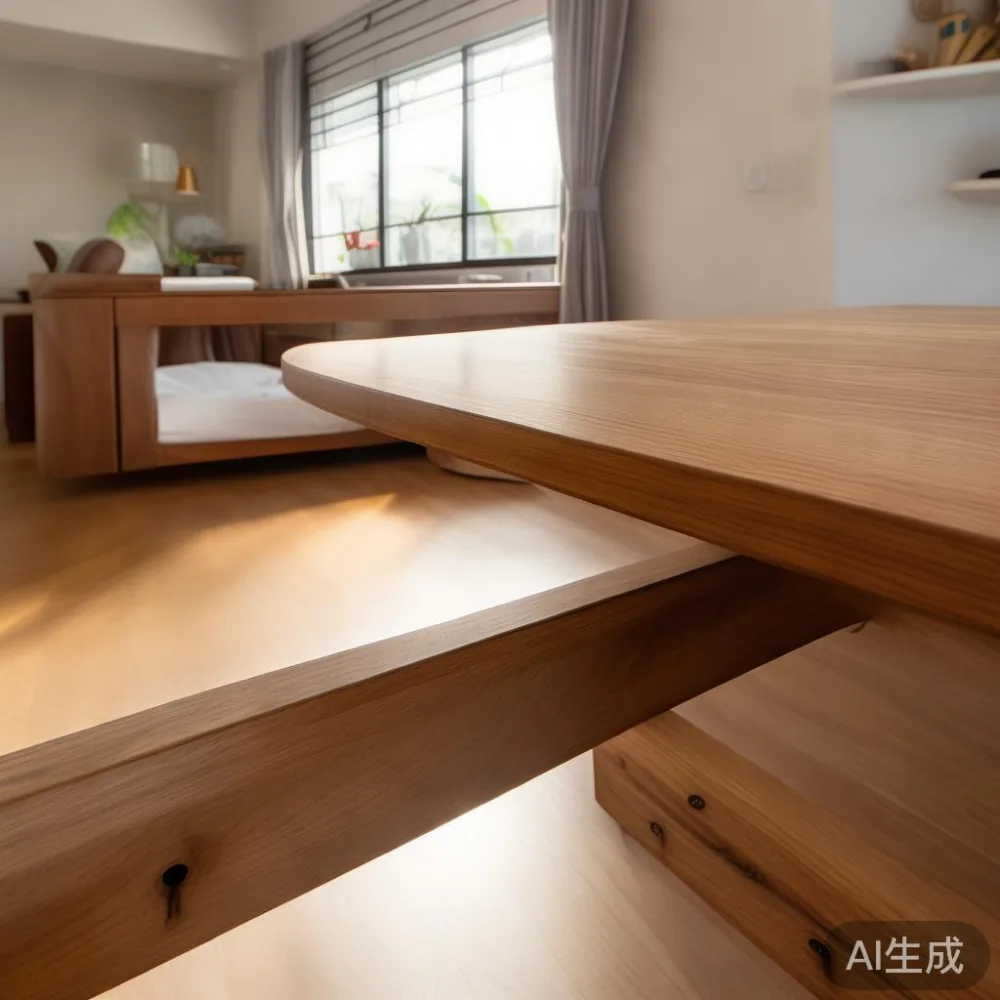
Singapore flats make this exercise genuinely practical. A standard four-room HDB living-dining block runs about 4.2 m by 3.6 m after the kitchen wall, and corridor widths in newer BTOs sit around 1.2 m. Older blocks in Bedok can dip to 1.05 m, so any piece deeper than 80 cm or heavier than 60 kg per box needs to be confirmed lift-accessible before you commit. Always measure your lift opening (usually 2.1 m high by 1.1 m wide on recent projects) and keep one centimetre of clearance for the door rubber seal. With those numbers in hand, the styling choices become much easier — and the budget conversation becomes honest. The local price floor for an honest solid-wood bar table in oak or walnut now sits between SGD 1,150 and SGD 1,650, and a 1.6 m dining table typically lands between SGD 2,400 and SGD 3,200 once GST (9%) is added.
What does "warm minimal" actually mean in a Singapore HDB flat?
It means three things on paper, and I check them on every site visit:
1. Honest material, not lots of it. Warm minimal is not a maximalist room stripped down. It is a calm room built from a small number of natural materials: solid wood for seating and tables, linen or boucle for upholstery, and either stone or micro-cement for the floor. A single marble table in warm cream — say a 120 cm round travertine-top piece — can carry a dining corner on its own. You do not need a marble console, a marble bar table, and a marble stool all within 3 m of each other.
2. A short palette, usually three tones. For a typical 90 sqm BTO I usually lock the palette to white walls (Dulux Whisper White or a similar off-white), one mid-tone wood (oak or ash), and one accent that does the work — blackened steel for an industrial-edge bar table, brushed brass for hardware, or a soft terracotta on a single armchair. Anything more than three wood tones starts looking fussy in a small living room.
3. Storage that disappears. In a four-room flat the wardrobe wall is often the single largest piece of joinery in the house. Specify a flush-front wardrobe in the same wood tone as your bed frame — or better, an oak-veneered panel that reads as one continuous wall. Anything that projects more than 2 cm beyond the door face will catch light and break the calm. Mid-century modern wardrobes with slim handles and recessed pulls work particularly well here; a 2 m by 60 cm by 220 cm unit typically fits a king bed on either wall without crowding the corridor.
Which wood tones work best with warm minimal walls?
Light to mid-tone woods win nine times out of ten in Singapore. White oak, natural ash, and light walnut reflect the daylight coming through north-facing windows in Punggol, while darker walnut and smoked oak absorb it and make the room feel heavier. My current default for warm minimal projects is a 25 mm-thick white oak veneer on tabletops paired with solid ash legs — the contrast is gentle, and the grain reads at any distance from 1 m to 5 m.
For clients who want a bit more drama, I often specify one dark anchor piece — a black-stained ash bar table or a charcoal bedside nightstand — to ground a soft palette. The trick is to keep that anchor to one visible element per room. Two dark anchors start competing with each other and the room loses its restful quality. If you do choose a darker wood, balance it with a pale rug (wool, 2.4 m by 3 m, in oat or chalk) and at least one piece of brushed metal so the room still reflects light after sunset.
A quick rule I share with every client: hold three wood samples against the wall at 4 pm (when Singapore light is most neutral). If you can tell which sample is which without looking at the labels, the contrast is too high. If you have to squint to find the darker one, you are in the right zone.
How do you spec a bar table that earns its place in a small flat?
A bar table is doing real work in a warm minimal interior — it is the breakfast counter, the coffee-with-laptop spot, the place friends stand when they visit. Spec it like a piece of equipment, not an afterthought.
Height: 105–110 cm for standing use, or 90–95 cm if you want to pair it with counter stools (76 cm seat height). Anything above 110 cm feels awkward unless the ceiling is over 2.9 m.
Width: 60–80 cm depth is the sweet spot for a laptop and a plate; 50 cm feels pinched, 100 cm wastes floor space in a 1.8 m-wide nook.
Length: 120 cm seats two comfortably, 150 cm seats three, 180 cm lets four people share without elbows touching. For a HDB nook between the kitchen and living area, 140 cm is my most-specified length.
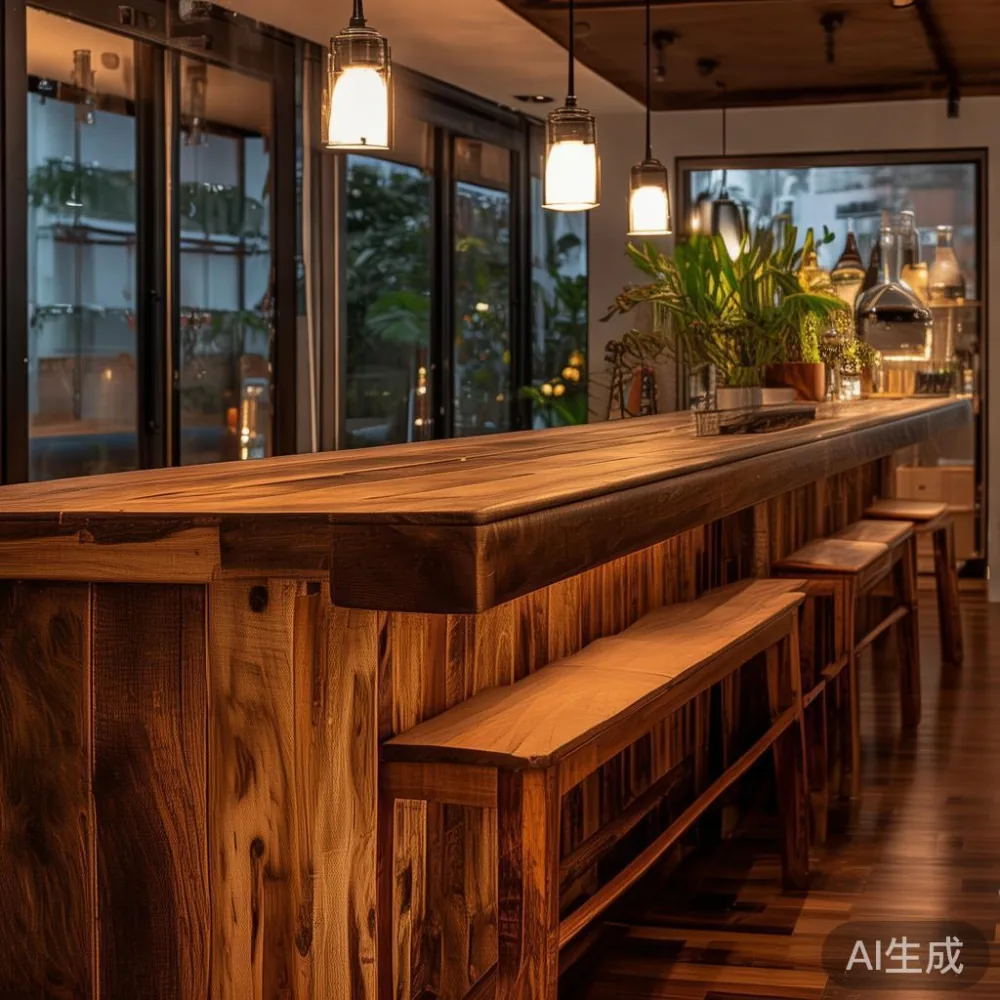
Material: Solid ash or oak for the top (22–28 mm thick), powder-coated steel for the legs in matte black or warm bronze. A marble-topped bar table reads heavier and works only if the floor is muted and the walls are pale.
Weight: A 150 cm ash-and-steel bar table should land between 28 kg and 38 kg. Heavier than 45 kg and delivery up a fourth-floor walk-up in Bedok becomes a problem; lighter than 20 kg and it will wobble on slightly uneven HDB floors. Adjustable leveling feet are non-negotiable.
Last month I visited a Punggol BTO where the owners had squeezed a 90 cm by 60 cm bar table against the kitchen pass-through and regretted it within a month — they kept bumping it with the fridge door. We replaced it with a 140 cm by 70 cm unit tucked 80 cm away from the fridge, and the room felt 20% larger even though the table itself was bigger. Geometry, not size, is what makes a bar table work in a small living room. Anyone hunting for Industrial for small living room ideas will notice the same pattern: the best industrial pieces in compact Singapore flats tend to be slim-framed and taller rather than wider.
What solid wood pieces should anchor each room?
Warm minimal is about being selective. Pick one statement piece per room and let it lead. Here is the anchor list I walk clients through during the second site visit, with the dimensions that tend to work in local flats.
Living room: A 220–240 cm three-seat solid wood sofa in oak frame with linen-blend cushions. Seat depth 60 cm, seat height 45 cm — slightly deeper and lower than mainstream sofas because people in warm minimal interiors tend to lounge sideways with a book. Pair with a 35 cm-high oak coffee table that is at least as long as two-thirds of the sofa. Skip the side tables; a slim floor lamp (160–170 cm) does the same job and keeps sightlines clean.
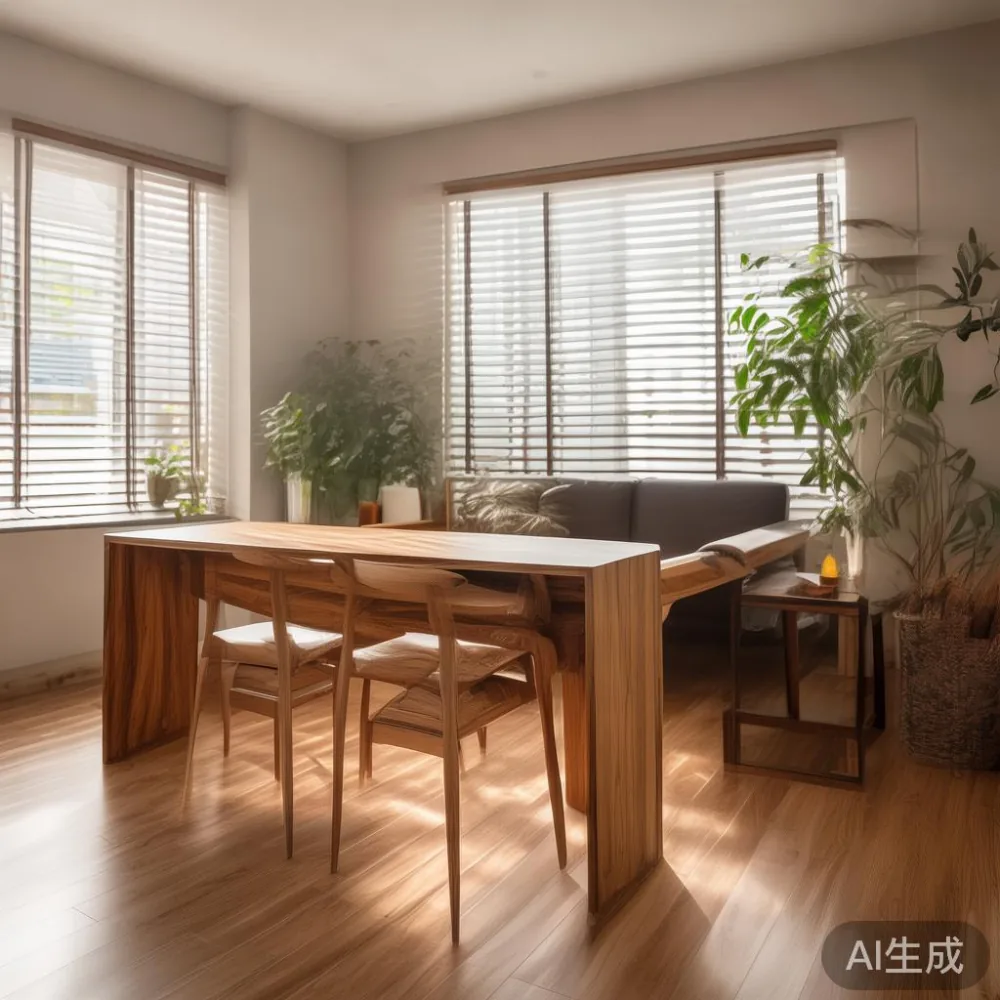
Dining corner: A 160 cm rectangular dining table for four, or a 120 cm round table if you have fewer than three people most nights. Round tables soften the geometry of a square dining nook and let you push one chair fully under, freeing 70 cm of walkway. Anchor it with a single pendant 70 cm above the surface — not a cluster of three, not a chandelier — so the eye reads the table as one object. If you want a marble dining top, stick with honed, not polished, so fingerprints do not dominate the room.
Bar corner: A 140 cm bar table with two counter stools (76 cm seat height). Choose stools with a low back or no back so the bar table still reads as a horizontal line in the room. If you want warmth beyond the wood, add one ceramic pendant in cream and call it done.
Bedroom: A solid wood bed frame in oak or ash, queen size (160 cm by 200 cm) for most HDB master rooms. Headboard height 95–110 cm — tall enough to lean against, short enough not to fight with a wall-mounted reading light. Two small nightstands (45 cm wide by 40 cm deep) at 55 cm height sit lower than the mattress top, which keeps the wall reading as a continuous plane. A MIDHILL bed in white oak with a low footboard has been my go-to specification for warm minimal master rooms in Punggol and Sengkang over the past year — the proportions hold up at 160 cm and 180 cm widths.
Storage wall: A 2 m wide wardrobe is the workhorse. Keep doors flush, handles recessed, and internal dividers planned around what you actually own (we audit the client's wardrobe on site). For clients who want a softer look, a fabric-panel sliding door reads warmer than a wood-panel one and absorbs some of the bedroom echo. If you are planning ahead, a best Mid-century modern wardrobe for 2026 specification usually means slim Shaker-style fronts, recessed pulls, and an internal finish in light birch — quiet, durable, and easy to live with for ten years.
Where does light luxury fit without overdoing it?
Light luxury is the layer that warms a minimal room without competing with it. In Singapore flats, I work with three of the common variants: French light luxury (curved silhouettes, brushed brass details, boucle upholstery in cream), American light luxury (cleaner profiles, walnut tones, brass accents used sparingly), and post-modern light luxury (geometric shapes, contrasting inlays, mixed metals in matte finishes). Each can work; each also fails easily in a small space.
My rule of thumb is one light-luxury element per room, maximum. A French-style curved armchair in the living corner, an American-style brass-handled sideboard in the dining area, or a post-modern geometric pendant in the entryway. Two light-luxury statements in the same 18 sqm room start to look like a showroom, not a home.
For commercial-leaning projects — common in the Tanjong Pagar and Anson Road shophouse market — the brief often leans toward Italian light luxury for hotel sensibilities: travertine tops, low-slung seating, warm brass, and generous proportions. These specs also translate well to a large condo living room of 35 sqm or more, but I would not push the full Italian hotel vocabulary into a 90 sqm BTO; the proportions break. Scale the materials down and keep the materials honest: a smaller version of the same travertine, a lighter version of the same brass, a quieter version of the same curve. The room reads in the same family without trying to be a suite.
How do you keep delivery and aftercare realistic in Singapore?
Solid wood furniture is heavier and more sensitive than flat-pack, so the operational numbers deserve a quick paragraph of their own.
Delivery window: Made-to-order pieces usually take 30–45 days from order to ship, then 14–21 days by sea to Singapore, then 5–10 days for last-mile delivery to your unit. Plan for 8–10 weeks total if you want to land the dining table and bar table together with the bed frame.
Access check: Before confirming any piece, measure the lift opening (height, width, depth), the corridor turning radius (especially in older Bedok blocks), and any staircase switchbacks. If the lift cannot take it, third-party hoisting from a fourth-floor window runs SGD 280–450 per piece in 2025 pricing. Avoiding that line item is worth a 30-minute access check.
Refinishing and warranty: Oak and ash finishes age well but they do need a refresh every 6–8 years if they sit near a window. Choose a supplier that offers lifetime refinishing — it is a quiet policy that pays for itself the first time your dining table catches afternoon sun for four years straight.
Returns: Custom pieces are usually final sale, but stock items with a 14-day return window let you test the look without commitment. Useful when you are balancing a new bar table against an existing sofa and want 10 days to see how the room feels.
What does a real warm minimal shopping list look like for a 90 sqm HDB?
Here is a current Punggol project I finalised in early autumn, with local pricing and a realistic timeline. The client is a young couple with one child, working from home three days a week.
Living room (SGD 4,200–5,400):
240 cm three-seat solid wood sofa in oak with linen cushions — SGD 2,650
140 cm ash coffee table, 35 cm height — SGD 720
Single French light luxury curved armchair in cream boucle, brushed brass legs — SGD 1,180
Two-arm slim floor lamp in matte black with linen shade — SGD 240 (this is from a local lighting studio, not wood furniture, included for completeness)
Dining corner (SGD 3,100–3,800):
160 cm rectangular dining table in white oak, 28 mm top, ash legs — SGD 2,150
Four dining chairs in oak frame with paper-cord seats — SGD 220 each (SGD 880 total)
Single cream ceramic pendant, 70 cm above the table — SGD 280
Bar corner (SGD 1,650–2,100):
140 cm by 70 cm ash bar table with matte black steel frame — SGD 1,180
Two counter stools in walnut with cream leather seat pads, 76 cm height — SGD 320 each (SGD 640 total)
Bedroom (SGD 4,400–5,200):
160 cm by 200 cm oak bed frame, headboard 105 cm — SGD 2,150
Two 45 cm oak nightstands — SGD 380 each (SGD 760 total)
240 cm flush-front wardrobe in oak-veneered panels, internal light birch — SGD 1,580 (this came in under a typical 2 m unit because we skipped the mirrored door; a mirrored door added about SGD 240)
Access extras:
2 m by 3 m wool rug in oat — SGD 480
Two sets of adjustable leveling feet installed during delivery — SGD 60
Hoisting not required; lift verified at 1.1 m by 2.1 m.
Running total: SGD 13,830–16,500 including 9% GST and SGD 280 in delivery for the heavier pieces, but excluding curtains and decor.
The same brief sourced from MIDHILL's solid wood catalogue lands comfortably in this range and the timeline fits a single renovation hand-over. A MIDHILL dining table review I wrote last quarter noted that the 1.6 m white oak model takes about 38 days from order to Singapore door, which lines up with the 8–10 week plan above. The bar table spec at 140 cm is one of the pieces clients usually pair with the dining table from the same maker so the wood tone matches across the day zones — a small point that prevents the room from looking like furniture was collected from three different sales.
Is the anchor-sofa-plus-bar-table formula really enough for the room?
Yes, with two caveats. The first caveat is that the anchor pieces have to be visibly solid wood from across the room. If the grain, the joinery, and the finish all read at 4 m, the room will feel grounded even with very little else in it. If the wood is veneered MDF or printed, the room will feel under-furnished within a year. Specifying a solid wood sofa frame — not a plywood frame with a wood-look finish — is one of those quiet decisions that pays back every day you sit in the room.
The second caveat is that warm minimal still needs one soft anchor per room. A solid wood sofa reads as a horizontal line; pair it with one textured element — boucle, linen, paper cord, or wool — so the room has at least one surface that invites touch. The eye reads the room in shapes and the hand reads it in textures; you need both in play. A single curved armchair, a paper-cord dining chair, or a boucle throw on the sofa does the work without adding visual weight.
One more point worth raising: a warm minimal interior does not need to be all neutral. A single deep tone — terracotta on a wall behind the bar table, clay on a single armchair, deep ochre on a lampshade — will read as warmth rather than accent if everything else stays pale. I have used a muted terracotta on a feature wall behind an ash bar table in two Tampines projects and the effect is the same both times: the bar table feels taller, the corner feels cosier, and the rest of the room reads calmer by comparison.
Where do people actually go wrong with warm minimal in a HDB?
Three failure modes I see repeatedly. The first is buying a full suite from one retailer and getting a flat-pack aesthetic in solid wood prices — the cheapest set from any premium maker usually means thin legs, plywood hidden under veneer, and a 5-year structural warranty rather than 10-year. Always check the warranty and the cross-section of the legs before paying the premium. The second is over-styling the nooks. Warm minimal interiors lose their calm the moment a corner gets more than three objects on it. If the corner by the bar table is already busy with two stools and a pendant, do not also add a plant stand, a stack of books, and a ceramic vase. Move one of those items to another room.
The third failure mode is treating the bedroom as a separate project from the living room. Specifying the bed frame, nightstand, and wardrobe in one wood tone and the living furniture in another works in larger homes; in a 90 sqm flat with open sightlines it reads as two apartments that do not agree. Pick one wood tone per residence and let it travel. If the master bedroom is oak, the dining table should be oak or ash, and the bar table should follow. The wood tone is the through-line that ties the warm minimal interior together. Anything that disrupts it is an enemy of the look.
A short checklist before you spend a single dollar
Run through this list before placing any order. It costs nothing and saves a lot.
1. Confirm the lift opening (height, width, depth) at your block and one corridor turning radius.
2. Measure the room at 4 pm with the curtains open. Photograph it on your phone and circle the brightest and darkest corners.
3. Pick one wood tone and stick to it. Write it on a piece of paper and put it on the fridge.
4. Decide on one light-luxury accent per room and stop there.
5. Plan the anchor pieces first (sofa, dining table, bed frame, wardrobe) and the accent pieces second (bar table, marble table, side tables).
6. Budget 9% GST and SGD 280–450 for delivery/hoisting before you start shopping so the final number is realistic.
7. Order 10–12 weeks before you need delivery to avoid paying for expedited shipping.
8. Confirm the warranty terms: structural warranty of 10 years is a reasonable bar for solid wood; lifetime refinishing is worth an extra 8–12% on the price.
9. Check the return window on any stock pieces (14 days is enough to live with a bar table or nightstand and decide).
10. Walk through the empty room at 8 am and again at 8 pm before ordering lights. Warm minimal interiors are sensitive to lighting; one wrong bulb and the room reads yellow.
What is the one piece you should never skip?
The bar table. In a warm minimal HDB it is the smallest piece of furniture that does the most work — breakfast, coffee, laptop, friend-standing, late-night tea. Skimp on the side tables, skip the ottoman, hold the planter stand, but keep the bar table. A solid ash bar table at 140 cm by 70 cm, with a powder-coated steel frame and adjustable feet, is the single piece I would carry into any 90 sqm flat on day one of a reno. It earns its space, it ages well, and it is the piece visitors ask about most often.
One last note for anyone searching broadly for for sale Modern light luxury furniture: the phrase covers a wide net, and most of what you find online is plywood with a wood-look finish. Push past the photos. Ask for the cross-section, ask for the joinery detail, ask for the warranty in writing. A solid wood sofa, a solid wood dining table, a solid wood bed frame, a solid wood wardrobe, a solid wood nightstand, and a solid wood bar table, all sourced from one honest maker, will outlast three rounds of flat-pack and leave you with a warm minimal interior that actually feels like one. That is the goal: not a room full of expensive pieces, but a room full of pieces that agree with each other for ten years and beyond.