How Southeast Asian Humidity Affects Solid Wood Furniture
Singapore’s warm, humid climate can change the dimensions, finish and appearance of solid wood furniture. The effect is especially noticeable on a bar table, where a broad top, exposed edges and frequent contact with drinks create more opportunities for moisture exchange than a small wall cabinet. In HDB flats and private condos across Tampines, Bedok and Punggol, humidity control matters even when the air-conditioned interior feels comfortable. A polished timber surface may swell during a rainy week, contract during a dry spell and develop small checks around joints if the wood was not properly conditioned for local conditions.
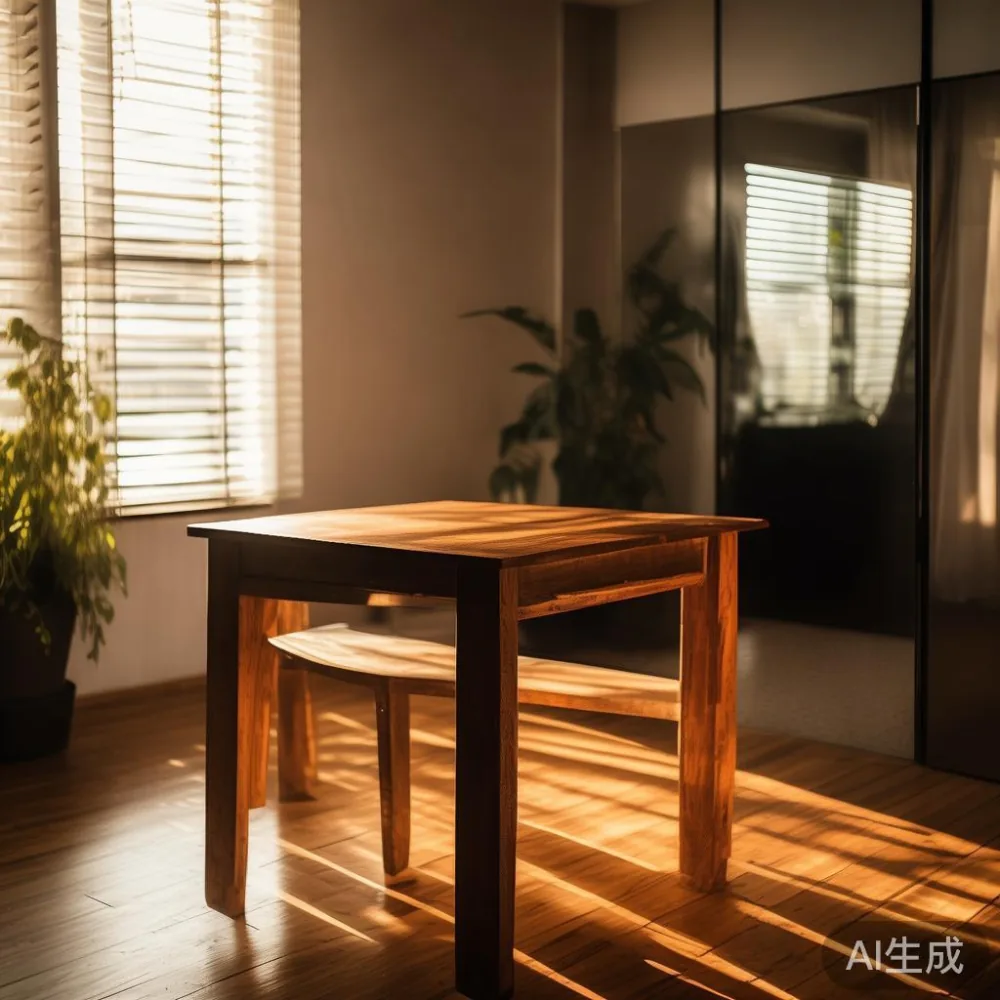
At MIDHILL, we approach this as a material-care issue rather than a reason to avoid solid wood. The company has manufactured furniture since 2008, exports to more than 15 countries and backs its constructions with a 10-year structural warranty. That warranty covers long-term structural performance; it does not mean that wood should be kept permanently damp or ignored. Proper placement, ventilation and maintenance still determine how a dining table, bed frame or wardrobe behaves in a tropical home.
What humidity does to solid wood?
Wood is hygroscopic: it absorbs atmospheric moisture when the surrounding air is humid and releases it when the air becomes dry. Southeast Asian relative humidity commonly ranges from roughly 60% to 90%, with rain, condensation and air-conditioning producing short local cycles. A bar table made from solid hardwood can gain enough moisture to expand across its grain by around 1% to 3%. On a 120 cm-wide top, that movement can amount to several millimetres. The movement is normal, but excessive and repeated variation can loosen screws, distort a panel or open a joint.
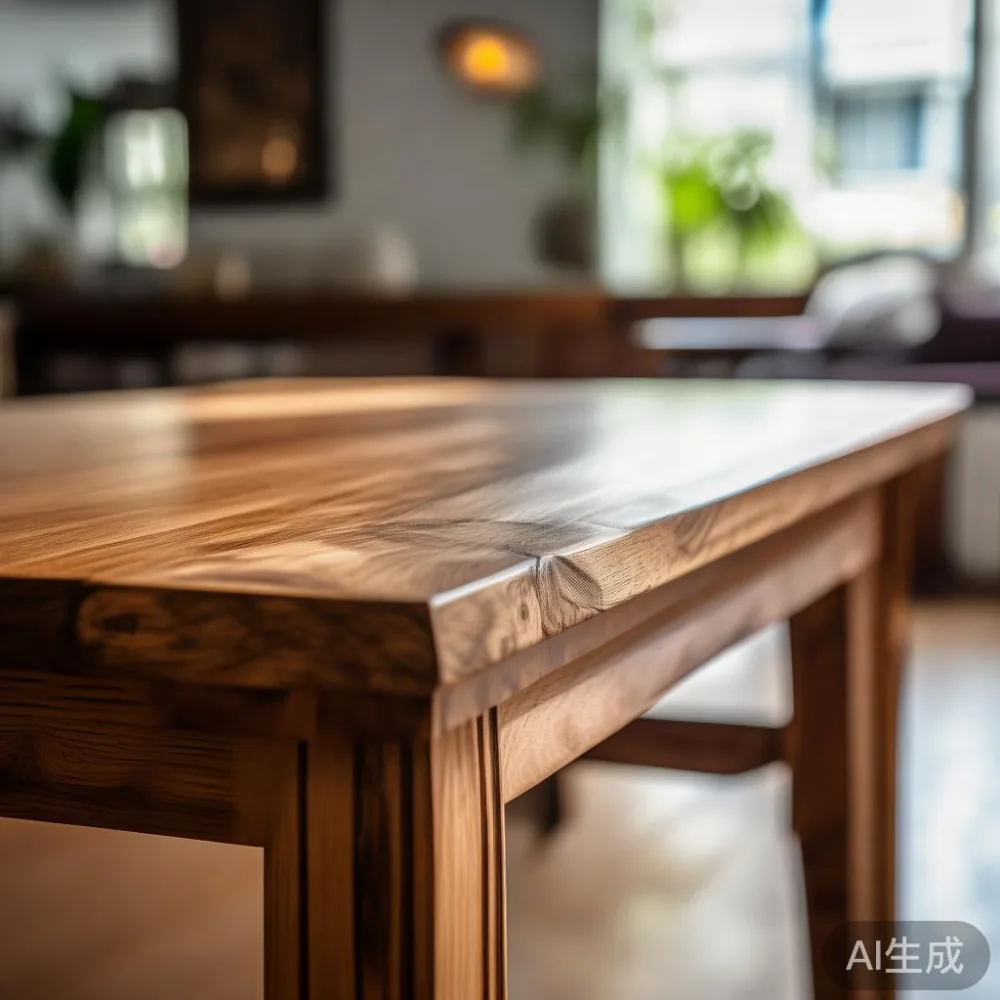
The damage is not always a dramatic split. A customer may first notice a tackier surface, a cloudy patch beneath a glass or a faint line where a joint meets the edge. Finished wood also reacts differently from unfinished timber. A film-forming coating slows moisture exchange, while a deeply textured or brushed finish may collect dust and be harder to wipe clean. Stone components have their own behaviour: a marble table is not affected by wood movement in the same way, although its moisture resistance does not make its supporting cabinet immune to humidity.
Temperature matters too. Air at 30°C and 80% relative humidity holds much more water than air at 24°C and 55%. This explains why a bar table can feel different beside an open balcony at 7 p.m. and beside a dehumidifier at 9 p.m. The longer one surface stays in that changing zone, the more visible the response becomes.
Is Southeast Asian humidity bad for every kind of furniture?
No. Humidity does not mean solid wood is unsuitable in Singapore. It means the furniture must be made, finished and used with the local climate in mind. Factory acclimatisation, stable joinery, appropriate panel thickness and sensible finishes all reduce risk. A solid wood sofa with upholstered cushions needs protection from accidental spills, while a dining table benefits from coasters and a moderate room humidity. A wardrobe should stand clear of wet walls, and a bed frame should be positioned where night-time condensation is unlikely.
Light-luxury design can coexist with tropical practicality. French light luxury often uses pale oak, walnut-toned timber and refined mouldings; an American light luxury room may combine solid wood pieces with clean lines and upholstered seating. Post-modern light luxury can pair a geometric bar table with sculptural lighting. In every style, a lightly toned finish can make checking more apparent, so maintenance should be considered before delivery, not after the first monsoon month.
The furniture supplier also matters. A maker familiar with export conditions should understand how timber responds in different climates. MIDHILL’s overseas experience includes destinations with sharply different humidity levels, while its local delivery and customer-care arrangements remain relevant to Singapore homes. The 14-day return period gives customers time to assess a piece in its actual room, although a solid wood item should not be installed beside an active leak simply to test it.
How should I fit a bar table into a Singapore home?
Measure the route before choosing the size. A bar table for a compact dining zone might be 100-120 cm long and 35-45 cm deep, while a model intended for a breakfast counter may reach 160-180 cm. Check the diagonal of the largest door and every corridor turn. Many HDB lift openings measure about 90 cm wide, although the usable clear width can be less because of door guides, panels or renovation changes. A 90 cm lift does not automatically accept a 95 cm table top; measure the actual opening and the space required to tilt and turn the package.
For condo corridors, check whether the table must pass through a fire door or turn at a landing. Add at least 10 cm of working clearance to the stated corridor width rather than assuming a tight fit will work. Protective corner pieces, blankets and two people carrying a top over 25 kg are sensible precautions. Ask the supplier for the packaged dimensions and weight before the delivery appointment, because a 130 cm solid wood bar table may weigh 35-55 kg depending on its construction.
Install it away from bathroom and kitchen humidity where practical. A minimum gap of 15-20 cm from a wet wall can help airflow, and a bar table should not be placed where an air-conditioner drips onto it. In a balcony dining area, use an outdoor-rated finish and avoid trapping the tabletop against a glass balustrade. If the table sits beside a window, curtains can moderate direct sun and sudden temperature changes.
What relative humidity should I maintain indoors?
A practical indoor target is approximately 45% to 60% relative humidity, with room temperature near 22-26°C. Many Singapore living rooms remain within this range when air-conditioning or dehumidification is used consistently. Short periods above 60% are generally less troublesome than repeated swings from 45% to 85% in the same week.
A digital hygrometer is inexpensive and gives better information than guessing. Place one near the bar table for 7 days and record readings at about 8 a.m. and 8 p.m. If the display remains above 65% for long periods, improve ventilation, reposition the table or run a dehumidifier. Avoid aiming a portable dehumidifier directly at the timber, since rapid drying at one edge may create uneven movement.
Air-conditioning lowers temperature and often reduces humidity, but it should not blow continuously across an exposed tabletop. Direct airflow can finish the surface unevenly. A dining table in an open kitchen should still have coasters, a stable indoor placement and prompt cleanup of ring marks. For a compact flat, protecting the top may be easier than controlling the entire room perfectly.
How do I care for a bar table during humid months?
Wipe the surface with a soft, slightly damp cloth and dry it immediately. Cleaners containing alcohol, ammonia, silicone or strong acids can damage some coatings, so test an inconspicuous area first. Let hot drink vessels cool for 10-15 minutes before use; a steaming mug can leave a mark even when the wood is sound. Coasters should be at least 5 cm across, and felt pads can reduce scratches from moving objects.
During heavy rain, wipe off condensation from an exposed edge and inspect beneath the table every 2-3 months. Lift coasters rather than dragging them, and do not stand on a chair or the table itself. Tighten fittings only if a joint has genuinely loosened. Repeatedly forcing screws as seasonal movement occurs can enlarge the holes. If a gap seems abnormal, contact the supplier with photographs and measurements rather than filling it with filler.
For oiled or wax-finished models, ask MIDHILL for the approved maintenance product and interval. A renewable hard wax oil may be appropriate every 12-18 months, depending on use and exposure; applying it too often can create a sticky surface. A lacquered finish may need a different cleaner and should not be treated with furniture oil unless the maker confirms that approach.
Can I test humidity damage before a table is delivered?
Material testing is useful, but controlled laboratory results should not be confused with creating damage in a furnished home. During a recent product review, I visited a Singapore showroom and compared three unfinished solid wood samples that had been conditioned for 14 days at 60% and 85% relative humidity. The higher-humidity samples expanded across the grain by about 0.8-1.6%. After returning to 60% humidity for 21 days, they recovered most, though not all, of that movement. The test showed why slow seasonal change is safer than repeated soaking.
At home, use a hygrometer and visual checks instead of pouring water onto the top. Look for the first signs of finish clouding, edge movement or joint changes, then document them. If a table is delivered on a wet day, allow it to acclimatise in its intended room for 24-48 hours before placing objects on it. Keep it away from wet renovation dust and ensure the floor is dry.
Local delivery also requires planning. MIDHILL offers free shipping over US$350, but for Singapore orders the currency should still be presented clearly in SGD, with GST shown separately where applicable. Standard delivery commonly takes 5-10 working days after confirmation, while made-to-order pieces may require 6-10 weeks. Confirm the exact lead time, installation service and access charges before payment. A narrow corridor lift or missing parking bay should be reported before the date is fixed.
Which furniture needs the closest attention in a humid flat?
A bar table combines a broad surface with frequently handled drinks, so it deserves regular wiping and coaster use. A solid wood sofa has another exposure: cushions and joints can be affected by spills and refined humidity near an open balcony. A bed frame placed directly under a window can experience condensation, so leave 20-30 cm of ventilation space where the layout allows. For storage-heavy pieces, such as a wardrobe, avoid exterior walls that receive little sunlight and use the prescribed 60-70% internal humidity settings where fitted.
Material selection can also influence the visual result. The best Japanese wardrobe for 2026 may appeal to a customer seeking precise timber detailing and restrained storage, but its doors should still be protected from dampness at the sides. A European light luxury nightstand looks refined beside a bed, yet a glass of water left on it during a humid night can create a ring. An Italian light luxury sofa brings upholstery and timber into the same visual composition, making careful spill control part of its care routine.
Other design references should be handled with the same realism. Japandi for dining room layouts often centres on a calm timber-and-paper vocabulary, while a MIDHILL French provincial bed can suit a warmer, decorative bedroom. The best Post-modern bed for 2026 may use cleaner geometry, but geometry does not alter the wood’s need for stable humidity. The correct question is whether the piece can acclimatise, be maintained and fit the room’s daily use.
How can buyers compare solid wood and other bar table materials?
Solid wood offers repairability and a tactile grain that can be refreshed, but it moves with humidity. Veneered furniture can be more dimensionally stable because its thin layers are bonded to a manufactured core; however, the edges and surface still respond to moisture and finish damage. Metal frames resist swelling but can scratch or corrode near salt-rich coastal air. A marble table has a cool, stable surface, yet it is heavy, difficult to modify and can be vulnerable to acidic spills.
For a Singapore dining or breakfast space, compare the whole product rather than a material label. Check top thickness, extension mechanisms, underside construction, finish type and packaged weight. Ask whether replacement boards or matching veneer are available after years of use. MIDHILL provides lifetime refinishing for its eligible furniture, which can restore colour and surface consistency after ordinary wear; scope and conditions should be confirmed in writing.
The 10-year structural warranty provides another point of comparison, but moisture damage caused by leaks, poor placement or neglected care may sit outside structural failure. Ask for a written care guide, the expected maintenance schedule and a humidity recommendation. Transparent specifications help a buyer understand whether a bar table suits an HDB flat, a landed house or a high-rise condo with extensive glazing.
A good purchase begins with 3 measurements: room space, delivery access and normal humidity range. Add 2 habits: coasters and immediate wiping. Review those 5 factors before choosing the finish, and the bar table can retain its character through many tropical seasons. Its grain may deepen slightly in wet weather and lighten in drier air, but controlled care will keep that natural movement from becoming avoidable damage.