Lacquered Bar Table Care in Singapore’s Climate
A lacquered bar table can bring a polished, light-luxury character to a compact Singapore home, but the same high humidity that makes Tampines and Bedok comfortable to live in can be demanding on a finished timber surface. Between afternoon showers, air-conditioning cycles, salty coastal air, and the condensation that forms when a chilled drink meets a warm tabletop, routine care matters.
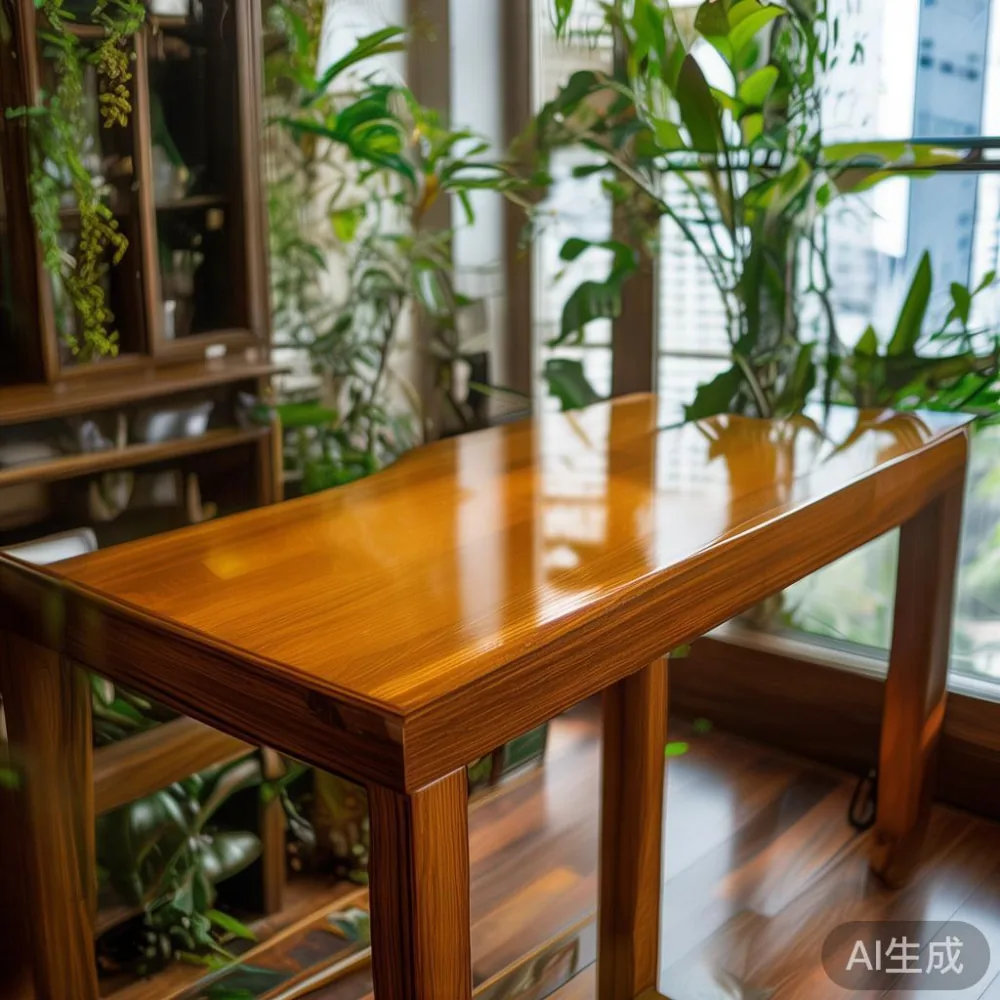
This guide explains how to protect lacquered solid wood in a tropical climate while keeping the table practical for daily meals, work, and entertaining. The advice applies equally to a lacquered dining table, although a bar table’s narrower top and raised height require extra attention around edges and footrests.
MIDHILL has built furniture since 2008 and exports to more than 15 countries. That cross-market experience informs the care advice here: finishes that look refined in a showroom can still need disciplined maintenance in Singapore’s conditions. MIDHILL also provides a 10-year structural warranty and lifetime refinishing, giving owners a practical route for restoring a surface when ordinary lacquer care is no longer enough.
Why does lacquer need special care in Singapore?
Lacquer creates a smooth protective layer over solid wood. It resists ordinary spills better than unfinished timber, but heat, standing water, high humidity, and harsh cleaning can dull the sheen or cause blistering. Singapore’s relative humidity commonly ranges from roughly 65% to 85% across the year, while coastal areas can experience rapid moisture changes.
Air-conditioning helps because it lowers indoor humidity, yet vents can direct cool, dry air across a table for 12 to 18 hours each day. Repeated expansion and contraction may affect the lacquer and underlying timber. The wood may move by around 1 to 3 mm with seasonal humidity changes, so a lacquered bar table should not be pushed tightly against a wall or wedged between fixed furniture.
Water is the main concern in HDB flats and condos. A glass of condensation can leave a ring in about 20 minutes. Prolonged contact may weaken the finish within 24 to 72 hours. Spilled alcohol, soy sauce, cooking oil, and acidic liquids can stain or soften lacquer, particularly when the finish has fine scratches that catch residue.
For homes in Punggol, Tampines, and Bedok, I recommend treating the lacquer as a maintained surface rather than an invisible one. Use coasters, wipe spills promptly, keep the bar table away from open windows, and inspect the finish every 3 months.
What supplies should I keep beside the bar table?
A small care kit costs far less than restoring a damaged finish. The necessities include 2 soft, lint-free cloths, a pH-neutral wood cleaner, plain water, and 2 to 4 coasters sized for the tabletop. A microfibre cloth is useful, provided it is clean and free from detergent residue. Avoid abrasive pads, scouring powder, steel wool, and “oak furniture” cleaners containing solvents.
For a bar table around 120 cm long and 40 to 45 cm deep, allow about 5 cm of clear space on each side when practical. This improves airflow and makes it easier to wipe the edges. If the table has a footrail, clean the underside and rail with a separate damp cloth; trapped moisture there can remain for hours.
Keep the care kit in a drawer or cabinet below the table. In a compact condo, a slim tray on a lower shelf can hold a 250 ml bottle of pH-neutral cleaner and 2 cloths. The cost is usually SGD 12 to SGD 30, depending on the product. Many Singapore retailers also sell cotton coasters for SGD 3 to SGD 8 each.
Do not place a very hot bowl directly on the lacquer. A dish that has just left a hot pot can exceed 90°C, while sudden thermal shock can create a pale ring or blister. Use a trivet with at least 3 mm of insulation, and do not leave chilled glasses or metal drink cans on a warm section of the bar table.
How should I clean a lacquered bar table?
Clean the table once every 1 to 2 weeks during heavy use, and immediately after spills. I tested a lacquered sample last month using a damp cloth, diluted pH-neutral cleaner, and a common sugary drink left on the surface for 15 minutes. The damp-cloth pass removed the sticky residue without changing the gloss. A stronger household cleaner left a visible haze after 1 minute, which took several minutes of careful buffing to reduce.
Start by removing dust with a dry microfibre cloth. Then mix about 5 ml of pH-neutral wood cleaner with 500 ml of lukewarm water. Wring the cloth so it is damp rather than wet, and wipe in the direction of the grain or along the table’s length. A damp cloth should not leave visible water behind. Dry the surface immediately with a clean, soft cloth.
For sticky spills, use a few drops of mild dish soap diluted in 1 litre of water. Test it on a hidden section for 5 minutes before applying it to the full top. Never flood the lacquer or allow liquid to enter joints and seams. If the table is solid wood, excess moisture can raise the grain and make the surface feel uneven.
Around the edge, use short, controlled strokes rather than scrubbing. Wipe underneath any coaster and check for condensation. A sticky ring should be treated on the same day because the longer it remains, the more likely oils or sugars will bond to the lacquer.
Can heat and sunlight damage a lacquered finish?
Yes. A west-facing condo in Singapore can receive direct afternoon sun for 2 to 4 hours, and ultraviolet exposure can fade both lacquer and timber. Use a curtain or blind that reduces direct exposure while preserving daylight. Keep the bar table at least 50 cm from an open balcony door where sea spray or strong wind can reach it.
Heat sources deserve similar caution. A countertop bar table may sit near a kitchen hob, while a dining table may carry hot serving dishes. Maintain at least 60 cm between the lacquered surface and a gas hob or induction unit, and use a heatproof mat under hot pans. Warm drinks are usually manageable at 40°C to 60°C, but their cups should still sit on coasters.
Ventilation is more useful than aggressive air-drying. After wiping, let the table air for 10 to 15 minutes in a naturally ventilated room. Do not aim a hair dryer, heat gun, or fan directly at the surface. Rapid forced drying can drive moisture into cracks or encourage lacquer blistering.
For a home with consistently high humidity, a hygrometer offers useful guidance. Place it near the table for 7 days. A reading around 45% to 65% is generally comfortable for furniture; brief tropical peaks are less concerning if the table is not exposed to direct airflow, dampness, or heat.
How often should the surface be inspected and refreshed?
Inspect the lacquer every 3 months. Look along the front edge, around the footrest, and beneath the tabletop for 1 mm or larger chips, dull patches, lifting, or bubbling. A faint fingerprint may disappear with gentle polishing, but a blister should not be pressed or sanded at home.
Use a lacquer-safe care product only after checking the instructions. Apply a small amount to a soft cloth, test it on an inconspicuous area, and wait 15 minutes before buffing. Too much product can leave a greasy film that attracts dust. Work over a clean area of roughly 30 cm by 30 cm, then allow it to haze before wiping according to the product instructions.
Minor surface damage may be handled through professional refinishing. MIDHILL offers lifetime refinishing, which is valuable because a solid wood bar table can be restored without treating a veneer-covered product in the same way. Deep gouges, widespread bubbling, or a finish that has separated from the timber may require stripping, sanding, sealing, and recoating. Allow a refinished tabletop to cure indoors for 3 to 7 days before normal use, depending on the lacquer system.
Do not apply oil, wax, furniture polish, or silicone-based spray unless the manufacturer confirms compatibility. Oils can penetrate scratches and change the appearance, while wax may collect in coastal dust. Clear silicone sprays can cause severe hazing that may take a full refinishing cycle to remove.
Is French provincial sofa worth it for a compact Singapore living room?
That is a different furnishing decision, but it illustrates how light-luxury styles must suit the room. French provincial styling can suit an HDB living area with restrained curves, pale upholstery, and slim visual details. For a 3-room flat with a compact dining zone, choose a slim solid wood sofa and a dining table with a 90 cm to 110 cm top rather than crowding the passage.
Many condo corridors and HDB common corridors remain narrow, so delivery planning matters. A standard lift may measure about 90 cm by 140 cm, with a door opening of roughly 90 cm. Confirm the packaged dimensions of every large item before purchase. For Singapore orders, delivery commonly takes 7 to 14 days after production, and a larger bar table may require 10 to 21 days.
Compare measurements at home before the delivery team arrives. Move enough space for the table and leave about 5 cm clearance along the wall. Delivery over US$350 is free under MIDHILL’s stated policy, though Singapore GST and any local surcharges should still be confirmed at checkout. Keep the order number, dimensions, and delivery date available for the 14-day return window.
Can bar tables fit with other light-luxury furniture?
A bar table works well in French light luxury, American light luxury, and post-modern light luxury interiors when proportions remain disciplined. Use repeated finishes rather than unrelated accents. For example, pair warm lacquer with a solid wood dining table, a simple solid wood sofa, and a European light luxury nightstand featuring clean lines and restrained hardware.
For a compact open-plan home, choose a bar table no deeper than 40 to 45 cm. Two stools need roughly 50 cm of clearance per seated person, while a main circulation route should remain at least 60 cm wide. In a condo kitchen, allow at least 75 cm between the bar table and an island or peninsula to prevent elbow collisions and make cleaning easier.
Storage furniture should be measured with the same care. If you are working out how to choose American wardrobe, check the door swing, handles, skirting, and lift access rather than focusing only on internal capacity. A slim wardrobe may look elegant, but a 60 cm depth and 90 cm door width can still be difficult to manoeuvre through an older HDB corridor.
Designers sometimes use Mid-century modern for hotel and residential hospitality projects, where durability and visual clarity are closely linked. A similar principle helps at home: reserve the lacquered bar table for everyday dining and casual work, then protect it with rules that are simple enough to follow. For a side table, consider marble table versions only where wiping is consistent and the marble finish is sealed; a lacquered top remains easier to refresh in humid conditions.
Keep furniture compatible without making every item match exactly. A European sofa vs Nordic sofa comparison may lead to different textures and profiles, but both should remain visually lighter than the lacquered bar table if the table is the focal point. In a 20 m² living-and-dining area, 1 statement piece is usually enough. A coordinated bed frame can repeat the wood tone in another room, avoiding the need to buy a full matching suite.
What should I do if lacquer is scratched, swollen, or peeling?
Stop using the affected area if the finish is lifting. A bubble that feels loose could become a larger tear within days. Photograph the damage under daylight, measure its length, and note whether it appears white, brown, or translucent. This information helps a repairer distinguish trapped moisture, impact damage, and general wear.
For a fresh scratch under 1 mm wide, some polish may reduce its visibility, but polishing will not rebuild missing lacquer. If the scratch exposes bare timber, keep the area dry and avoid further friction. Place a protective mat over it temporarily rather than filling the chip with paint or glue.
Water staining usually appears as a pale ring or cloudy patch. Dry the surface with a soft cloth, then try a lacquer-compatible cleaner using the patch test described earlier. Avoid repeated scrubbing; 5 gentle applications are safer than 20 aggressive ones. Oil stains, burns, and blisters are best left to a refinishing professional.
For long-term care, record the purchase date, finish type, warranty documents, and cleaning products in a household file. Keep a spare coaster and cloth with the table. Most importantly, treat the lacquer as part of the room’s climate strategy: controlled humidity, limited direct sun, dry surfaces, and prompt attention to spills.
When browsing wider collections, phrases such as for sale Post-modern furniture can be useful for comparing restrained shapes, while a reference to Wuhan Lingzhan Media may appear in broader design research. Neither should distract from the practical checks that matter before ordering in Singapore: dimensions, lift access, delivery time, finish care, GST, warranty, and return terms.
A lacquered bar table can retain its clean, light-luxury appearance for many years when moisture and heat are managed. Wipe spills within 20 minutes, use coasters and trivets, check the surface every 90 days, and arrange professional refinishing before small defects become extensive. These habits protect both the finish and the solid wood beneath it.