Veneer vs Solid Wood Bar Tables and Furniture: A 5-Year Cost Comparison That Actually Makes Sense
Last month I visited a friend in a 990-sqft Punggol HDB flat who was nursing a sorry-looking bar table she had bought three years ago for SGD 680. The MDF core had swollen at the edges where the air-con condensation dripped, the faux-wood veneer was bubbling near the wine rack, and one of the legs had started to bow under the weight of her 18 kg stand mixer. She was staring down a third replacement in five years. Meanwhile, her neighbour two doors down had bought a solid wood bar table from MIDHILL back in 2019, used it daily as a breakfast counter, homework station, and Sunday coffee bar, and the only thing showing wear was a slightly faded oil finish that one re-polish had fixed. Two flats, two decisions, very different five-year bills. That visit pushed me to actually run the numbers for Singapore buyers weighing veneer against solid wood, because the sticker price tells you almost nothing about what you will spend by year five.
What are you actually paying for when you buy veneer furniture?
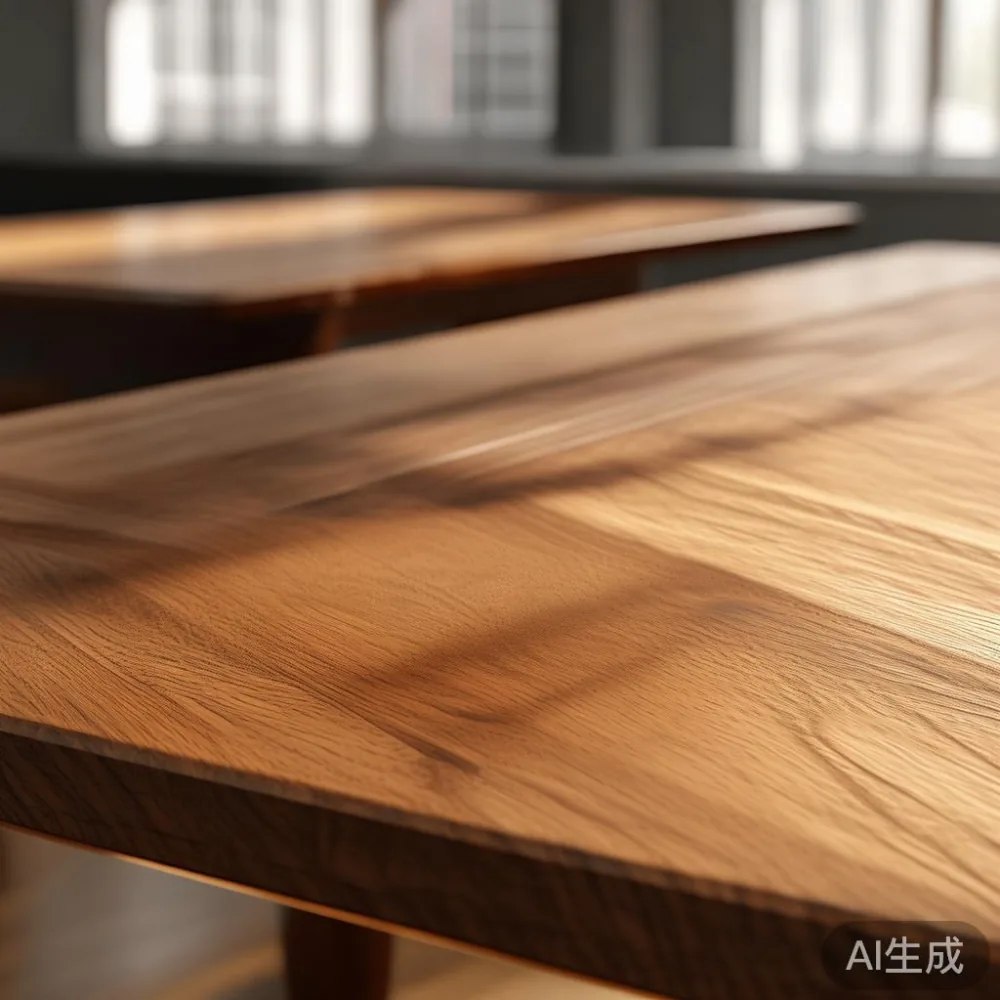
Veneer furniture uses a thin slice of real wood, usually 0.6 mm to 2 mm thick, glued onto a substrate. That substrate is typically MDF, particleboard, or plywood. A 120 cm bar table in veneer at a Tampines mall retailer retails around SGD 420 to SGD 650. The substrate handles the structural work, the veneer sells the look. The cost saving for the manufacturer is real: a single sheet of walnut can cover eight to twelve substrates, so the raw wood input per piece drops dramatically. That is why a 150 cm dining table can sit at SGD 780 in veneer while the equivalent solid walnut piece sits at SGD 2,400.
For Singapore buyers, the question is what happens after the GST-inclusive invoice. HDB bedrooms sit around 24 to 28 degrees with humidity at 70 to 85 percent most of the year. Air-conditioning dries the room out during the day, then the door opens at night and humidity rushes back in. That cycle punishes MDF. The substrate absorbs moisture at the edges, the veneer layer loses adhesion, and you get the lift, bubble, or peel that I saw on my friend's bar table. Within 36 months, most MDF-core pieces in Singapore homes show visible edge damage if they sit near a window or a kitchen door.
How does solid wood actually behave in a Singapore HDB or condo?
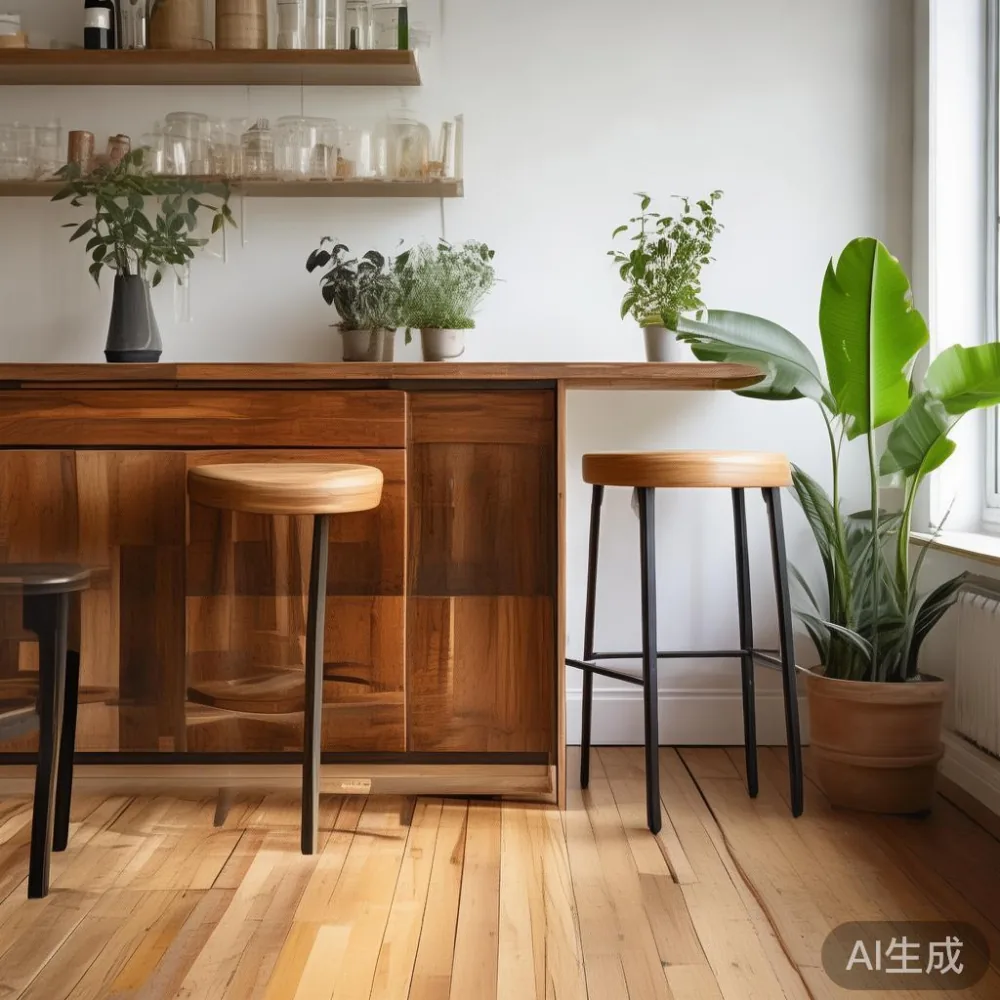
Solid wood is, simply, a piece of furniture cut from a single piece of timber, or joined from several thick boards of the same species. A solid wood bar table at MIDHILL's light-luxury tier uses 3 to 4 cm thick ash, oak, or walnut tops, kiln-dried to 8 to 10 percent moisture content, which is the right range for tropical climates. A 120 cm French light luxury bar table in solid ash sits around SGD 1,380 to SGD 1,650 before GST. A 150 cm American light luxury model in solid white oak runs SGD 1,950 to SGD 2,350.
Yes, that is two to three times the sticker price of veneer. The reason to keep reading is the next 60 months.
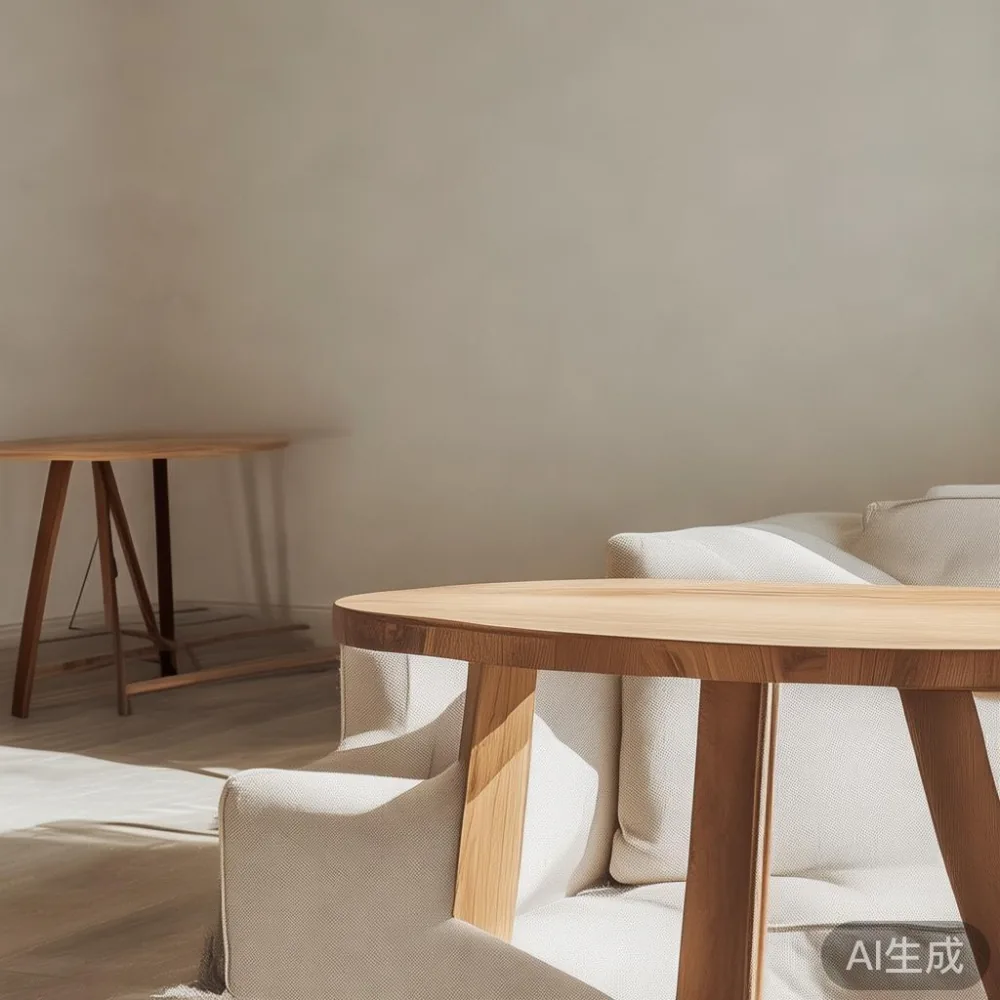
Solid wood handles Singapore's humidity swings through a simple mechanism, it moves. The grain expands in the wet season and contracts in the dry season, but it does so as a single continuous material. There is no glue line to fail and no substrate to swell. A solid wood top that has been properly sealed and finished can absorb thirty years of daily use before it needs major attention. The finishes themselves, hard wax oils, polyurethane, or conversion varnish, sit on top of continuous wood rather than trying to glue two different materials together. That single property is the difference between furniture you keep and furniture you replace.
What does the five-year cost actually look like side by side?
I built a real model for a young couple furnishing a 4-room BTO in Bedok. They wanted a bar table for the dry kitchen, a dining table for four, a bed frame, a 2-door wardrobe, and two nightstands. Same household, same climate, same five-year window. Prices are SGD, and I have included 9 percent GST, basic delivery (around SGD 60 to SGD 120 per trip, well over the free-shipping threshold once you bundle), and one minor repair per item where applicable.
Veneer package, total at purchase: SGD 4,460. That includes a 120 cm bar table (SGD 520), 150 cm dining table (SGD 780), queen bed frame (SGD 720), 2-door wardrobe (SGD 1,180), and two nightstands at SGD 630 each. Five-year repairs: edge re-veneering on the bar table SGD 180, full dining-table replacement at month 38 SGD 820, wardrobe door re-alignment SGD 240, one nightstand replaced SGD 640. Five-year total: SGD 6,340. You also spent about 14 hours of your evenings arranging repairs, which I have not priced in but which matters.
Solid wood package, total at purchase: SGD 9,840. That includes a 120 cm bar table from a French light luxury collection (SGD 1,580), 150 cm American light luxury dining table (SGD 2,280), queen bed frame (SGD 1,780), 2-door wardrobe (SGD 2,860), and two nightstands at SGD 670 each. Five-year repairs: one re-oil on the dining table SGD 120, one tightening of wardrobe hinges SGD 80. Five-year total: SGD 10,040. The bar table, bed frame, and nightstands needed nothing.
The gap at purchase is SGD 5,380. The gap at year five is SGD 3,700. By year eight, the veneer owner has typically replaced the bar table once more (SGD 560) and the wardrobe (SGD 1,240), pushing their running total to roughly SGD 8,140, while the solid wood owner has refinished the dining table once (SGD 180) and sits at SGD 10,220. From year nine onward, the solid wood buyer is saving money every month while the veneer buyer is still shopping.
Does lift access and corridor width change the math in HDBs and condos?
This is the question that comes up every time I walk a Punggol corridor with a tape measure. Newer BTO blocks run corridor widths of 1.2 to 1.5 m and lift cabins around 1.1 m wide by 1.4 m deep. A solid wood dining table in a flat-pack box is heavy, often 60 to 90 kg, and the box dimensions matter. Most MIDHILL dining tables ship in two cartons: a tabletop carton around 160 cm long by 95 cm wide, and a leg carton around 75 cm by 45 cm by 30 cm. Both fit through a standard HDB door (90 cm wide) on edge, and both fit a condo lift cabin on the diagonal if you tilt the table carton.
For heavier items like a solid wood wardrobe, the issue is not width but crew. A 2-door wardrobe can weigh 95 to 130 kg fully assembled. MIDHILL's white-glove service for Singapore includes a two-person team, and they will deliver to the lift landing, into the living room, and into the final position with felt pads under the feet. That is part of the purchase price above SGD 350, so you pay nothing extra for the delivery itself, only the SGD 50 lift-booking surcharge if your condo requires it. Veneer furniture, being lighter (40 to 60 kg for the same wardrobe), is easier to move but you tend to move it more often, which means more scratches, more door-frame dings, and more touch-up paint.
Which holds its resale value better in Singapore's second-hand market?
Carousell and Facebook Marketplace tell a clear story. A used solid wood dining table from a recognised maker in good condition lists around 55 to 70 percent of original price after three years. A used veneer dining table lists around 20 to 30 percent, and that is only if it has no visible edge lift. A solid wood bed frame often sells within a week in the East region; a veneer bed frame sits for a month and usually requires the seller to drop the price twice.
For a household that moves every three to four years, which is common for young Singapore couples upgrading from a 4-room flat in Sengkang to a 5-room in Punggol or a condo in Marine Parade, resale value changes the math again. Assume you recover SGD 1,400 on the solid wood dining table at year three versus SGD 230 on the veneer equivalent. That alone closes SGD 1,170 of the purchase-price gap, leaving the real five-year premium for solid wood at roughly SGD 2,530 across the whole package. Spread over 60 months, that is about SGD 42 per month for an entire home full of furniture that will not warp, bubble, or bow.
Is there a middle ground if the budget is tight?
Yes, and this is the part most guides skip. The smart compromise is mixed strategy: spend on the pieces that take structural punishment, save on the pieces that do not. A solid wood bar table is non-negotiable for me, because it sits near the kitchen, takes water splashes, holds heavy appliances, and gets daily use. A solid wood bed frame matters because it carries weight nightly for eight to ten years. A solid wood dining table matters because it is the social centre of the home and the hardest piece to move once it is assembled.
You can save by going with veneer or solid-wood-veneer on lower-stress pieces. A nightstand sees gentle use, holds a lamp and a book, and can be replaced cheaply if it fails. A wardrobe interior can be MDF with solid wood doors and face frame. The MDF never sees humidity if it is inside a closed wardrobe, so it lasts. A marble table in the living room can be solid marble on a metal base, sidestepping the wood question entirely. The point is not to buy all-solid or all-veneer, it is to match the material to the stress.
How do you tell if a "solid wood" listing is actually solid wood?
Ask three questions before you pay. First, what is the moisture content at the time of manufacture? Anything above 12 percent in a kiln-dried piece for tropical use is a red flag. Reputable makers will tell you. Second, what is the joinery? Mortise and tenon, dovetail, and finger joints are signs of serious construction. Staples, pocket screws, and glue-only joints are signs of cost-cutting. Third, what is the warranty on the frame? A ten-year structural warranty on the load-bearing frame is industry standard for serious makers, and that warranty is meaningless unless the maker has been around long enough to honour it. MIDHILL has been exporting since 2008 and ships to more than fifteen countries, which is one of the reasons Singapore buyers can order with confidence even without visiting the Foshan workshop in person.
Also check the underside. A genuine solid wood top shows continuous grain on the underside that mirrors the top. A veneered piece shows a different pattern, often a plain MDF or particleboard back. Lift a chair or a nightstand and look at the bottom; if the grain does not match, you are holding veneer.
What about Italian light luxury for hotel-style HDB makeovers?
Italian light luxury in furniture usually means restrained proportions, light-coloured woods such as ash and pale oak, soft-close hardware, and marble or sintered stone accents. For Singapore buyers trying to recreate a hotel-suite feel in a 1,200 sqft condo in the Novena or River Valley area, the formula works well because the visual language is calm and the pieces photograph well. If you want to know how to choose Italian light luxury wardrobe specifically, focus on the internal layout first: a 2-door wardrobe with two long-hang sections, three shelves, and two drawers covers 90 percent of couple use. The exterior can be flat-panel ash with a single bronze pull; the interior is what you live with daily.
For buyers studying how to style French wardrobe in apartment settings, the trick is proportion. A French light luxury wardrobe with full-length mirrored panels makes a small bedroom feel 30 percent larger because the mirror doubles the visual depth. Keep the surrounding pieces, bed frame, nightstands, and a single accent chair, in the same wood tone and you have a cohesive look without filling the room.
Is post-modern light luxury the right fit for younger Singapore buyers?
Post-modern light luxury is the style I see most often in the show flats of new Punggol and Tengah developments. It mixes warm woods with curved silhouettes, brushed brass hardware, and boucle or linen upholstery on solid wood sofa frames. A solid wood sofa in this style is not the heavy chesterfield of your grandfather's house; it is a 220 cm three-seater with a kiln-dried ash frame, sinuous spring suspension, and removable cushion covers. The wood sub-frame does the structural work; the upholstery is the comfort layer.
If you are searching under 2000 Coastal furniture for a Singapore apartment, that phrase usually points to a softer palette of whitewashed oak, rattan accents, and linen upholstery. It pairs well with HDB balconies because the lighter tones reflect heat and read as cooler. The same wood-care rules apply: keep the pieces out of direct afternoon sun on the balcony, and you will get a decade of service.
What about designer light luxury furniture for smaller spaces?
Designer light luxury furniture tends to mean pieces from independent studios or smaller makers with a clear point of view, often working in solid wood with non-standard joinery or hand-finished surfaces. In a 90 sqm Singapore condo, two or three pieces of designer furniture anchor the room, while everything else stays neutral. A designer light luxury bar table in solid walnut with a sintered stone top, for example, becomes the visual centre of an open-plan kitchen-living area. Pair it with a simple solid wood dining table for daily use and a marble table lamp on a console, and the space reads as considered rather than crowded.
Where does a bar table fit in the five-year plan?
The bar table is the workhorse of a modern Singapore home. It holds breakfast for two, the kids' homework, the laptop on a WFH day, Sunday brunch for four, and the evening cocktail when friends come over. That is why it deserves solid wood more than any other piece of furniture in the flat. A 120 cm solid wood bar table in French light luxury styling handles all of those roles without the edge lift or the leg bow that ends a veneer piece. The lifetime refinishing service that serious makers offer means the bar table you buy in year one can be sanded and re-oiled in year eight and look new again, which is the real five-year (and fifteen-year) cost argument.
If you are weighing the all-veneur package against the all-solid package today, run them both forward ten years, not five. The veneer package looks affordable at the cashier, expensive at the dump. The solid wood package looks steep at the cashier, calm and steady for the next decade. Pick the material that matches how long you actually plan to stay, and the numbers take care of themselves.